Words: 1636 | Estimated Reading Time: 9 minutes | Views: 71
The 38-story mixed-use tower outside Noborito Station was named Branz Tower Noborito on November 13. It is scheduled for completion in September 2029, bringing 442 new homes. For nearby landlords, the key question is not whether the tower will lift the entire station area, but which existing properties will compete for the same tenants.
Name announced; construction began in March
According to Impress Watch, the residential component of the Noborito Station Front District Type One Urban Redevelopment Project, being developed by Tokyu Land, Odakyu Real Estate and Tokyu Corporation, has been named Branz Tower Noborito. The building will have 38 above-ground stories, with a total of 442 homes. Layouts range from 1LDK to 4LDK, denoting bedrooms plus living, dining and kitchen space, with private floor areas of approximately 43–145 m². The tower is a 1-minute walk from Noborito Station on the Odakyu Line and a 2-minute walk from the JR Nambu Line station, with a pedestrian deck providing a direct station connection. A supermarket and other everyday amenities are planned within the building.
The latest announcement covers the name and amenity concept; the project itself has already passed key milestones. Kawasaki's mayor approved the rights conversion plan, which reallocates existing property rights within the redevelopment, on March 19, 2026. Tokyu announced the start of construction in a press release dated the 30th of the same month. According to Tokyu, the building will be approximately 140 m tall, with around 64,800 m² of total floor area, accommodating housing, shops, childcare support facilities and parking.
The schedule is roughly a year behind the original plan. When Kawasaki adopted the urban plan in November 2023, the developers envisaged construction starting in fiscal 2025 and completion in fiscal 2028. Current city documents instead record a construction start in March 2026, with completion scheduled for September 2029. Investors should use the latter schedule in their projections and allow an additional construction contingency.
Block 90, where the tower stands, forms part of Kawasaki's Noborito land readjustment project, launched in 1988. The project covers approximately 37.2 hectares, has a total budget of about 99.4 billion yen, and runs through March 31, 2037. City documents state that all provisional replacement plots have been designated. The station plaza is scheduled for completion in June 2026, and shared underground utility conduit works in fiscal 2027. In other words, the station-area roads and reallocated plots have already taken shape. The tower builds on that foundation rather than starting an entire district from scratch.
Which rental segment could the 442 homes enter?
Branz Tower is a condominium development for individual sale. No public data currently show how many of its 442 homes investors will purchase and rent out. The unit range is clear: the smallest homes are about 43 m², with layouts primarily from 1LDK to 4LDK. After 2029, homes entering the rental market from this tower will mainly be new units exceeding 40 m², with a direct station connection and shared amenities, targeting dual-income households, small families and tenants needing more space.
The impact therefore cannot be assessed by treating all rentals around Noborito Station as a single market. Tenants seeking compact apartments tend to prioritize total monthly rent and walking time to the station. The tower's larger units will not compete directly with approximately 20 m² 1K apartments, which have a separate kitchen. The closer comparable properties are recently built apartments of 40–80 m² within walking distance, along with older buildings whose owners hope renovations can bring rents closer to new-build levels.
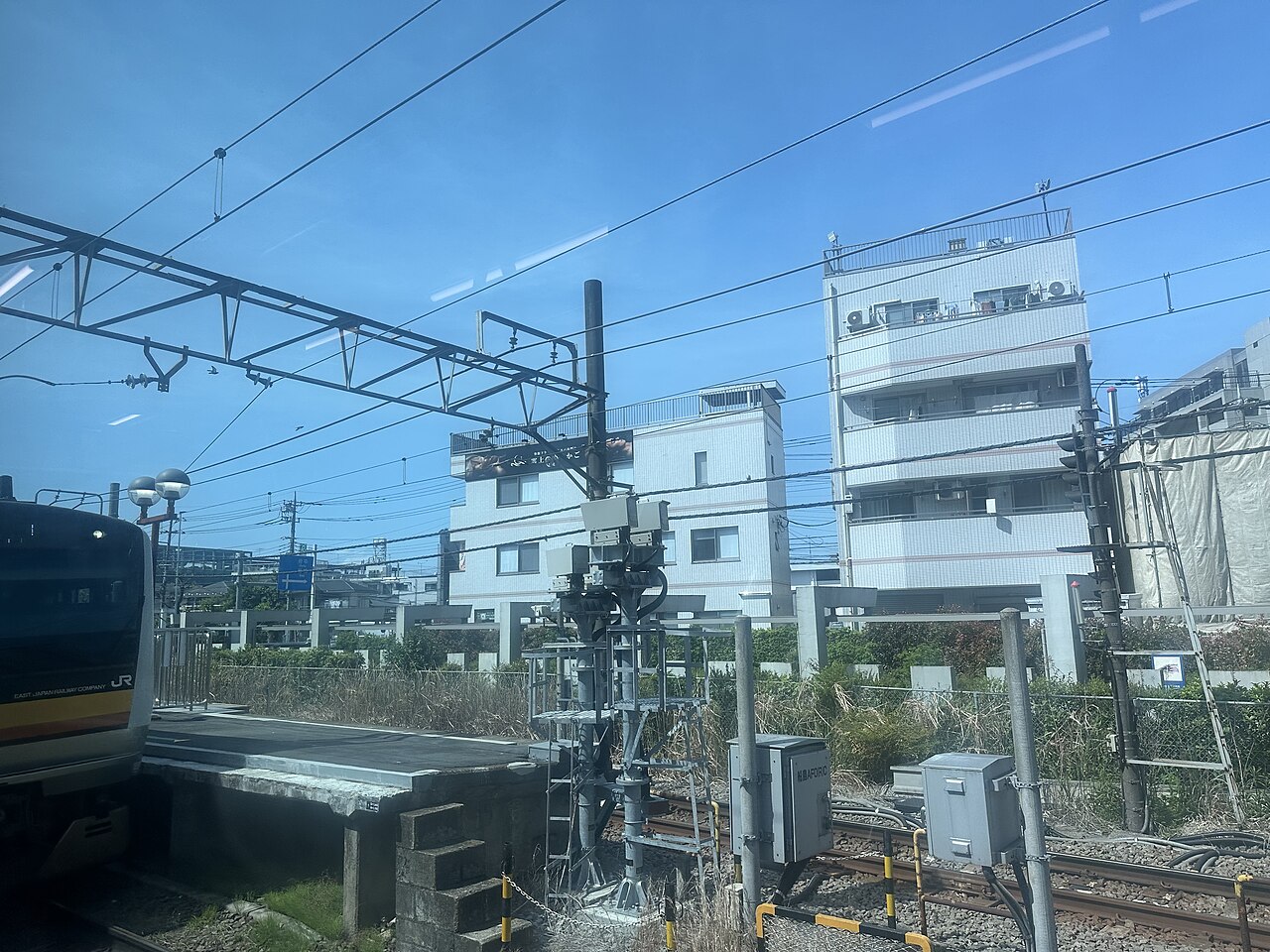
Newer and older properties already have distinct asking rents
Urbalytics rental listing data allow these rent levels to be examined separately. The comparison uses consistent criteria: apartments of 40–80 m² within a 10-minute walk of Noborito Station on the Odakyu or JR Nambu lines, taking median asking base rents, excluding management fees, over the past 12 months.
The 39 listings for properties completed in 2020 or later had a median monthly asking rent of 168,000 yen, or 3,968 yen/m²; the 15 listings for properties completed in 2019 or earlier had a median monthly asking rent of 142,000 yen, or 2,602 yen/m². On a per-square-meter basis, newer properties were more than 50% higher than older ones.
Neighboring Mukogaoka-yuen Station, also in Tama Ward on the Odakyu Line, shows a similar pattern. The 61 listings for properties completed in 2020 or later had a median monthly asking rent of 199,000 yen, or 3,226 yen/m². The 31 listings for properties completed in 2019 or earlier had a median of 112,000 yen, or 2,041 yen/m².
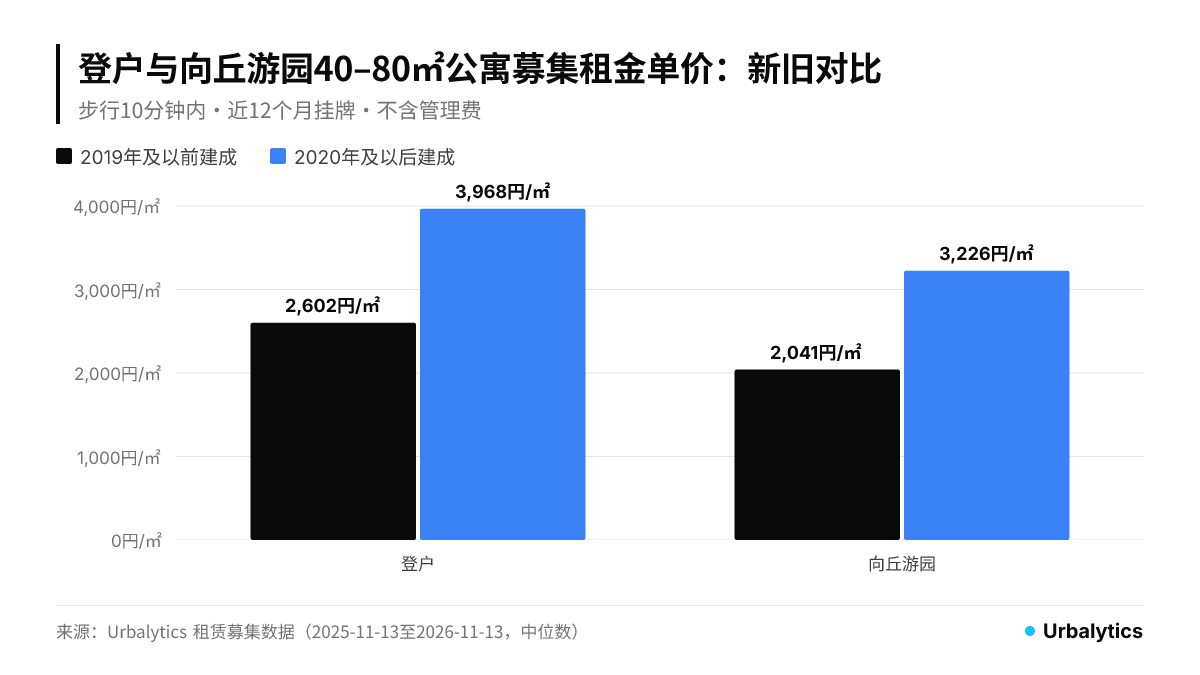
The data establish an important point: before the tower is complete, small apartment buildings completed over the past two years have already raised Noborito's new-build asking rent benchmark. Noborito's newer sample consists mainly of roughly 42 m² 1LDK units completed in 2026, mostly asking 166,000–170,000 yen per month. The newer sample in Mukogaoka-yuen averages about 64 m² and has lower rents per square meter. This is consistent with the general tendency for larger units to command less per square meter, and suggests that the tower's 2LDK and 3LDK units may not match the current per-square-meter asking rents of Noborito's 1LDK units.
Among older properties, Noborito's 40–80 m² apartments ask 2,602 yen/m², about 27% above Mukogaoka-yuen's 2,041 yen/m². This indicates an existing premium for access to an interchange serving both lines. It is a cross-sectional difference between the stations, not evidence that redevelopment has already raised rents.
Whole-building asking prices already reflect a station-area premium
The sales market also distinguishes between the stations. Urbalytics market reports put the price per square meter of floor area for individually owned condominium units near Noborito Station at 714,000 yen in October 2026, 34.7% above the Kanagawa prefectural average of 530,000 yen/m². Mukogaoka-yuen stood at 594,000 yen/m².
For whole income-producing buildings, the 10 properties listed near Noborito Station over the past 12 months had a median advertised gross yield of 5.66% and a median asking price of 151.5 million yen. Mukogaoka-yuen's 14 buildings had a median gross yield of 6.72% and a median asking price of 102.15 million yen. Both samples are very small and should be treated as indicative only. Advertised gross yields use sellers' stated rental income, which may assume full occupancy, and asking rather than transaction prices.
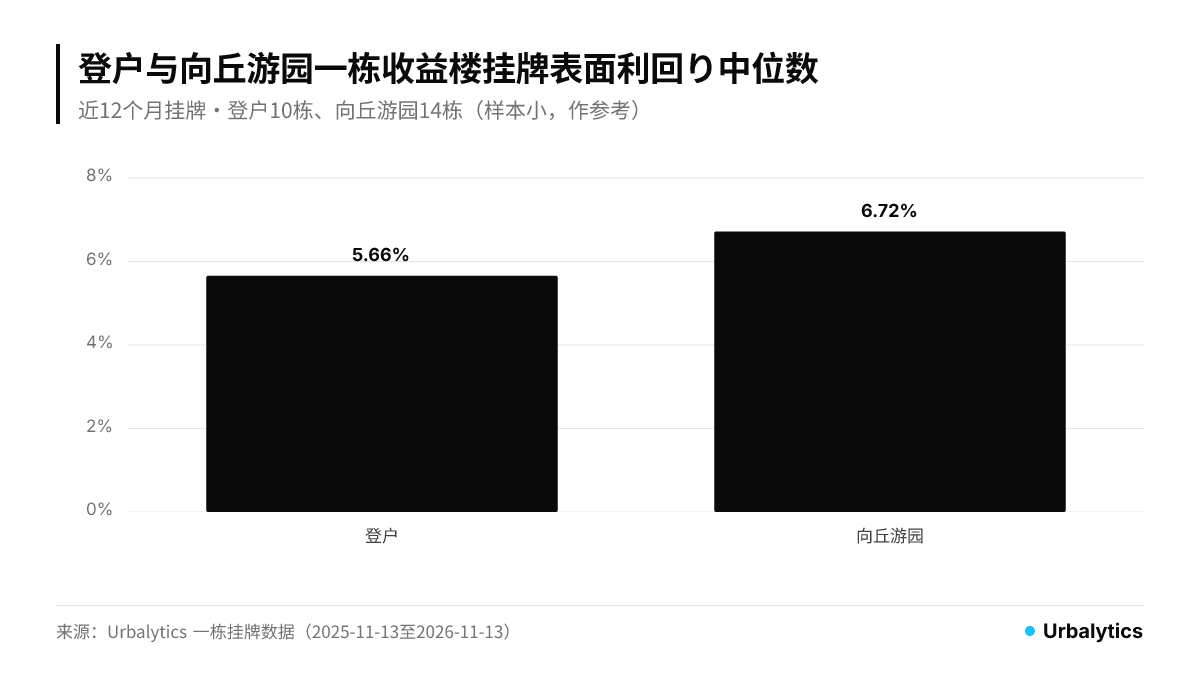
A gross yield roughly a percentage point lower implies that sellers' asking prices already incorporate the value of station-area renewal and access to both rail lines. Assuming that nearby rents will rise across the board once the tower opens would count the same expectation twice.
Urbalytics data insights
Urbalytics' Noborito Station Market Report provides monthly prices per square meter for condominium units and detached houses, alongside comparisons with nearby stations. Resale prices and rents for Branz properties elsewhere can be compared in the Branz Brand Report.
Holding or buying: assess each property segment separately
Owners of recently built 40–80 m² apartments within walking distance of Noborito will face competition after 2029 from better-equipped tower rentals serving the same station. The current asking rent of around 3,968 yen/m² is driven largely by 1LDK units in a small number of new buildings. At lease renewal or tenant turnover, model rents and vacancy periods on the assumption that tenants will compare the property directly with tower rentals, rather than extrapolating current asking rents.
Owners of older 40–80 m² apartments face less direct competition from the tower. Their asking rent of 2,602 yen/m² leaves a substantial gap below newer properties, attracting budget-conscious families. When renovating, retaining those tenants by keeping total monthly rent clearly below new-build levels may be more appropriate than pursuing new-build rents per square meter.
Investors considering a whole-building acquisition can value it using current rental income at full occupancy and actual vacancy rates, treating the tower's retail facilities and pedestrian deck as long-term support rather than grounds for an immediate price premium. At least part of the gap between Noborito's 5.66% and Mukogaoka-yuen's 6.72% reflects differences in the stations' transport roles. If comparable properties in Mukogaoka-yuen offer an extra percentage point of gross yield, compare walking distance, layouts and building age before deciding whether Noborito's premium is worth paying.
Data definitions: rents are asking base rents collected by Urbalytics, excluding management fees, not rents agreed under signed leases. Repeated listings of the same unit may each be counted. The observation period is November 13, 2025 to November 13, 2026 Whole-building yields are advertised gross yields, with cross-site duplicates and outliers removed. For the wider prefectural market, see the Kanagawa Prefecture Market Report. For analysis of how similar station-front towers relate to nearby rents, see Rental Listings After the Opening of Ogawa Station's 27-Story Tower and Omiya Sakuragi PPJ and the Gap with Nearby Rents.
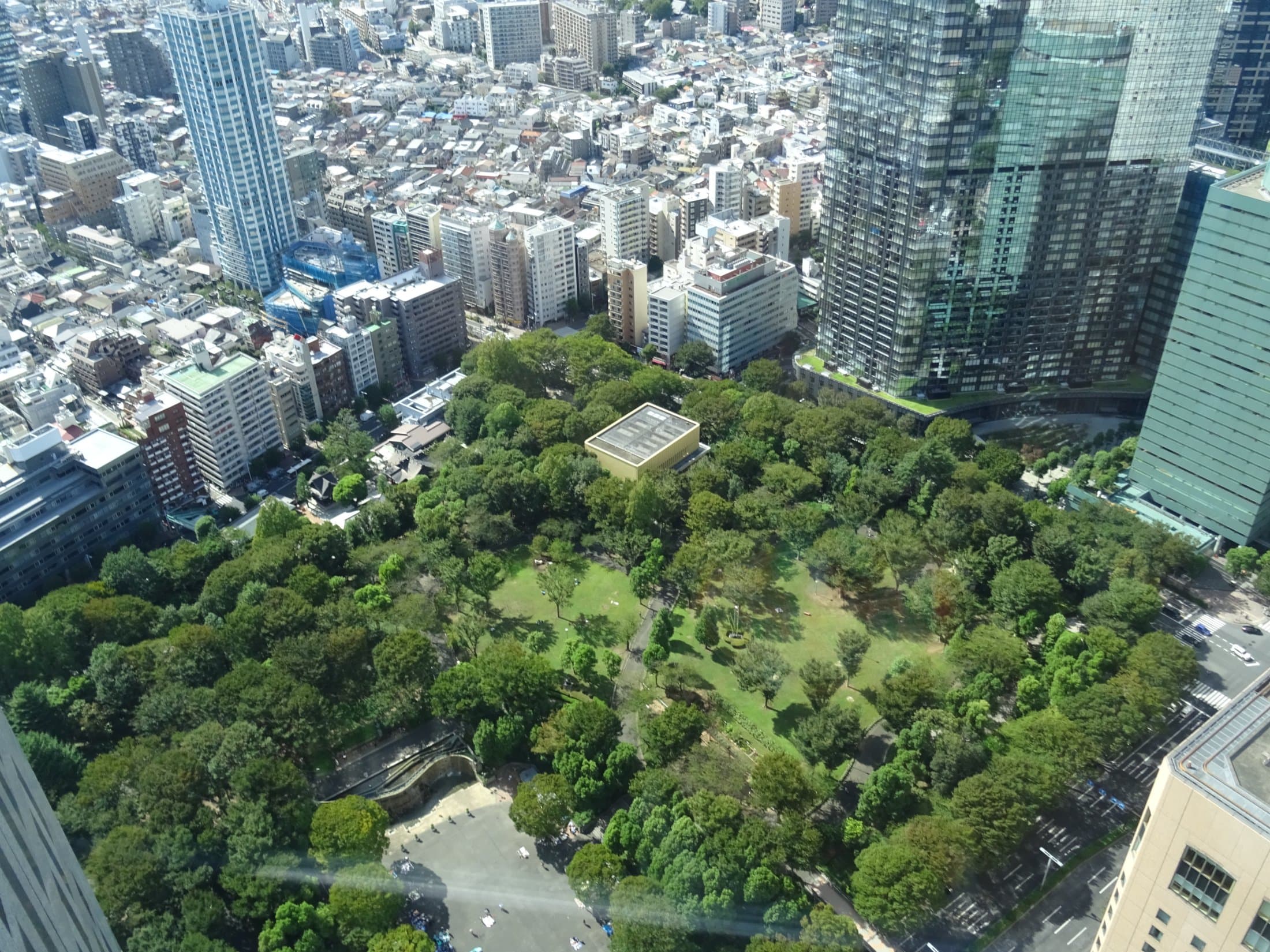
Cover image: illustrative image. Photo: Nichika Sakurai / Unsplash
#Noborito #BranzTowerNoborito #NoboritoStationRedevelopment #KawasakiTamaWard #MukogaokaYuen #OdakyuLine #JRNambuLine #StationFrontTower #RentPerSquareMeter #WholeBuildingGrossYield #KanagawaPropertyInvestment #Redevelopment #JapanRealEstate #Urbalytics
Sources
Impress Watch, 2026, “38-Story Mixed-Use Tower Outside Noborito Station: Residences Named Branz Tower Noborito” Link
Tokyu Corporation, 2026, Noborito Station Front District Type One Urban Redevelopment Project: Rights Conversion Plan Approval and Construction Start Link
Tokyu Corporation, 2026, press release PDF Link
Odakyu Real Estate, 2023, Urban Planning Decision for the Noborito Station Front District Link
Kawasaki City, 2026, Noborito Land Readjustment Project documents Link
Urbalytics, 2026, Noborito Station Market Report Link
Urbalytics, 2026, Mukogaoka-yuen Station Market Report Link
Copyright: This article is original content by the author. Please do not reproduce, copy, or quote without permission. For usage requests, please contact the author or this site.