Words: 1695 | Estimated Reading Time: 9 minutes | Views: 11
The October Flat 35 modal rate climbed to 3.83%, but what decides how much you lose isn’t the rate sheet—it’s how the loan contingency clause (ローン特約) is written in your contract.
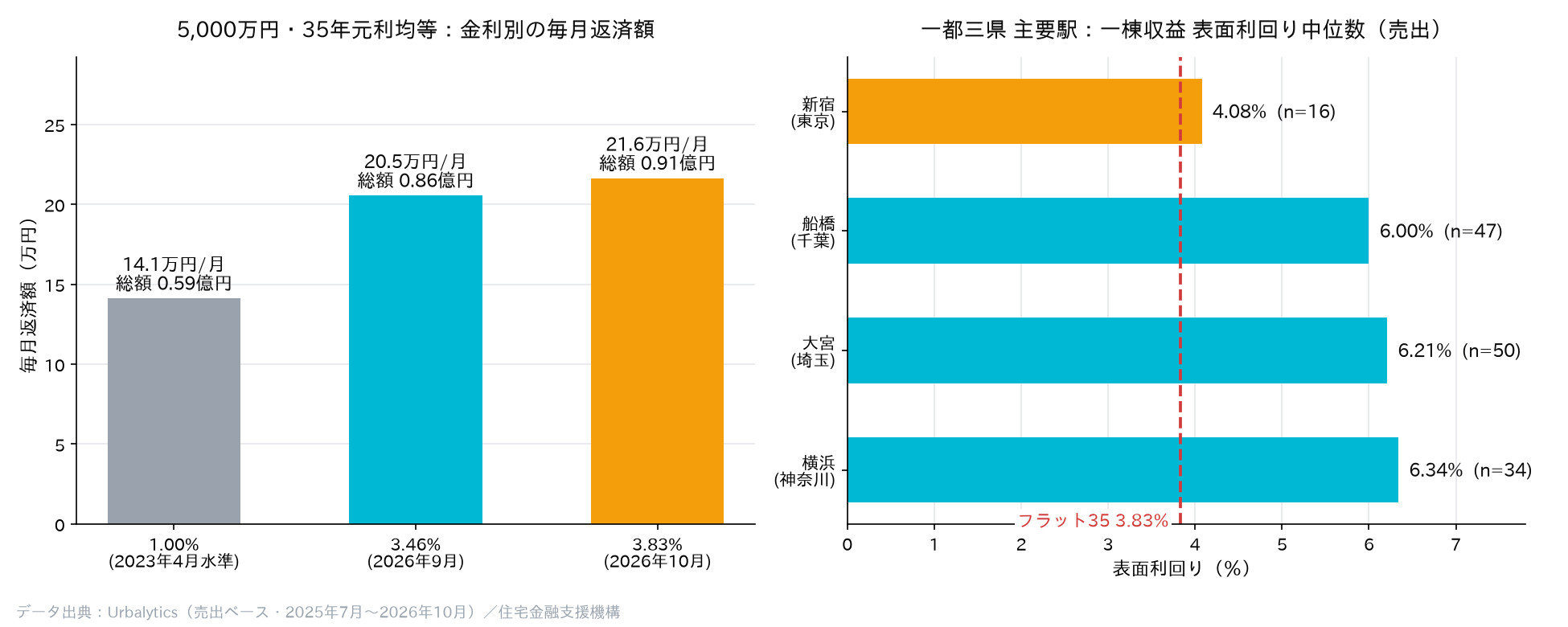
According to the Japan Housing Finance Agency, the October 2026 Flat 35 modal rate under the most common conditions—LTV at or below 90%, with the agency’s new group credit life insurance, and a repayment term of 21 to 35 years—settled at an annual 3.83%. In September it was 3.46%. One month, a 0.37 percentage-point jump.
It’s easy to gloss over the numbers—until you drop them into a real mortgage. Borrowing 50 million yen over 35 years on a level-payment schedule, someone who signed in September would pay about 205,000 yen per month; signing in October pushes that to roughly 216,000 yen—about 10,800 yen more every month, or an extra about 4.55 million yen over 35 years. Rebase to April 2023, when rates were just over 1%, and the same loan’s total repayment would differ by around 31.57 million yen—nearly half a starter home in greater Tokyo.
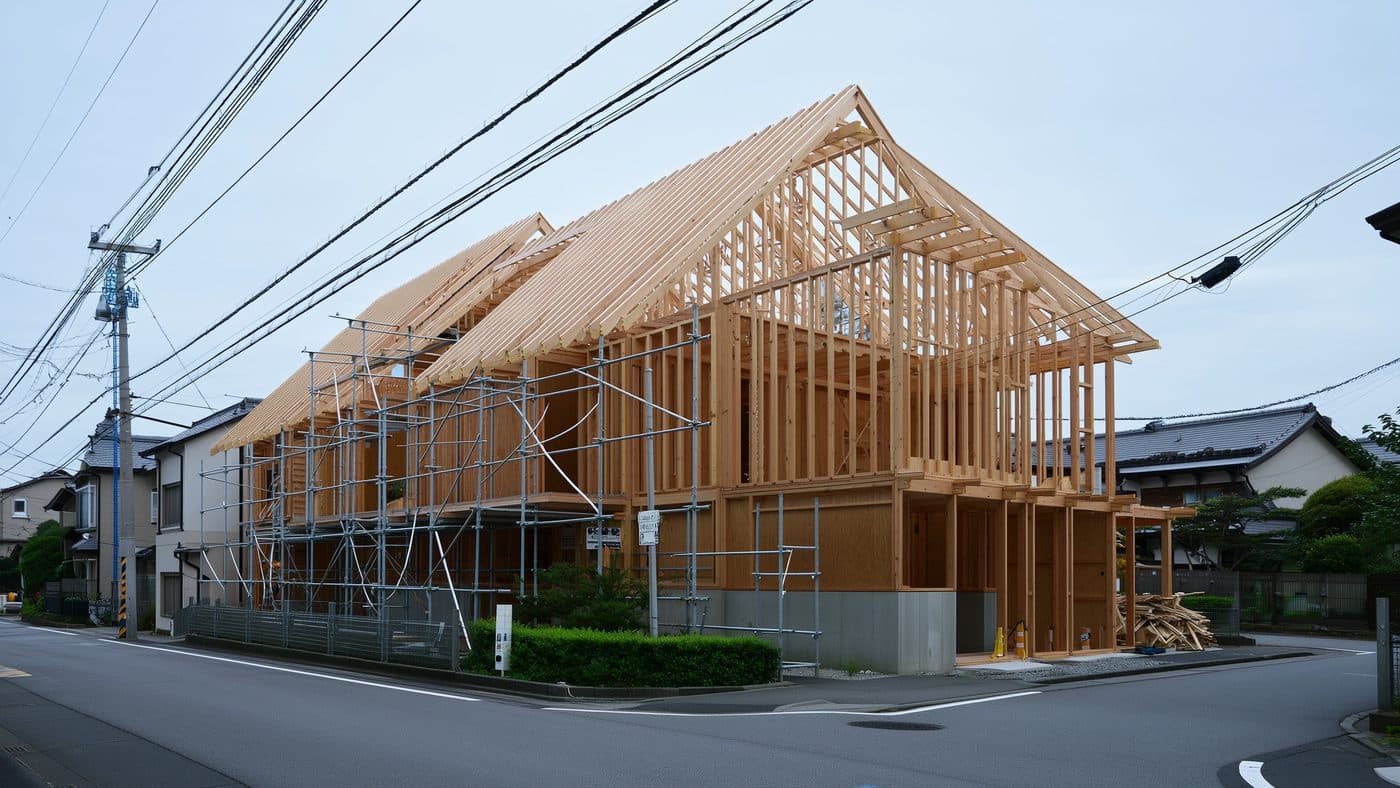
The harder part is that you don’t close on the day rates are announced. Especially with custom-built detached homes (注文住宅), months can pass between finding land, signing the land sale contract, signing the building construction contract, and the bank’s actual disbursement. The monthly payment you calculated at signing may no longer be the number when funds are released. A very practical question follows: if you’ve already signed, can you back out?
Market sentiment: half are waiting, the other half are rushing
Newly released figures from Zentaku (the National Federation of Real Estate Transaction Associations) and Zentaku Guarantee in the 2026 Housing and Residential White Paper (surveyed July 30–August 5, 2026; 5,000 men and women aged 20–65) quantify this split. Those saying “now is not the time to buy” reached 37.7%, up 3.0 points year over year; those saying “it is the time to buy” also rose, to 21.6%, up 0.8 points. Both ends expanded, while the undecided middle shrank.
More interesting are the top reasons. Among skeptics, 47.2% cited “prices have become excessive.” Among optimists, a striking 64.4% chose “mortgage rates will continue to rise.” The same fact—rising rates—reads as “I can’t afford it” to one half and “buy now before it gets worse” to the other.
Behavioral change is modest overall: 55.8% reported “no change.” But the remaining four-tenths took concrete steps—8.6% delayed or abandoned purchase, 8.1% cut loan size and budget, 7.0% switched areas, another 7.0% began shifting from variable to fixed rates, and 6.1% started comparing multiple lenders.
For Chinese buyers in particular, note this: the mainstream response among domestic Japanese buyers is not to exit, but to adjust terms and keep buying. In other words, competition hasn’t disappeared—it has changed tactics.
“Approved at a higher rate” and “not approved” are legally different
Attorney 田上嘉一 made this clear in an October 6 analysis: rising mortgage rates do not automatically allow rescission of a signed land or home sale contract.
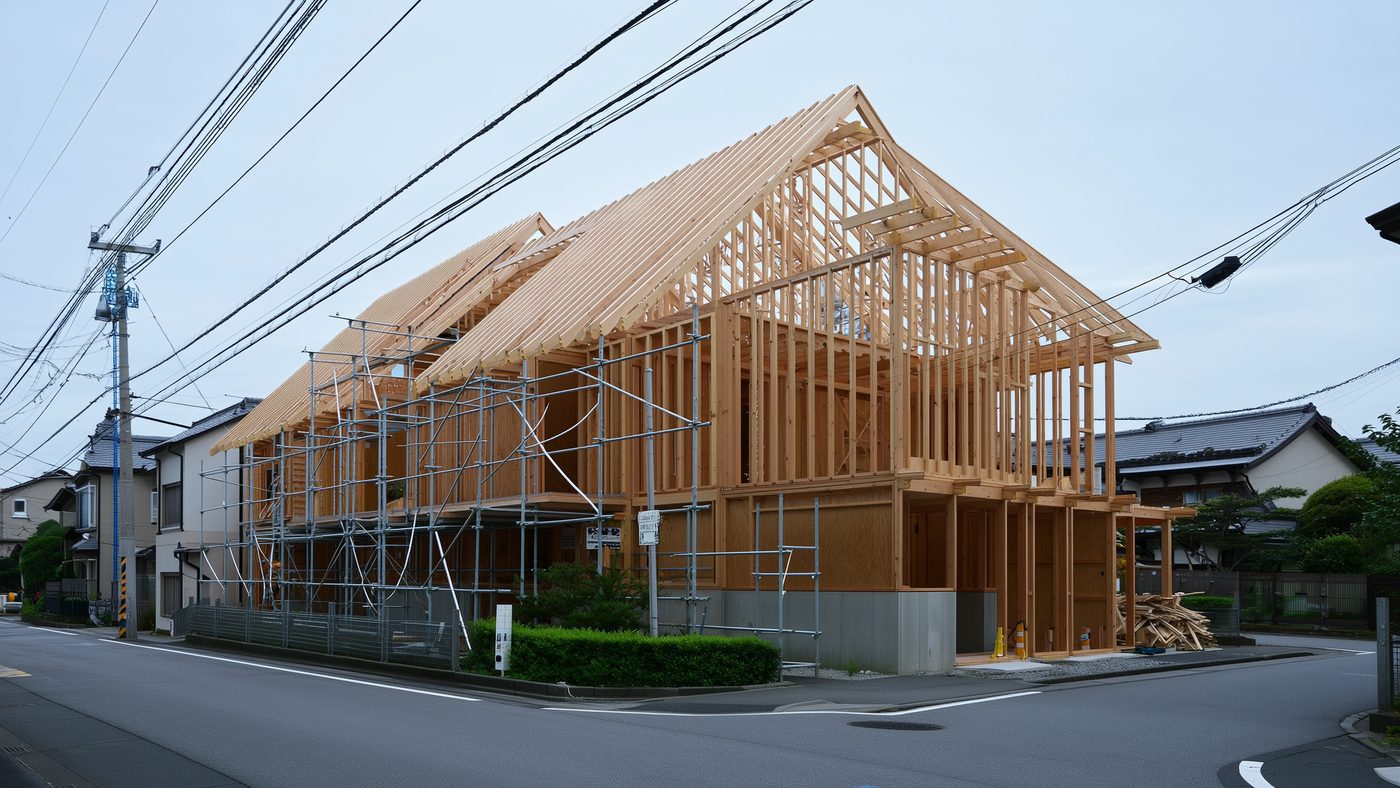
Real estate sale contracts in Japan typically include a “loan contingency” clause (ローン特約). The Real Estate Transaction Improvement Organization (RETIO) explains it this way: if all or part of the planned financing is not approved, the buyer may void the sales contract ab initio or exercise a right to rescind. In short, it protects the outcome of “funding was not obtained.”
Here’s the rub:
“Applied for 50 million yen; the bank approved only 40 million.” This is partial denial of financing and can fall within the scope of the loan contingency, giving the buyer a path to walk away without breach.
“Got the full 50 million approved, but the rate rose from the expected 1% to 3%, making the monthly payment untenable.” As a rule, this does not constitute grounds to invoke the loan contingency. The money was approved, the contract remains valid, and the pain from the rate change is borne by the buyer.
So the real focus isn’t whether the words “ローン特約” appear, but three concrete parameters: which financial institution you will apply to, the application amount, and the deadline by which approval must be obtained. The fuzzier these are, the less protection the clause offers when it matters.
Land and building are two separate contracts: the breakpoint most often missed
Custom-built homes (注文住宅) have a structural trap many overseas buyers don’t anticipate.
In Japan, buying land and building a house are usually governed by two legally independent contracts: a land sale contract with the landowner, and a construction contract with the builder. Buyers think of them as one project—“I’m building my house on this lot”—but legally they do not automatically move in lockstep.
The consequence: even if the land-side loan contingency triggers and the land contract is voided, the building construction contract does not automatically lapse. If only the land contract includes a loan contingency, you can end up “returning the land” while still being bound to the builder.
The Civil Code does give the commissioning party an out: before completion, you may terminate by compensating the contractor for resulting losses. But “may terminate” is not the same as “void at no cost.” If design is done, building confirmation filed, or materials ordered, those costs—and the contractor’s damages—will be on the table.
The practical fix isn’t complicated, but you must raise it before signing:
First, write cross-default explicitly into both contracts—if either is terminated due to loan failure, the other may be terminated as well.
Second, make sure the deadlines in the loan contingency align across both land and building contracts. If the land-side contingency expires end-October and the building-side end-December, that gap is naked exposure where only one side may be cancelable.
Urbalytics data: Mortgage rates have caught up with core-city one-building gross yields
Rate pressure isn’t only on owner-occupiers. On the investment side, the numbers are even starker.
Urbalytics’ sales stats for one-building income properties around major stations in Tokyo and the three surrounding prefectures (July 2025–October 2026) show a clear concentric pattern in median gross yields: Yokohama Station at 6.34% (n=34), Ōmiya at 6.21% (n=50), Funabashi at 6.00% (n=47), while Shinjuku is just 4.08% (n=16; small sample, reference only). Narrow to the Nishi-Shinjuku postal area and the median drops further to 3.80% (n=19; reference only).
Draw the Flat 35 line at 3.83% and the picture turns stark: in the urban core, median gross yields on one-building assets are now in the same ballpark as the coupon on a plain-vanilla owner-occupied fixed mortgage.
Urbalytics Insight Owner-occupied mortgages can’t be used for investment property, and investment loans typically carry higher rates, so this isn’t a direct arbitrage formula. But it does show that in cores like Shinjuku, the safety buffer in valuations once supported by ultra-low rates is being eaten away. By contrast, the 6% band in Yokohama, Ōmiya, and Funabashi still leaves genuine spread to work with at this stage.
In the same dataset, the median asking rent for condominiums in the Nishi-Shinjuku postal area is 149,000 yen per month, with a median unit rent of 5,110 yen per square meter. Rent growth is far lagging the jump in rates—exactly the arithmetic behind “asking prices are rising, but deals are stalling.”
Before you sign, ask these four questions
Jiji Press noted on October 7 a growing response: ultra-long-term mortgages. Products with terms up to 40 or even 50 years began with the JHF’s “Flat 50” in 2009 and have spread to online and regional banks. They do lower the monthly payment, but at the cost of repaying potentially past age 70 and inflating total interest. The Financial Services Agency has said it will step up oversight to check for lending beyond borrowers’ capacity.
Extending the term to offset rising rates is essentially pushing the problem to your future self. For non-residents and foreign buyers, the path is narrower anyway—age, residency status, and income documentation are scrutinized more strictly.
A more reliable approach is to lock terms at the moment of signing:
First, confirm which lender is specified in the loan contingency, the loan amount to be applied for, and the approval deadline—the trio is non-negotiable.
Second, if it’s a custom build, confirm that the land and building contracts include cross-termination and that their contingency deadlines are aligned.
Third, confirm how “insufficient approval amount” will be handled—what approval percentage triggers the clause, and whether rescission is full or adjusted pro rata.
Fourth, run a rate stress test between pre-approval (事前審査) and final funding: if rates rise another 0.5 percentage points, do your monthly payment and household cash flow still hold?
The rate environment will keep moving—no one controls that variable. But contract terms are negotiable before you sign, and they determine whether a rate shift costs you several million yen in default penalties or becomes a “glad we wrote that in.” Before wiring your earnest money, use Urbalytics’ area yield and rent benchmark tools to compare real local numbers with the assumptions in your contract—the gaps are often your negotiation starting points.
Note: Illustrative images in this article were generated by AI.
#JapanRealEstate #Mortgage #Flat35 #RisingRates #LoanContingency #CustomBuiltHome #BuyingInTokyo #TokyoMetroArea #GrossYield #RealEstateContracts #ForeignBuyers #MortgageRates #JapanPropertyInvestment #Urbalytics
References
- 田上嘉一, “If mortgage rates rise, can you cancel the contract? The loan contingency to watch in custom homebuilding,” Yahoo! News Expert, October 6, 2026, https://news.yahoo.co.jp/expert/articles/e828c9ab4825e1c2cfc45762d96fce6ef1027645
- Jiji Press, “Newsword: Ultra-long-term mortgages,” Yahoo! News, October 7, 2026, https://news.yahoo.co.jp/articles/9179d81c8c76b33c5ceac0adaca53e4ef0d3af45
- SUUMO Journal(山本久美子), “Over half of people in their 20s use generative AI to search for homes—how is purchase intent changing as rates rise?”, Yahoo! News, October 7, 2026, https://news.yahoo.co.jp/articles/7dcce0b7cd9d4a3eb46c2e7369809c152b1b3f25
- 全国宅地建物取引業協会連合会・全国宅地建物取引業保証協会, “2026 Housing and Residential White Paper,” 2026, https://www.zentaku.or.jp/
- Japan Housing Finance Agency, “Flat 35 | Interest rate trends,” 2026, https://www.flat35.com/kinri/index.php
- Real Estate Transaction Improvement Organization (RETIO), “Explanation of loan contingency clauses,” https://www.retio.or.jp/
- Urbalytics internal platform data (building_cap_rate_stats / rent_stats, retrieved October 7, 2026), https://www.urbalytics.jp/
Copyright: This article is original content by the author. Please do not reproduce, copy, or quote without permission. For usage requests, please contact the author or this site.