Words: 1425 | Estimated Reading Time: 8 minutes | Views: 24
By Li | 20 Oct 2026
Discounted rents for young residents can support neighborly interaction, but whether a rental building can operate sustainably still depends on who bears the cost of ongoing services.
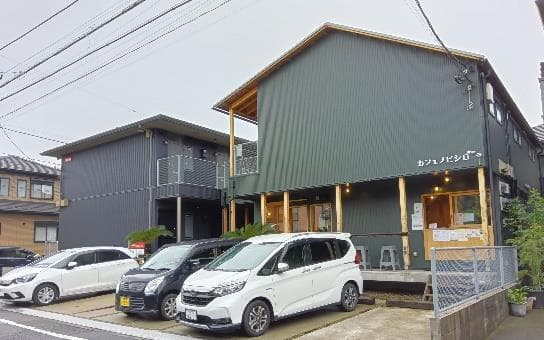
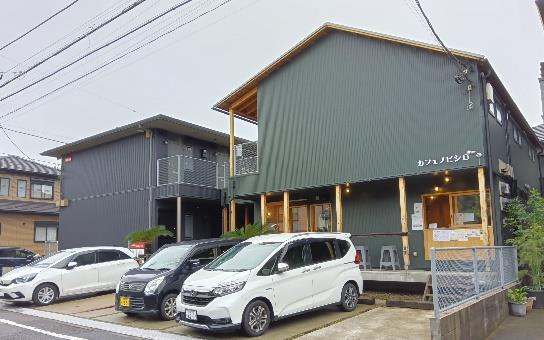
On October 20, TBS reported on operations at "Nobishiro House Kameino" in Fujisawa, Kanagawa Prefecture. Young and older residents live in the same rental property, with young residents participating in day-to-day interactions in exchange for reduced rent. According to the report, the property was fully occupied at the time—giving the discussion of demand from older renters a concrete operating case to observe.
For typical rental-building owners, the point worth studying is how rent and services support each other. Even if young tenants pay less, someone still needs to organize activities, facilitate communication, and connect residents to professional resources as needs change. Full occupancy signals demand; net returns require separate math.
Beyond the room: What way of living are residents buying?
The project has been operating since 2021. In the TBS report, young tenants greet older neighbors about twice a week and organize a monthly tea gathering. Private rooms preserve solitude, while communal activities offer opportunities to meet neighbors proactively. The need it addresses is more specific than simply finding a low-price unit.
An independent SUUMO Journal interview this month adds a critical boundary: young tenants take on a neighborly engagement role, and the operator explicitly distinguishes this from professional well-being/safety checks. If families assume discounted tenants are on-call caregivers, expectations will diverge from the actual arrangement.
Therefore, the living proposition must be explicit at leasing. People who prefer quiet solitude and those willing to participate in regular activities may rate the same unit very differently. In our Kiyose and Nagareyama tenant-positioning analysis, we discussed identifying demand first and then deciding whom to recruit; intergenerational living extends this to daily interaction styles.

Half-price rent is a visible operating investment
In meeting materials released in September 2025, the operator listed monthly rent of 70,000 yen for older residents and 35,000 yen for young residents who take on a community role. MLIT research materials from the same year recorded the same prices. These explain the historical arrangement but are not necessarily today’s asking rents.
If we use those historical figures for an arithmetic illustration only, a youth unit collects 35,000 yen less per month than 70,000 yen—a gap of 420,000 yen annually. This indicates the rent-discount gap is not an already realized cash loss. Whether the unit could have rented for 70,000 yen in the first place requires separate verification.
Owners and operators should place this difference back into the full contract: who bears the concession, who pays personnel costs for organizing interactions, and which party covers costs generated by common spaces. Identical tenant-facing prices can correspond to very different net receipts for the owner.
If management changes in the future while the discount remains but interactions cease, the income transfer has lost its purpose. Replicable arrangements should have ongoing recruitment and handover mechanisms and not rely entirely on a single enthusiastic tenant.
What benchmarks do standard small-unit rents provide?
To gauge the conventional market facing young tenants locally, we queried Urbalytics’ sample around Mutsuai-Nichidai-mae Station. Within a 15-minute walk, for listings of 20–40㎡, we found 18 valid records, with a median monthly base rent of 62,750 yen.
The same sample’s lower quartile was 51,250 yen/month and upper quartile 63,750 yen/month. These figures describe base rents in this specific filter only, helping operators understand nearby price options available to young tenants.
You cannot simply subtract the project’s historical youth rent from 62,750 yen to claim monthly savings. The sample units and project rooms were not matched one by one, and listing times differ. Proper comparison must go down to specific rooms, laying out interaction commitments and other costs together.
Young residents may take on a community role not just for a discount. Whether they accept the interaction model and can align schedules will affect length of stay. For how small units serve youth demand, see the Hachioji student rental analysis; community roles need extra matching, and proximity to a university alone does not guarantee stable supply.
Another independent query found 11 income buildings for sale within a 15-minute walk of the station, with listed gross-yield lower quartile at 5.527%, median at 6.6%, and upper quartile at 6.686%. This addresses the ratio of listed annual income to asking price in nearby sale offerings.
For owners holding rental buildings, these figures are a starting point for comparing operating options: if an operator proposes a gross yield similar to conventional rentals, they should also specify who bears the additional costs of community operations. Gross yield excludes vacancy, repairs, taxes, and personnel costs; it does not represent the owner’s net cash flow, nor does it establish that this project achieves 6.6%.
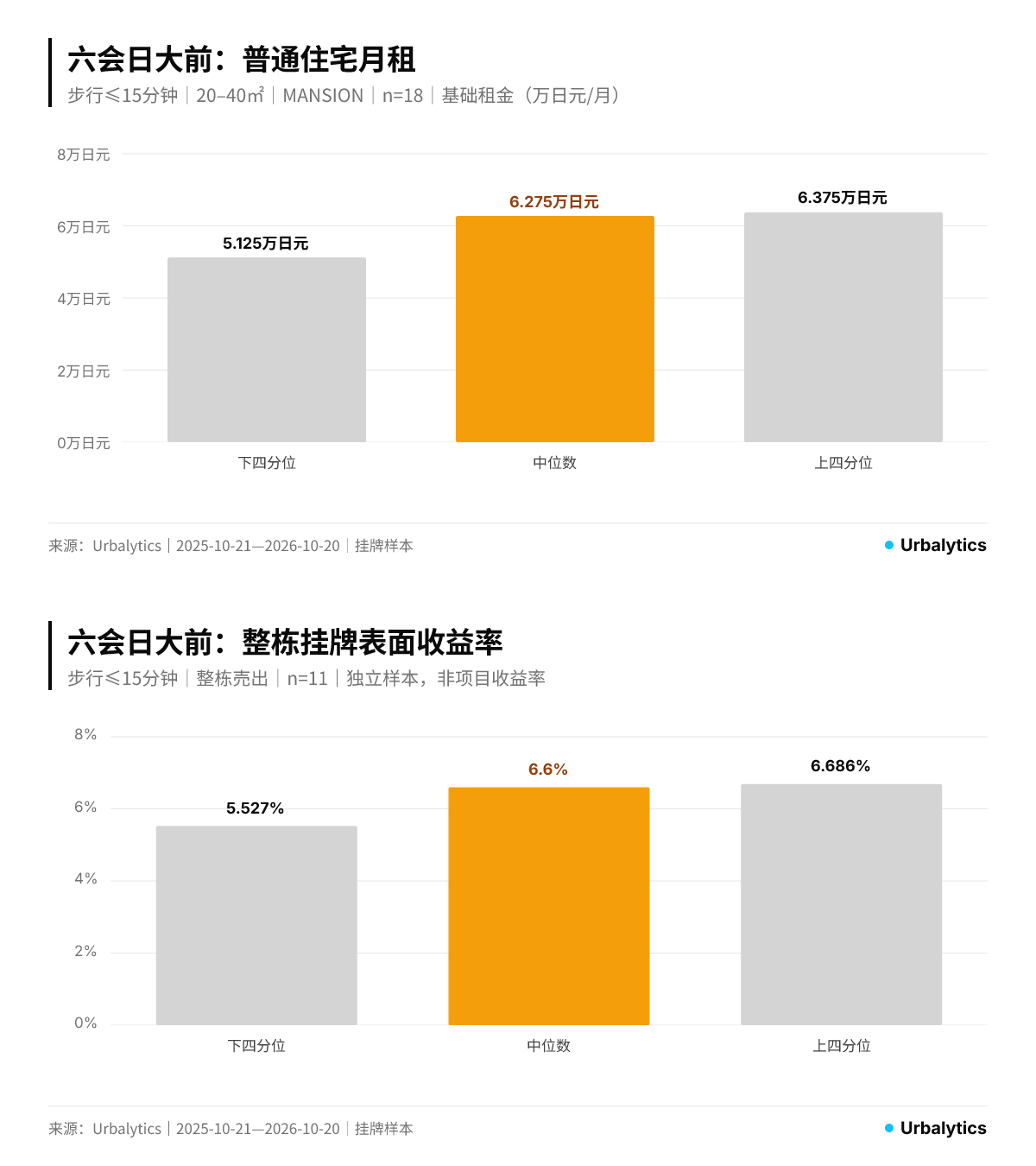
Data notes: Query window is UTC first-observation date 2025-10-21 to 2026-10-20; residential MANSION category, LISTED status, base-rent basis. Records are currently stored listing values, not contracted rents, nor the rent trajectory for the same unit. The 18 rent records and 11 buildings are small-sample references. Whole-building sample includes properties with a listing or price-change record in-window; 13 raw records deduplicated to remove 2; closed transactions and undisclosed valuations excluded. Annual income uses listed values; whether on a full-occupancy assumption or as-is basis varies by source. The rent management-fee and total fields show unit inconsistencies and are not used here. Prefecture-level public-entry point: Kanagawa market report.
Separate community work from property ownership responsibilities
MLIT’s survey of this project shows the property owner leases to the operator, who then contracts with residents. The survey also records guaranty and equipment arrangements, as well as matters such as lease termination and disposal of remaining items. Beyond daily interactions, there is still formal property management.
For owners, this means evaluating both the property contract and the operating plan. Whether residents’ services can be sustained depends on the operator’s staffing and collaboration resources; the owner’s cash flow depends on their own collection and cost terms.
When discussing collaboration pricing, ask the counterparty to assign responsibilities to actual tasks: who maintains contact when a young tenant is temporarily away; who mediates when activities cause disagreement; who engages agencies when residents need professional support. This clarifies management roles—do not treat neighborly goodwill as a 24/7 service commitment.
Common spaces also require separate accounting. They facilitate encounters, but area and day-to-day operations cost money. When replicating the model, do not count only the added rental rooms while ignoring how the interaction space will be run.
The next document should be a reconcilable operating statement
The Fujisawa case demonstrates a demand: some people will pay for arrangements that preserve independent living while enabling neighborly interaction. Whether it suits a given building depends on unit conditions and actual management capacity.
Our cross-check also found discrepancies in public materials on unit counts and rents: TBS cites 7 units, while MLIT and operator materials cite 8. Materials from 2025 show older residents’ monthly rent at 70,000 yen, while SUUMO in October this year cites 80,000 yen; fee composition and applicable dates remain unverified. We do not interpret the difference as a rent hike, nor do we patch together whole-building income from disparate sources.
Owners in Fujisawa evaluating similar partnerships should first request current room-by-room pricing with a fee breakdown from the operator, then ask for the owner’s actual collections schedule. Itemize the youth discount, common-space expenses, and day-to-day staffing inputs separately to judge whether the community model can continue under the next tenant cohort and the next manager.
Tags
#Japan intergenerational housing #Fujisawa City #Kanagawa real estate #Mutsuai-Nichidai-mae #multi-generational housing #rental building operations #senior tenants #youth rentals #rent analysis #property management #community operations #Urbalytics
References
TBS NEWS DIG/Yahoo, 2026-10-20, Same-day report and three-page main text.
Policy Research Institute, MLIT, 2025-06-04, Study on multi-generational co-living communities, p.14.
Nobishiro Co., Ltd., 2025-09-16, Cabinet Office meeting materials, p.7.
SUUMO Journal, 2026-10-02, Interview on Nobishiro House operations.
Copyright: This article is original content by the author. Please do not reproduce, copy, or quote without permission. For usage requests, please contact the author or this site.