Words: 1499 | Estimated Reading Time: 8 minutes | Views: 48
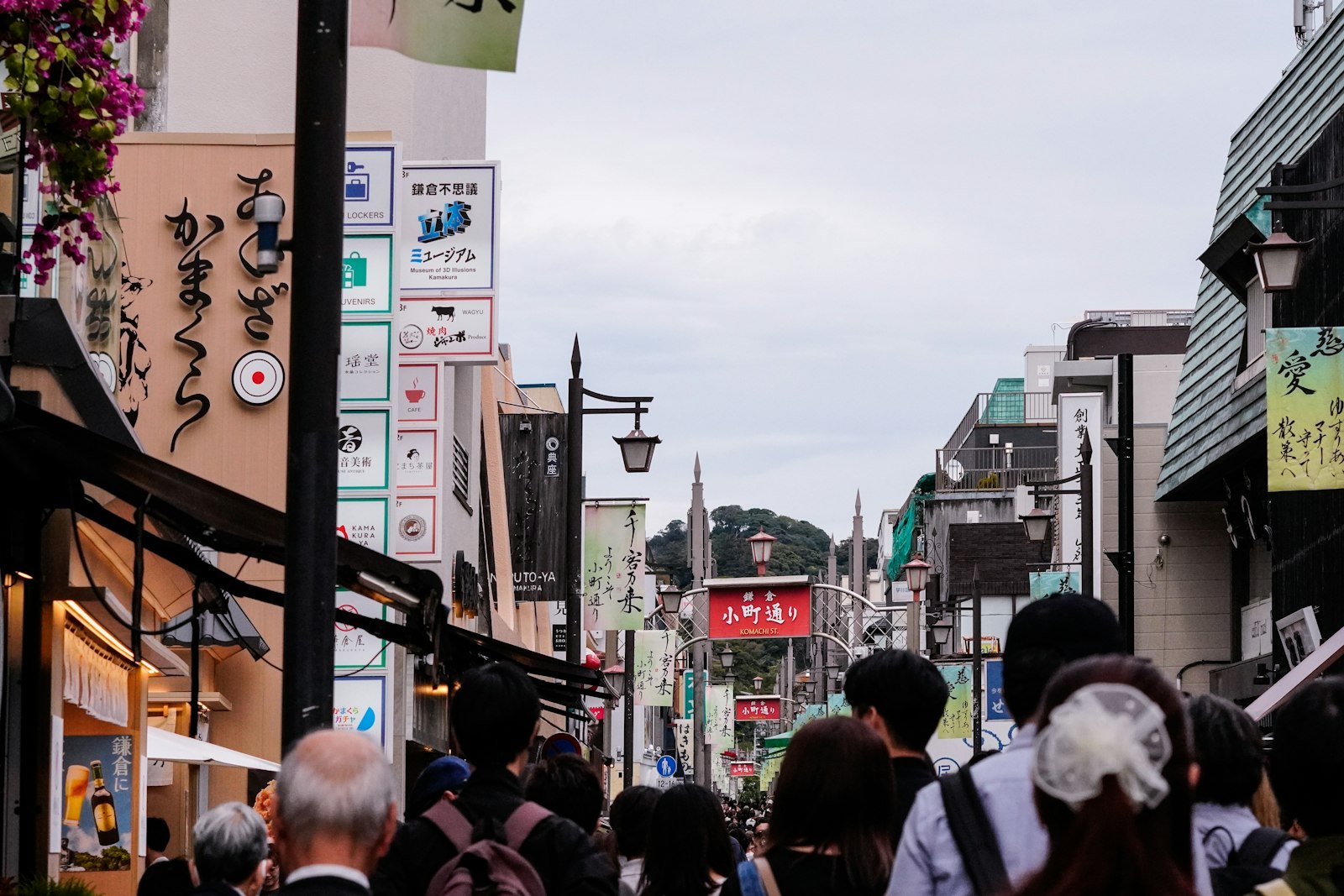
Komachi-dori near Kamakura Station. Photo: KJ Gonzales / Unsplash
Summary: Phase 2 of Kamakura’s Historic Character Preservation and Enhancement Plan has received national certification, expanding the priority area to approximately 1,776 hectares. For investors, however, the plan changes not what can be built, but alteration procedures for a small number of buildings, land use along a stretch of prefectural road in Kita-Kamakura, and visitor routes. Urbalytics listing data show that asking rents per square meter in the historic core are only about 6% higher than in Ofuna, while gross yields on whole-building properties are about two percentage points lower.
What was certified: a larger priority area, not new building restrictions
On September 30, 2026, the relevant national ministers certified Kamakura’s Historic Character Preservation and Enhancement Plan (Phase 2) under the Historic Town Development Act. The plan runs for fiscal years 2026–2035, and the priority area has been renamed the “Historic Kamakura Area,” covering approximately 1,776 hectares. According to Kenbiya, the Phase 1 priority area covered approximately 1,554 hectares, making this an expansion of about 222 hectares.
City documents state that the newly included areas encompass Kamakurayama and neighborhoods along the Enoden railway. The plan lists 37 projects, covering the preservation and reuse of historic buildings, streetscape improvements, conservation of the natural environment, and public access to cultural properties. Some continue measures from Phase 1; they are not all new construction projects.
One point needs clarification: inclusion in the priority area does not itself change land-use zoning, floor-area ratios, or height limits. Kamakura is already subject to overlapping controls under the Ancient Capitals Preservation Act, scenic district designations, and landscape regulations. Phase 2 organizes subsidies and projects within those existing frameworks rather than adding a new zoning map. Investors who own property or are considering a purchase should check the following three mechanisms.
Which properties are affected: three specific mechanisms
First: buildings designated as contributing to historic character
The city may designate buildings within the priority area that are particularly important to its historic character as “buildings contributing to historic character.” Phase 2 also includes privately owned buildings and gardens as potential candidates. The candidate list includes Yuasa Bussankan and Mikawaya Honten in Yukinoshita 1-chome, and Koga Residence in Ogigayatsu 1-chome.
Designation brings both benefits and obligations. Repairs and work to preserve the historic appearance can receive support, and the city’s owner–operator matching program connects owners with businesses seeking to use these buildings. On the other hand, extensions, alterations, relocation, and demolition all require advance notification, and owners must also maintain the property properly. Such designations substantially reduce flexibility for an investment strategy based on demolition and redevelopment to use more of the permitted floor area. For owners seeking to convert an old building into a shop or restaurant, however, designation and the matching program may provide a source of tenants.
Second: approximately 500 meters along Prefectural Route 21 in Kita-Kamakura
The plan’s most specific streetscape project involves pedestrian improvements along Prefectural Route 21 near JR Kita-Kamakura Station, from the Third Kamakura Road railway crossing to the entrance of Kencho-ji Temple, covering approximately 500 meters. With no continuous sidewalk of sufficient width at present, the policy is to secure pedestrian space on the privately owned land alongside the road.
This project was included in Phase 1 but was not implemented during that period. Phase 2 has reset the completion target to fiscal 2035. In other words, the schedule remains uncertain. Owners of roadside plots may eventually face land-use negotiations, while improved pedestrian access could also benefit shops along the route. Both effects must await more detailed project plans before they can be assessed; neither should be factored into valuations yet.
Third: dispersing visitors and addressing overtourism
The plan also includes walking-route improvements, visitor information facilities, crowding information displays, and adjustments to visitor routes. If visitors explore a wider area, shops and restaurants away from the main attractions may benefit. For housing, easing congestion on the busiest streets is more likely to improve living conditions than directly raise rents. The newly included Enoden corridor and Kamakurayama neighborhoods have likewise simply become eligible for area-wide measures; there is currently no quantifiable change in demand.
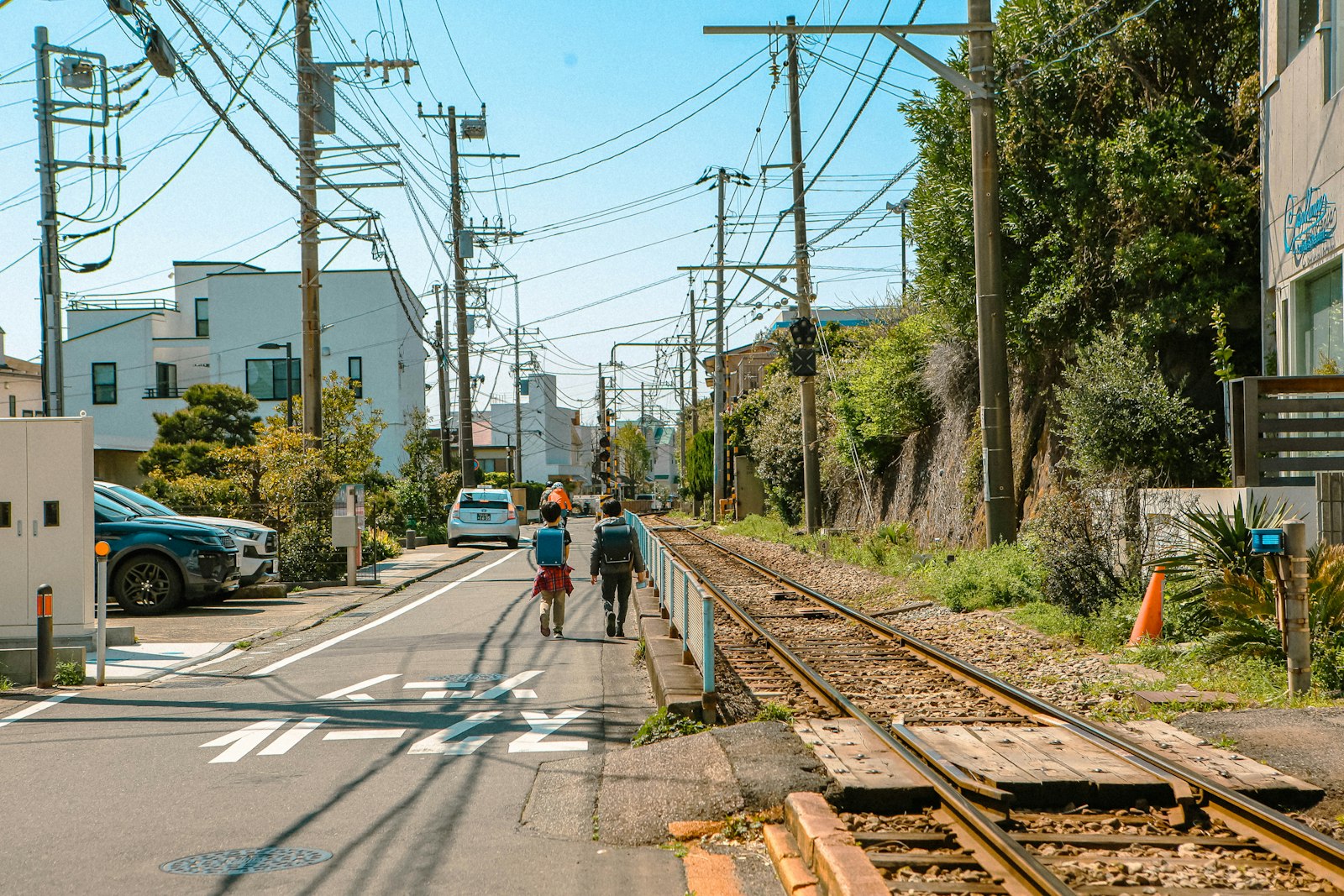
Neighborhoods along the Enoden railway have been added to the priority area. Photo: HANVIN CHEONG / Unsplash
Market evidence: the historic-city premium is in prices, not rents
Since the plan itself does not directly create a driver of rent growth, the next question is how current rents and yields in the historic core compare with those around commuter-oriented Ofuna Station, also within Kamakura. We compared two samples using Urbalytics asking-rent and whole-building gross-yield statistics.
For homes of 20–80 m² around the five historic-area stations—Kamakura, Kita-Kamakura, Hase, Yuigahama, and Wadazuka—the median asking rent per square meter was JPY 2,985 per m² (across 168 listings). The equivalent figure around Ofuna Station was JPY 2,809 per m² (across 109 listings). The premium for the five historic-area stations was only about 6%.
Whole-building investment properties present a different picture. The median gross yield for properties listed around Kamakura Station over the past year was 5.01%, although the sample comprised only 4 listings and should be treated as indicative only. Around Ofuna Station, the median was 7.01% (across 18 listings). If asking rents per square meter are similar but gross yields are about two percentage points lower, the premium buyers pay for the historic core primarily reflects scarcity and its residential reputation, rather than higher rental income.
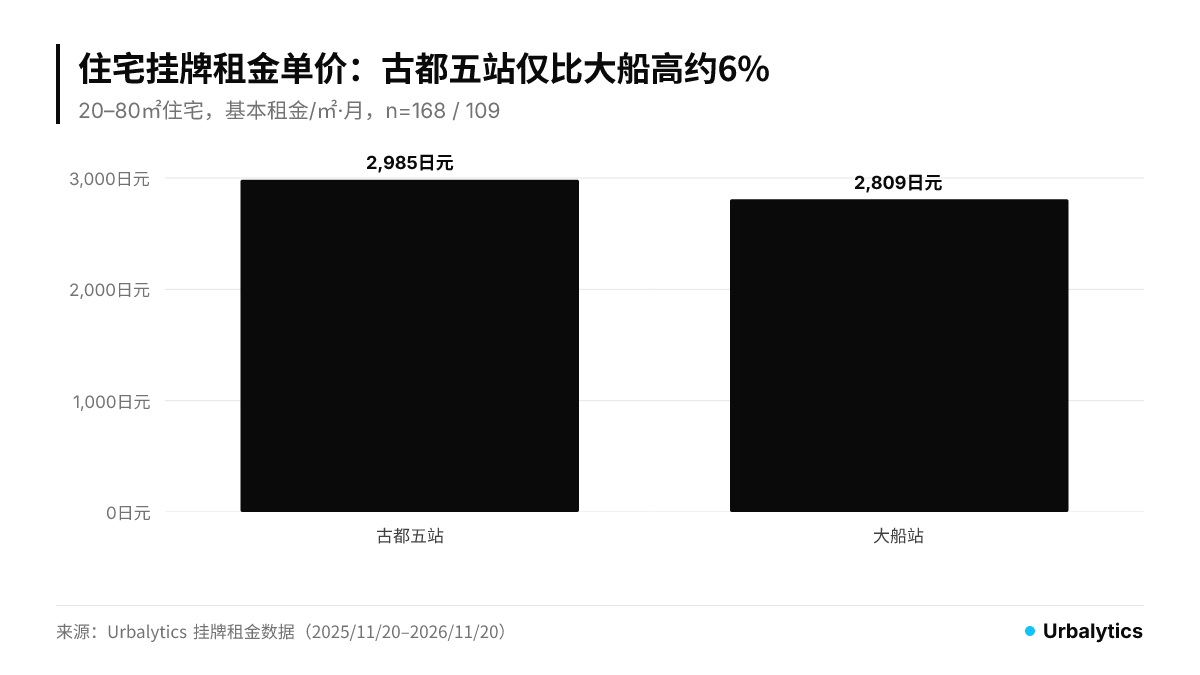
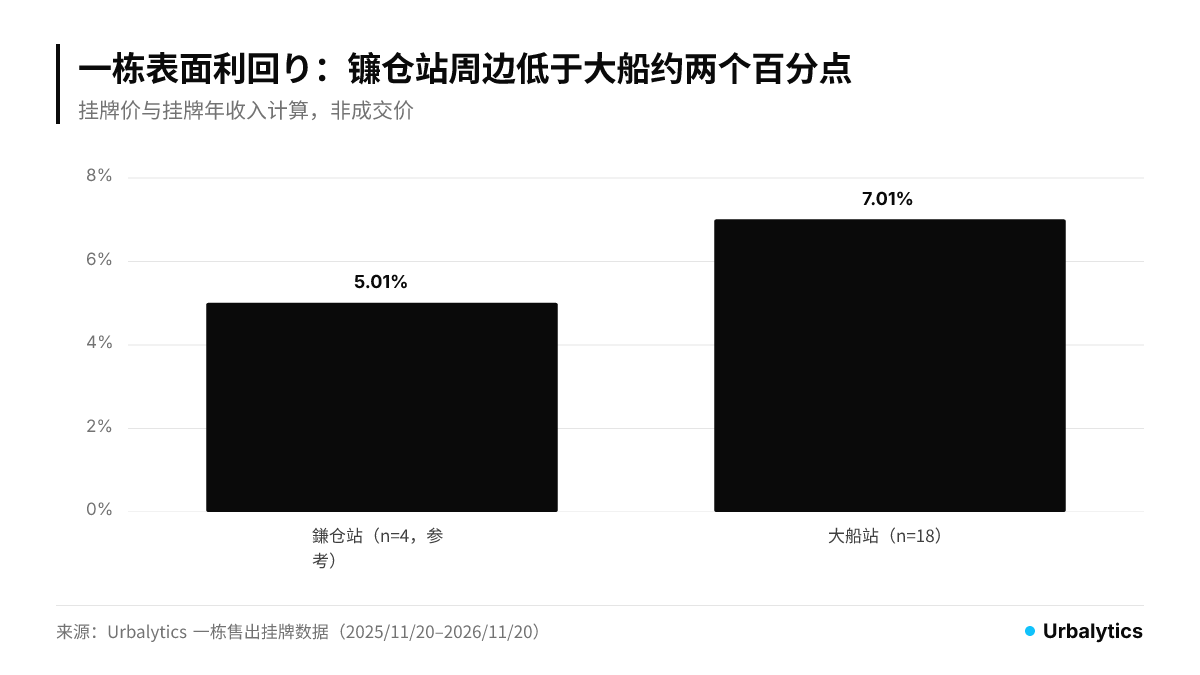
Methodology: residential figures use asking base rents, excluding management fees, for homes of 20–80 m² first observed between November 20, 2025 and November 20, 2026, not achieved rents. The five historic-area stations account for 168 listings, and Ofuna for 109. Whole-building gross yields are calculated from asking prices and advertised annual income over the same period. Whether that income assumes full occupancy or reflects current occupancy depends on the listing provider. There are 4 listings around Kamakura Station and 18 around Ofuna. The Kamakura sample is so small that a single property can materially change the median. The two areas also differ in their mix of building ages and sizes. This is a cross-sectional comparison and cannot be interpreted as an effect of the plan.
These figures are consistent with the plan’s focus on preservation, pedestrian conditions, and visitor management, rather than additional housing supply or better commuting access. Prices in the historic core are supported by constrained supply, and those constraints will remain in place after Phase 2, rather than being relaxed.
Implications for valuation and property operations
Investors considering a purchase in the Historic Kamakura Area should base valuations on existing rents. Buying at a gross yield of around 5% leaves little room to price in plan-driven rent growth; returns depend primarily on price stability and lower vacancy risk associated with scarcity. Investors seeking higher cash returns may find a yield advantage in Ofuna, within the same city, but must also account for its different demand profile.
Before buying in the core area, make three specific checks: whether the building is a candidate for, or already holds, historic-character designation, which affects flexibility for future alterations and demolition; whether the plot lies within the improvement section of Prefectural Route 21 in Kita-Kamakura, in which case the project’s progress should be checked with the city; and whether the owner–operator matching program could help secure a retail or restaurant tenant for an older building, turning preservation obligations into operating income.
For owners in the newly included Kamakurayama and Enoden corridor areas, no valuation assumptions currently require immediate adjustment. What matters is tracking which projects are implemented by fiscal 2035, particularly whether Kita-Kamakura’s pedestrian improvements move into design and land negotiations. Changes in the city’s asking prices and gross yields can be monitored through Urbalytics’ Kamakura City Market Report and Kamakura City Whole-Building Property Report.
Related reading
References
Kamakura City: Historic Character Preservation and Enhancement Plan
Urbalytics rent_stats / building_cap_rate_stats (listing data, November 20, 2025–November 20, 2026)
Tags: Kamakura, Kamakura City, Kita-Kamakura, historic town development, Historic Character Preservation and Enhancement Plan, ancient capital preservation, Enoden, Ofuna, Kanagawa real estate, gross yield, asking rent per square meter, area analysis, historic building reuse
Copyright: This article is original content by the author. Please do not reproduce, copy, or quote without permission. For usage requests, please contact the author or this site.