Words: 1677 | Estimated Reading Time: 9 minutes | Views: 88
By Sudo | 2026-10-27
Chiyoda Ward has, for the first time, requested a five-year post-handover resale restriction at specific projects. Buyers need to factor contractual exit restrictions into their holding budgets.
On October 27, Chiyoda Ward announced its first project-specific requests to residential developers participating in the ward's urban development programs: include a clause in sales contracts requiring in principle, no resale for five years after handover, and prohibit purchases of multiple homes in the same building under the same name. For buyers considering new homes in central Tokyo, the change concerns the terms offered at the sales office. Whether a quick resale remains an available exit needs to be checked afresh.
The ward has not named the projects or developers involved. Nor does the announcement impose a blanket restriction on every condominium in the ward. Whether a particular home is affected still depends on the project's actual sales rules and contract wording. The ward's announcement that day sets out the policy direction, but not the complete terms that each buyer would sign.
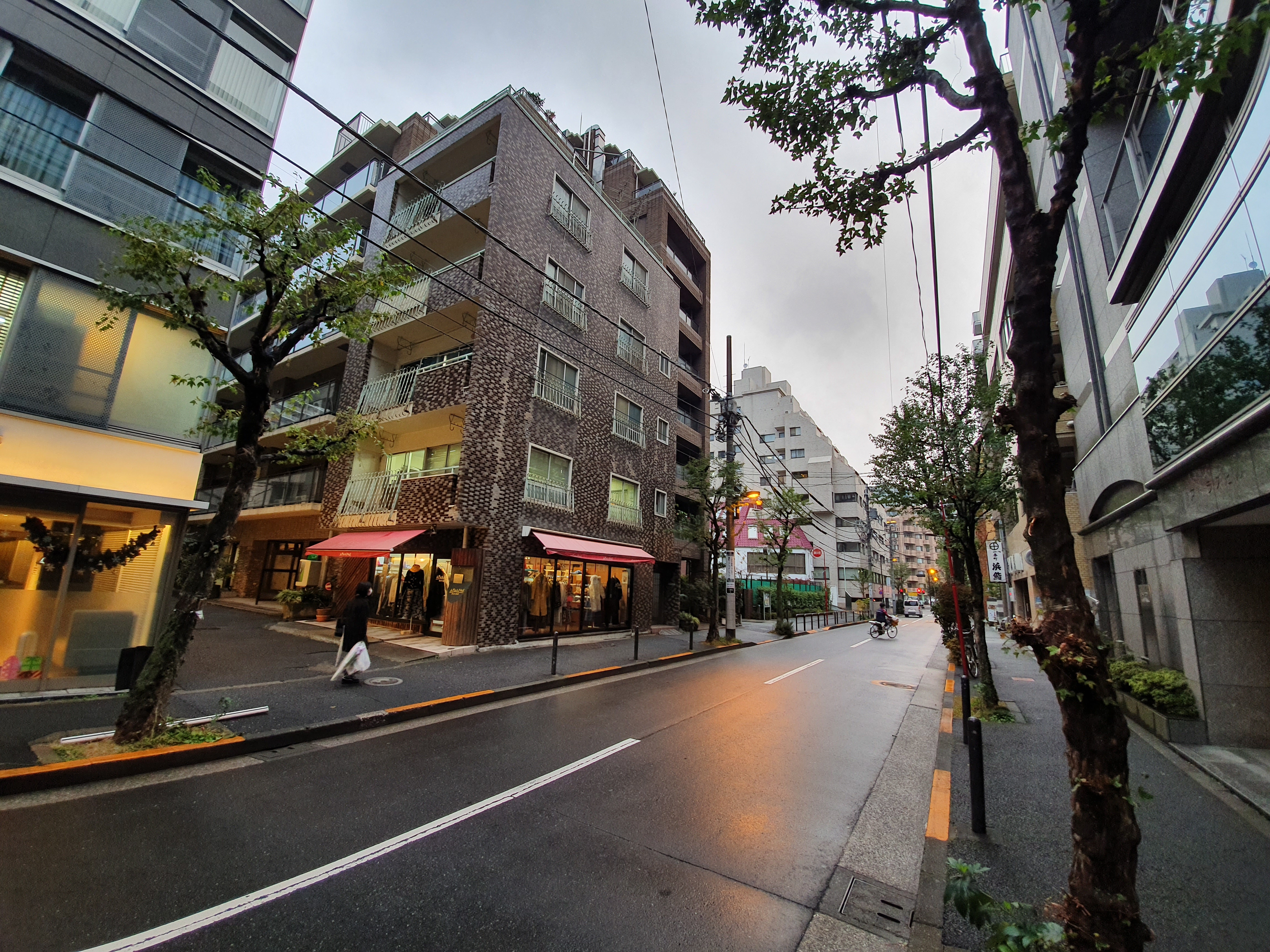
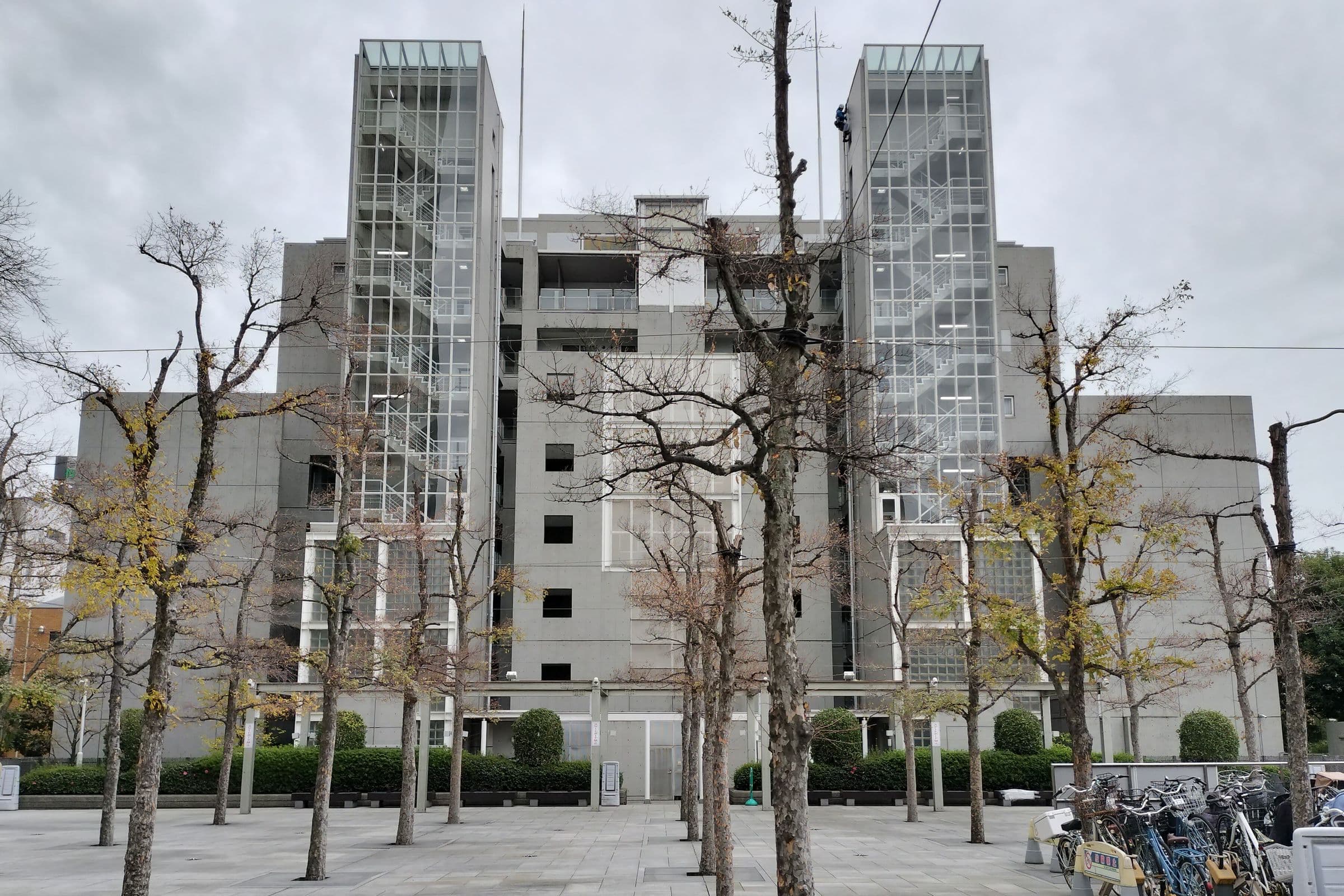
Street scene in Ichibancho, illustrating Chiyoda's residential environment only; it is not a project covered by this request. Photo: Syced, December 2020, Wikimedia Commons, CC0; Original image and license.
From industry-wide requests to specific projects: contracts still determine implementation
In July 2025, Chiyoda Ward had already asked real-estate industry groups to curb speculative transactions, including through a five-year post-handover resale restriction. The significant development now is that requests are reaching developers of specific projects. The policy is moving closer to the sales process, but a request is not evidence that developers have implemented a uniform standard.
ANN reported that day that the request is not binding. Mitsubishi Jisho Residence said it had not yet decided the specific approach for future projects and that it had already taken measures under industry guidelines. Mitsui Fudosan Residential supported curbing speculative resales while also raising legitimate reasons to sell, such as job transfers, and property-rights concerns. These responses do not establish that developers have universally accepted the five-year restriction.
For buyers, the more useful step is to obtain the terms in advance: which transfers are restricted; whether resale, inheritance and work-related relocation are treated differently; who decides on exceptions; and what remedies or liability apply to a breach. The official announcement does not answer these questions, and unpublished contract terms should not be filled in with assumptions.
The starting point of the five-year period matters too. The ward is requesting five years after handover. If the purchase contract is signed well before handover, the period from committing to buy until the expected opportunity to resell may exceed five years. Financial planning should distinguish the wait before handover from the holding period afterward, rather than counting down from the purchase lottery or contract date.
A pre-handover resale ban and a five-year post-handover hold are separate hurdles
Measures announced by the Real Estate Companies Association of Japan in November 2025 to curb short-term resales cover purchase limits, stricter checks on purchaser names and a ban on pre-handover resale activity. Individual companies decide which projects, periods and purchase limits apply. Their timing differs substantially from Chiyoda's proposed five-year post-handover restriction.
The industry measures mainly target arrangements in which purchasers seek another buyer before handover. Chiyoda's restriction, if written into a contract, would extend into the period after buyers take possession. A project's stated compliance with industry guidelines does not establish that it also includes the five-year post-handover clause. Investors should check each separately.
The association also noted that restricting transfers after handover raises property-rights and enforcement issues. These are boundaries that policy design still needs to address; it is not reasonable to assume that every such agreement is automatically valid or invalid. Buyers with questions about a particular contract should take the wording to a qualified professional, rather than decide to buy based solely on headlines about a resale ban.
Owner-occupiers and investors also have different concerns. Even long-term residents may face a job transfer or a change in household size. Buyers planning a quick sale after handover would need to revise their exit strategy. The ward's request would directly affect plans to buy multiple units in the same building, but it does not yet establish detailed rules for every type of purchaser or related purchasing name.
If you need to hold longer, first check what rent can cover
A longer holding period moves letting the property from a fallback option to a central investment consideration. Here, we examine base monthly asking rents for residential listings of 40–80 square meters within a 15-minute walk of Hanzomon Station in Chiyoda. This shows what comparable properties nearby are currently asking, not a substitute rental valuation for a particular new development offered for sale.
Urbalytics' screening returned 83 valid listings, with a lower-quartile base monthly asking rent (percentile 25) of 268,500 yen, a median of 330,000 yen, and an upper quartile (percentile 75) of 409,000 yen. The middle half of the sample already spans a substantial range. Size, building age, floor and quality all affect an individual home's rental potential; 330,000 yen cannot simply be applied to every new unit.
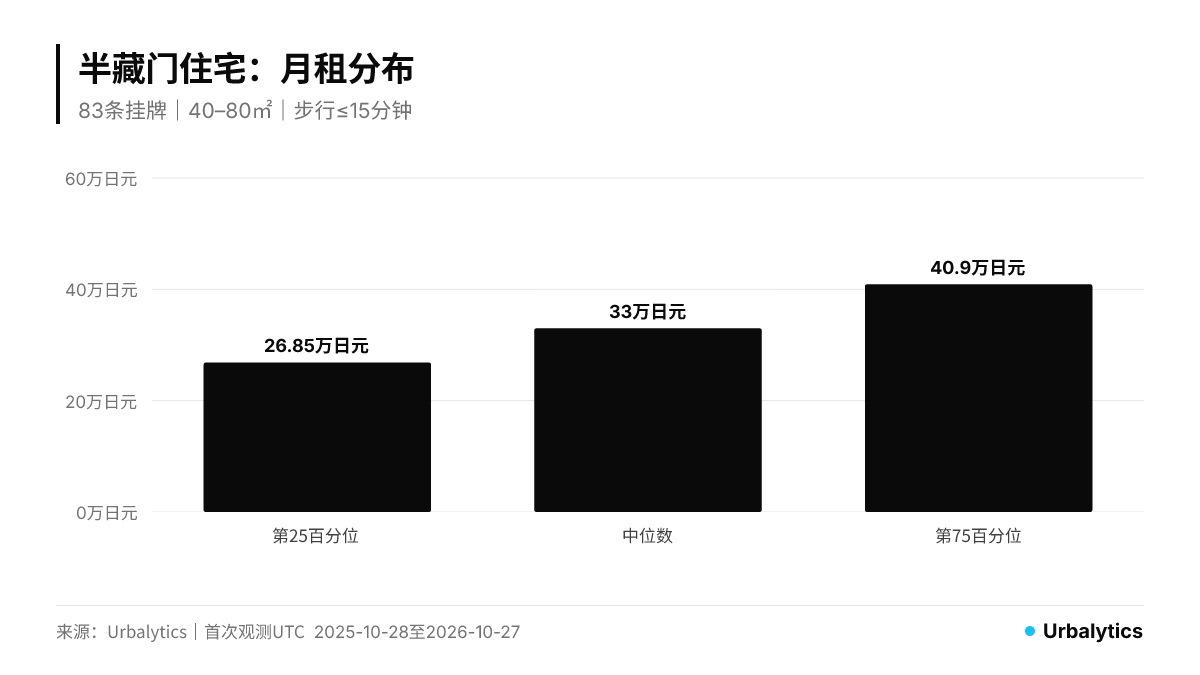
Panel A | Base monthly residential asking rent, in 10,000 yen per month; 83 listings of 40–80 square meters within a 15-minute walk of Hanzomon Station.
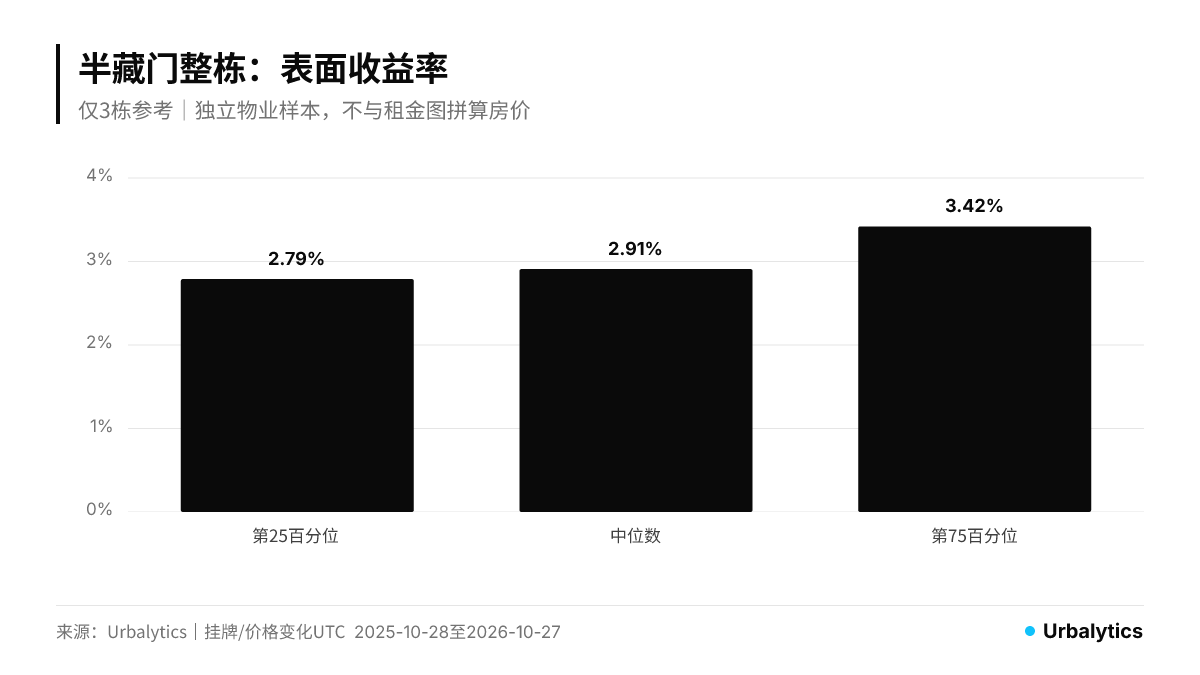
Panel B | Listed whole-building gross yields; only 3 buildings within a 15-minute walk of Hanzomon Station. This small sample is for reference only. The panels cover different property sets: dividing Panel A's rents by Panel B's yields cannot be used to infer purchase prices.
A separate screening of whole-building income properties returned only 3 buildings, with a lower-quartile gross yield (percentile 25) of 2.79%, a median of 2.91%, and an upper quartile (percentile 75) of 3.42%. These figures provide only limited listing benchmarks. They do not represent typical yields across Chiyoda, much less a required investment return for an individual new-build condominium.
Each dataset has limits. Residential asking rents help buyers identify comparable properties for letting; whole-building yields indicate the relationship between income and asking prices for local investment properties. What ultimately determines whether a home can be held sustainably is the rent it can realistically earn, less management, repairs, taxes, letting and vacancy costs, and then financing expenses.
For example, if a purchase depends on a quick post-handover sale to cover a funding gap, attractive nearby asking rents do not resolve the problem created by changed exit terms. The purchase budget should work without relying on resale gains before any future sale price is considered. Buyers planning to let should also confirm that the loan's permitted purpose and relevant agreements allow it, rather than seek a workaround after handover.
Curbing speculation does not mean prices immediately fall
The ward aims to ease the effect of speculative transactions on housing affordability and reduce community-management problems associated with more non-resident owners. Discouraging short-term buyers may reduce the extent to which expectations of quick resale gains influence pricing at some projects. That is a plausible mechanism to discuss, but there are currently no post-implementation transaction data demonstrating the measure's effect.
Prices also depend on supply, development costs, location and owner-occupier demand. Even if a project attracts fewer short-term buyers, purchasers prepared to hold for longer may take their place. The announcement cannot therefore be translated directly into a discount, nor can rent differences among Hanzomon listings establish that the policy has raised or lowered rents.
The next points to watch are which projects adopt clauses in formal sales documents, how exceptions are handled, how applicant numbers and sales progress change, and whether fewer resale listings emerge after handover. Discussing price effects requires ongoing comparison of sales activity and transactions at projects adopting restrictions with comparable properties.
For anyone considering a new home in Chiyoda, the immediate task is specific: before submitting a purchase application, obtain the project's resale restrictions and exceptions, enter the earliest possible exit date in the financial plan, and test the holding budget against genuinely comparable rental properties. The ward has taken its request to individual projects. Buyers should take their analysis to the actual contract they would sign.
Data methodology and further reading
The data were queried on 2026-10-27. The residential sample comprises active listings classified as MANSION, meaning condominium-style apartments, for residential use, first observed during the UTC window from 2025-10-28 to 2026-10-27. Figures show recorded base asking rents, excluding management fees, utilities and similar charges, not rents achieved on leases signed during that period. The raw and valid samples both contained 83 listings, with no duplicates or exclusions.
The whole-building sample comprises BUILDING records within a 15-minute walk of the same station that were listed or had a price change during the same UTC window. Sold and withdrawn listings were excluded, duplicates removed, and yields outside 1%–25% filtered out. Listed gross yields do not deduct operating expenses, taxes, vacancy or financing costs. Both datasets are cross-sectional references, not before-and-after policy comparisons, and do not track changes in the same properties over time.
For a broader view of listing data, see Tokyo Market Report. The earlier Analysis of Chiyoda's Five-Year Resale Restriction Request examined the limits of the industry-request stage; The Short-Term Resale Debate After Harumi Flag provides related Tokyo-wide context. This article adds the development announced on October 27: requests directed at specific development projects.
Tags
Chiyoda Ward, Japanese real estate, Tokyo new homes, five-year resale ban, resale restrictions, short-term resales, Hanzomon, Bancho, housing policy, asking rent, gross yield, investment exit
References
Chiyoda Ward: Request to industry to curb speculative transactions, July 18, 2025
Urbalytics Tokyo Market Report; this article's statistics were separately queried through an authorized market-data interface using the criteria above on 2026-10-27.
Copyright: This article is original content by the author. Please do not reproduce, copy, or quote without permission. For usage requests, please contact the author or this site.