Words: 1812 | Estimated Reading Time: 10 minutes | Views: 85
Nakano’s real variable is not a single new build; it is that, after the north–south passage opens in December 2026, the directional flow of foot traffic across the entire station will be redefined.
1. Why hasn’t a location five minutes from Shinjuku been fully priced?
On investment maps of Tokyo’s west-side rail corridor, Nakano has long been a bit puzzling. About five minutes from Shinjuku. The JR Chuo Line Rapid, the Chuo–Sobu Local, and the Tokyo Metro Tozai Line intersect here; in FY2024 JR’s average daily boardings reached 132,316, and Tokyo Metro entries/exits reached 141,680.
On numbers alone, the station should command a clear premium. In practice, however, market perception of Nakano has long stopped at “Nakano Broadway” and its subculture cluster, rather than a seriously priced residential core.
The reason is simple. The station area has been split north–south by the Chuo Line tracks, with the South and North sides belonging to effectively separate districts that hardly connect physically. Foot traffic has been constrained by this geography, and the value of retail and residential has been confined to half of what it could be on each side.
That is why the change starting in December 2026 is categorically different from the site-by-site projects of recent years.
2. December 6, 2026: What changes isn’t the route but the “sense of distance”
On December 6, 2026, the west-side north–south passage and the new overhead station building at Nakano Station will officially open. This pedestrian-only passage is approximately 80 m long and 19 m wide, connecting on the second floor to the newly built West ticket gates. The north-side entrance will be called the “New North Exit,” and the south side the “New South Exit (Momoen; 桃園口).”
The raw dimensions aren’t flashy, but they resolve a structural issue decades in the making. Previously, crossing the tracks north–south required a detour; going forward, pedestrians can move straight across at the second-floor level. The passage is also positioned as the third primary evacuation route from the south side of the Chuo Line toward the wide-area evacuation site around the Nakano City Office.
There is a decision point investors often overlook. What changes is not the physical distance, but the perceived distance and the actual minutes on foot. The shortest path from the broader Nakano 3-chome area to the ticket gates will be shortened overall with the emergence of the Momoen Exit.
In Japan’s rental market, “minutes on foot to the station” is effectively the most important pricing variable. If a district shifts en masse from an eight-minute walk to five, the rent curve is systematically pushed up a notch. And this can happen even without a single new building completing.
Three days later, on December 9, the station retail facility “atre Nakano (アトレ中野)” directly connected to the new gates will also open, with about 70 stores. The fifth floor will feature a rooftop BBQ where you can bring your own ingredients, plus a roof plaza. The station shifts from “a waypoint” to “a destination” — that is the second layer of change in the flow structure.
3. 165 rental-only units: the signal from Kintetsu Real Estate and the Urban Renaissance Agency (UR; 都市再生機構)
Just south of this new gateway, Kintetsu Real Estate (近鉄不動産) and the Urban Renaissance Agency (UR; 都市再生機構) are advancing a mixed-use project tentatively named the “Nakano 3-chome Hub Facility.” Construction starts in July 2026, with completion slated for summer 2029.
The site is 40, Nakano 3-chome, Nakano, Tokyo. It is a three-minute walk from the current South Exit of Nakano Station, with a site area of about 2,406 m² and a total floor area of about 17,686 m². The building will have 14 floors above ground and one below; floors 1–3 will be retail, and floors 4–14 will supply family-oriented rental housing.
Two points merit investor pause.
First, all 165 residences will be rental-only with no condominium sales; the developer and UR explicitly target “the formation of a favorable living environment.” This means the stock will not flow into the market as secondhand condo supply; it will remain as professionally managed rental inventory over the long term.
Second, delivering 165 family-type rentals in one shot at a three-minute walk from the station creates structural competitive pressure on existing single-building rentals nearby rather than a tailwind for demand. In particular, aging wood-frame and light-gauge steel properties whose sole selling point is “near the station” face a headwind.
Importantly, this is not an isolated project. It is part of UR’s “Nakano 3-chome Land Readjustment Project (中野三丁目土地区画整理事業),” which, together with “Nakano Station Momoen Plaza (中野駅桃園広場)” and new streets, forms an area-wide reconfiguration. The backdrop is Nakano Ward’s “Basic Policy for Urban Development of the Nakano Station West Exit District (中野駅西口地区まちづくり基本方針).”
In other words, what is being updated is not a single building, but the entire block layout — streets, plazas, housing, and retail.
4. Urbalytics data: rents are flat while whole-building prices lead
Overlaying these plans on actual transaction and listing data reveals an interesting mismatch. Aggregating the area within a 10-minute walk of Nakano Station on the Urbalytics platform yields 371 observable rental apartment listings, an average rent of ¥195,600, and an average private area of 38.51 m².
| Quarter | Rental apartments price per tsubo (tsubo = 3.3 m²; units: ¥10,000/tsubo) | Sample size |
|---|---|---|
| 2026 Q1 | 1.64 (reference value) | 8 |
| 2026 Q2 | 1.52 | 126 |
| 2026 Q3 | 1.59 | 235 |
Looking at the quarterly trajectory of price per tsubo, 2026 Q2 stands at 1.52 in ¥10,000/tsubo units, rebounding to 1.59 in Q3, up about +4.6% quarter-on-quarter. Note that 2026 Q1 has only eight samples and is a reference value, unsuitable for trend judgment.
The conclusion is straightforward: on the rent side, conditions are broadly flat and the redevelopment premium is not yet priced into leases. The passage is not yet open, atre is not yet operating, and the 165 units are not yet complete — as expected.
The price side for whole-building income properties looks different. Across 68 on-market whole buildings in the same radius, the average gross yield is 5.13%, with a median of 4.64%. The average price is about ¥286.13 million, and the average gross annual income is ¥13.12 million.
| Quarter | Whole-building price per tsubo (units: ¥10,000/tsubo) | Sample size |
|---|---|---|
| 2025 Q3 | 390.52 (reference value) | 3 |
| 2025 Q4 | 496.28 | 42 |
| 2026 Q1 | 542.46 | 27 |
| 2026 Q2 | 459.02 | 38 |
| 2026 Q3 | 460.30 (reference value) | 12 |
The price-per-tsubo trend tells the story. The cumulative rise over five quarters reaches +17.87%.
Urbalytics Insight: While price per tsubo for whole buildings rose a cumulative +17.87% over five quarters, rental price per tsubo was roughly flat. In other words, today’s Nakano prices already reflect sellers front-running expectations for December 2026–2029 redevelopment. Buyers will carry the holding cost “before expectations become reality.” The real opportunity is not on the price side, but in pinpointing locations where the New South Exit will effectively shorten walk times while rents remain underappreciated.
5. 2029 is not the finish line. The endgame is the Nakano Sunplaza (中野サンプラザ) site
Framing the timeline around just summer 2029 understates the back-half upside. Renewal around Nakano Station is not a single mega-project delivered at once; multiple works will mesh in stages over a decade.
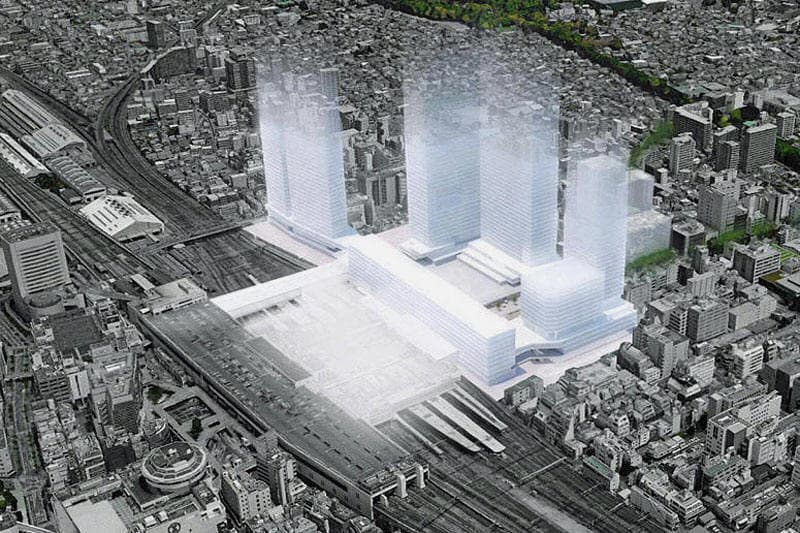
To the north, “Park City Nakano” held its town opening in May 2026. Across about 2 hectares, it places two residential towers with 807 units, the office building “Nakano M-SQUARE,” and eight retail tenants, with a pedestrian deck planned to connect directly to Nakano Station in FY2029.
The true endgame is the “Nakano Station New North Exit Station-Front Area,” including the Nakano Sunplaza (中野サンプラザ) site. As of July 2026, Nakano Ward’s indicative schedule calls for a revision to the redevelopment plan in February 2027, a public call for private operators the same fiscal year, project start in FY2030, and completion in FY2034.
Associated plaza works are on different tracks — Nakano Station Momoen Plaza opens December 6, 2026; the South Exit station-front plaza is slated for completion in FY2028; and the New North Exit station-front plaza in FY2029.
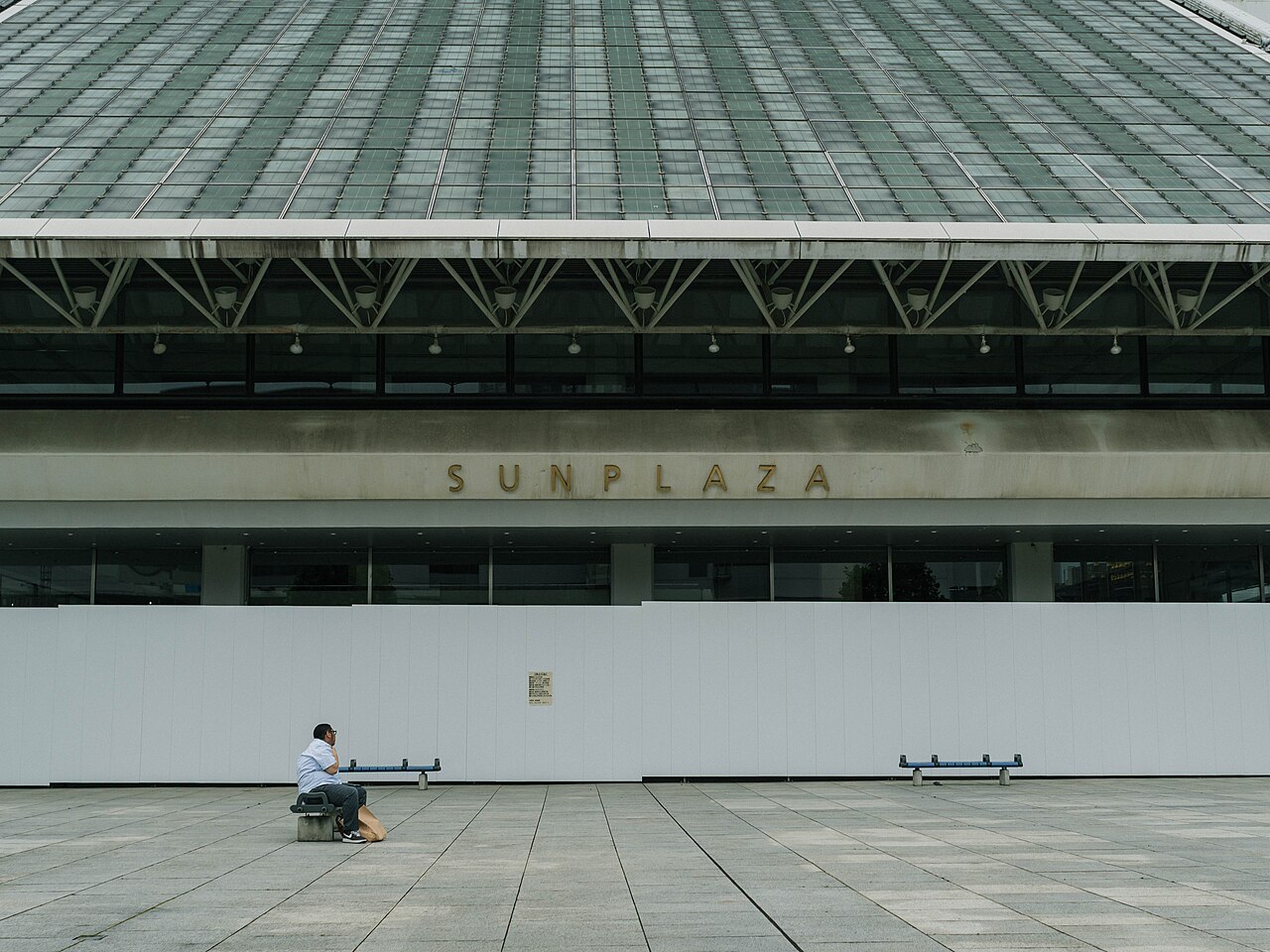
Risk disclosure: The Sunplaza site project has undergone plan revisions amid rising construction costs; “FY2034 completion” is merely Nakano Ward’s indicative schedule as of July 2026 and not a fixed timeline. Exit assumptions predicated on 2034 require ample time buffers. Also, only part of the pedestrian deck on the New North Exit side will open in December 2026; full station-front plaza works, including the transport node, will continue for several years. Construction noise and circulation changes during this period could materially affect leasing operations of existing assets.
6. Three practical lenses for investors
In an area that will “materialize in stages,” acquisition timing and micro-location selection matter far more than a blanket, optimistic view on the district.
First, rebase pricing maps to the “New South Exit (Momoen; 桃園口)” and recalculate walk minutes accordingly; do not default to today’s South Exit premise. Systematic underpricing may exist in Nakano 3-chome and Nakano 5-chome, and this distortion is likely to close quickly after December 2026.
Second, beware listings that have already fully priced in expectations for 2029 or 2034. A 4.64% median gross yield is not high for the 23 wards. If the purchase price bakes in the entire redevelopment premium, holding-period cash flow will be tight for an extended time, and any further rise in interest rates will amplify exit pressure.
Third, take seriously the competitive impact of the 165 family-type rental units. Owners of mostly one-room, small-footprint assets should see limited impact, but owners of near-station family-type assets may face clearly less favorable renewal terms after 2029.
Nakano’s value logic is shifting from “Shinjuku’s cheaper neighbor” to a “reconnected residential core,” with the switch flipped in December 2026. If you want to validate rent comps or whole-building yield quantiles for specific locations before expectations crystallize, Urbalytics lets you extract actual transaction and listing samples by walking catchment and cross-check them.
Tags: #NakanoStation #NakanoWard #TokyoRedevelopment #Nakano3Chome #NakanoSunplaza #JapanRealEstate #TokyoInvestment #WholeBuilding #GrossYield #MinutesFromStation #RentalMarket #UrbanRenaissanceAgency #KintetsuRealEstate #ParkCityNakano #Urbalytics
References
- Kenbiya, “Further redevelopment in front of Nakano Station, Tokyo. A mixed-use complex is slated for completion in summer 2029; tracking changes around the station” 2026年8月29日 https://www.kenbiya.com/ar/ns/region/tokyo/10437.html
- Nakano Ward, “Basic Policy for Urban Development of the Nakano Station West Exit District” https://www.city.tokyo-nakano.lg.jp/
- Nakano Ward, “Nakano Station New North Exit Station-Front Area Redevelopment Plan” (indicative schedule as of July 2026) https://www.city.tokyo-nakano.lg.jp/
- Urban Renaissance Agency (UR; 都市再生機構), “Nakano 3-chome Land Readjustment Project” https://www.ur-net.go.jp/
- Kintetsu Real Estate (近鉄不動産), “(Tentative name) Nakano 3-chome Hub Facility” press release, 2026 https://www.kintetsu-re.co.jp/
- East Japan Railway (JR East), “Average daily boardings by station, FY2024” https://www.jreast.co.jp/passenger/
- Tokyo Metro, “Station entries/exits ranking, FY2024” https://www.tokyometro.jp/
- Urbalytics platform internal data (Nakano Station 10-minute walk-shed: rental apartment stats; whole-building yield stats, retrieved August 29, 2026) https://www.urbalytics.jp/
Copyright: This article is original content by the author. Please do not reproduce, copy, or quote without permission. For usage requests, please contact the author or this site.