Words: 1647 | Estimated Reading Time: 9 minutes | Views: 1681
On an open plot that is still grassland, 3,000 brochure requests set a price six years early for the 2032 new station—this is not impulse, but a time-lag trade with precedents.
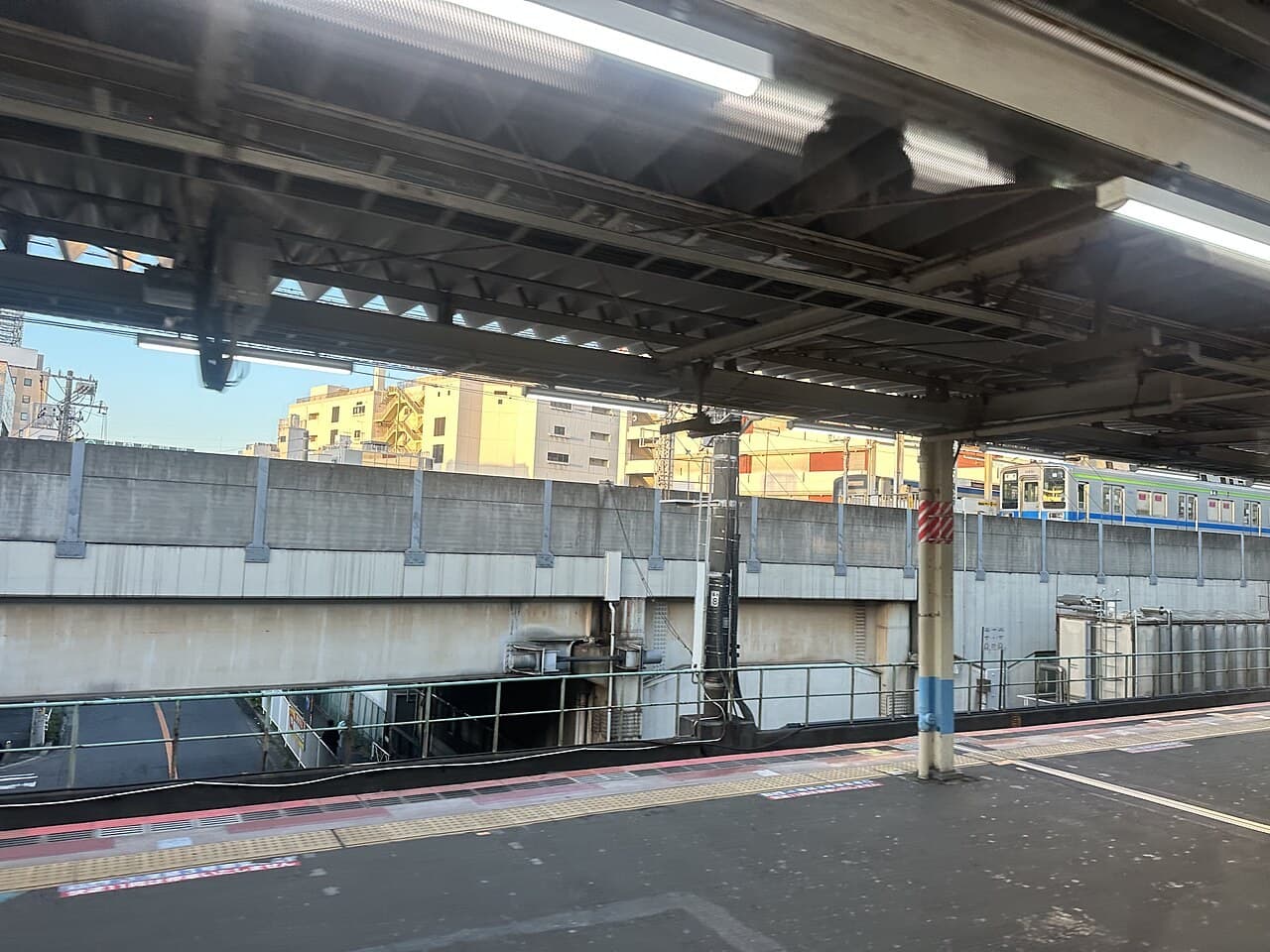
If you stand on the platform of the Shonan Monorail (湘南モノレール) at Shonan-Fukasawa Station and look north, there is no dramatic construction fencing and no skyline of tower cranes—only open grassland and a low hill in the distance. It is hard to believe this seemingly forgotten tract is the construction site for the first new station in 107 years on the JR Tokaido Main Line (JR東海道本線) since Atami Station opened in 1925.
Harder to believe: right beside this grassland, a large 645‑unit condominium has already received over 3,000 brochure requests (資料請求), and appointments to tour the model rooms are becoming scarce—even though pricing has not yet been announced.
This warrants unpacking. On the surface it is a local news item; in essence it is a recurring, repeatedly debated pricing mechanism in Japan’s real estate market: when the “neighborhood” does not yet exist, what exactly are first buyers paying for.
From two disused railway parcels to a station that does not yet have a name
To understand why this land is “empty,” look at what it was. The so‑called “Muraoka New Station” (working name; 仮称・村岡新駅) is not a station crammed into a mature district, but a stitching together of two large sites the rail system had already retired.
To the north, roughly 8.6 hectares in Fujisawa City’s Muraoka area, formerly the Shonan Freight Station (湘南貨物駅) decommissioned in 1985; to the south, about 31.1 hectares in Kamakura City’s Fukasawa area, formerly JR’s Kamakura Rolling Stock Center (鎌倉総合車両センター) closed in 2006. Together they total nearly 40 hectares—a contiguous scale that is almost impossible to find in the built-up core of the Greater Tokyo area.
Precisely because there is “nothing,” the freedom to plan an entire street from scratch exists. The station development cost is about 15 billion yen, funded 30% by Kanagawa Prefecture, 27.5% each by Fujisawa and Kamakura, and 15% by JR East—this funding split itself signals one thing: this is not a railway company’s commercial decision, but a fiscal commitment by two cities and one prefecture.
The land readjustment project runs through 2038 and, beyond housing, includes medical, administrative, and research facilities. In other words, the 2032 opening is the beginning of this district, not its completion.
Find properties in 神奈川県鎌倉市
Individual listings, price-change history, closed transactions and AI valuations are available on a free account.
Timeline recap: in the same summer construction began, the 645‑unit first release started building its buyer pipeline
The timeline is tight—this is where the real information content lies.
Station construction formally starts during 2026, on a site between Ofuna and Fujisawa Stations and within Kamakura City. Almost in parallel, a large 645‑unit condominium project (ルネ鎌倉深沢) adjacent to the land readjustment area announced sales will begin in late September 2026—this autumn.
By early August, brochure requests for the project had surpassed 3,000. Against 645 units of supply, that is nearly a 5‑to‑1 ratio—an unusual level of interest when pricing is undecided and the surrounding district has yet to take shape.
Two very specific downside limiters underpin this interest. The project is an eight‑minute walk from Shonan Monorail Shonan‑Fukasawa Station, meaning residents will not become a “land‑locked island” before the new station opens; and adjacent retail (Cainz and a Life supermarket) is scheduled to open in summer 2026, so everyday shopping convenience will be in place at handover.
In short, buyers are not really taking on the risk of “inconvenient living,” but a simpler one: whether the 2032 station and the new district will materialize as drawn.
Pricing mechanics of the “first project in a new district”: the market compensates for time
This pattern has precedents in Japan—conveniently, just a few stops away.
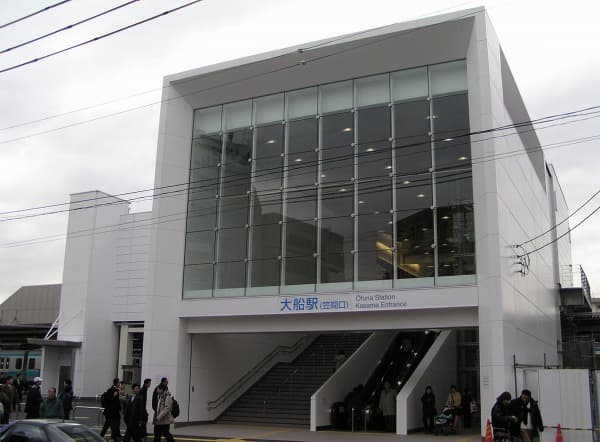
In 2018, a large high‑rise condominium launched near Ofuna Station’s Kasama exit. Opinion split: some anticipated a re‑rating from the new entrance and district; others doubted “what this place will become,” and many considered prices in the upper‑¥70 million band on the high side.
The result was sufficient belief in future potential to force a lottery at sales; about eight years on, secondary prices have moved up markedly. The case is repeatedly cited and has hardened into a consensus: the “first project” in a new district is worth a bet.
Mechanically, this is not mysticism but an information‑and‑time spread. Developers cannot fully embed the convenience of the 2032 station or the 2038 district completion into today’s price, because those values cannot yet be verified; buyers willing to bear that verification risk are effectively purchasing tomorrow’s location at today’s price.
That is the source of the “first project” premium: the market is compensating for waiting, not rewarding optimism. Conversely, if developers fully price in future value, the margin of safety disappears.
Investor lens: how to size the price band, and whether rents can carry it
For investors targeting rental income or long‑term hold, the “new station + first release” story must resolve to two numbers: entry price and today’s rental reality.
There is a clear anchor on pricing. The Real Estate Economic Institute’s “Greater Tokyo New Condominium Market Trends, 1H 2026” (released July 21, 2026) shows the region’s average new‑condo price has exceeded 100 million yen, though that mean is skewed by high‑priced central‑city stock; in the same report, the Kanagawa Prefecture average, normalized to 70 square meters, is 83.46 million yen.
But that 83.46 million yen includes strong gains in popular semi‑core areas such as Yokohama, Kawasaki, and Musashi‑Kosugi. New builds in Kamakura therefore will not necessarily be surprisingly cheap—if a family‑type 3LDK lands in the ¥60 million range it would be notably aggressive; the ¥70 million range would be reasonable.
Rents must be validated with observed data. Urbalytics indicates that at nearby, mature Ofuna Station, rental apartments average ¥107,800 per month with an average size of 42.96 square meters—about ¥2,615 per square meter (74 samples); one stop over at Fujisawa Station the sample is thicker (227 cases), with average monthly rent ¥123,000 and about ¥2,756 per square meter.
Set against a potential ¥70 million price point, the conclusion is not easy: on current rent levels alone, gross yields for this kind of owner‑occupier new condo will struggle to meet typical income‑property hurdles.
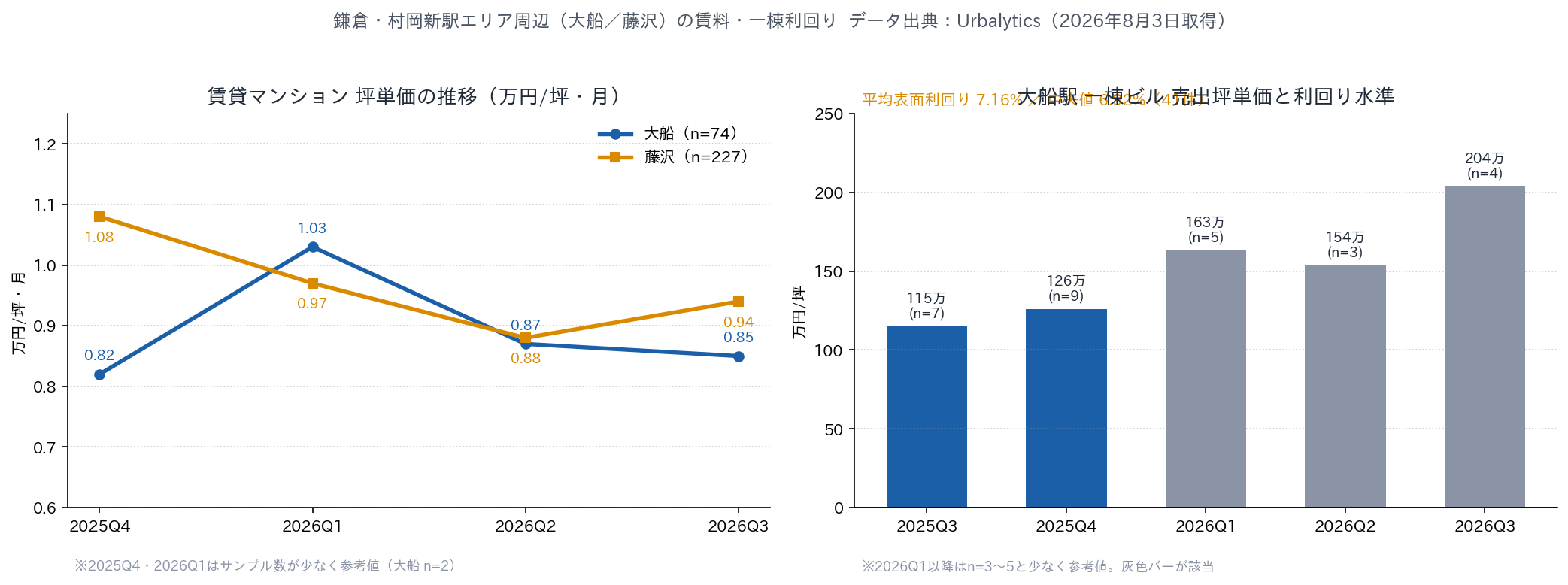
Urbalytics Insight Internal Urbalytics data fill the gap media coverage cannot: within the broader Ofuna area, entire‑building assets(一棟ビル)show an average gross yield of 7.16% and a median of 6.92% (41 samples), with an average asking price around ¥98.22 million. This shows that in the same area, “buy a whole building for rents” and “buy a single unit for appreciation” follow two entirely different pricing logics—the former is priced by cash flow, the latter by expectations. Being clear which side you are on matters more than judging whether the new station will be completed.
Note that Urbalytics’ tsubo unit‑price trend also shows asking prices per tsubo for whole‑building assets in the Ofuna area rising from ¥1.1494 million in Q3 2025 to ¥2.0379 million in Q3 2026. But quarterly samples number only 3 to 9, making these reference points rather than trend conclusions; they should not be treated as the area’s overall appreciation.
Risk reminders There are three risks to consider in such “new‑station first‑release” cases: about a six‑year gap between building handover and station opening, during which holding costs and leasing competitiveness rely only on the existing monorail and retail; the land readjustment program runs through 2038 and the content and pace of later district development may change—drawings are not commitments; and the 645‑unit scale means the complex will face long‑running internal resale and rental supply, so exit pricing power will not rest solely with individual sellers.
Conclusion: the bet is not the station, but execution against the timetable
Back to the opening question—what are those 3,000 brochure requests paying for? The answer is not “the new station will bring convenience,” which is scarcely in dispute; what is really being priced is whether the two cities and the prefecture will execute their commitments on schedule.
For owner‑occupiers, the math is relatively straightforward: if the household life cycle aligns with the 2032 commute improvement, buying early does mean locking in tomorrow’s location at today’s price. For investors, the bar is higher—discount current rents, the six‑year gap, and a district whose works run through 2038, rather than focusing on the narrative alone.
This is why we suggest pulling the actual rent distributions for Ofuna and Fujisawa and the whole‑building yield samples on Urbalytics before making a call: narratives can be told; cash flows must be calculated.
#MuraokaNewStation #KamakuraFukasawa #FujisawaCity #KamakuraCity #KanagawaRealEstate #JRTokaidoLine #LandReadjustment #ShonanMonorail #NewCondominiums #GreaterTokyoHomePrices #WholeBuildingInvestment #GrossYield #AreaRedevelopment #JapanRealEstateInvestment #Urbalytics
References
- Yahoo! News Expert (Yukio Sakurai), 2026, “Construction has begun on a new station on the JR Tokaido Main Line. Brochure requests pour in for a condominium slated to start sales in autumn”, https://news.yahoo.co.jp/expert/articles/04679865b78cad208b610a49463ffb42018a1e8d
- Tetsudo Channel, 2021, “New station between Ofuna and Fujisawa on the JR Tokaido Line, ‘Muraoka New Station (provisional name),’ to be developed as a key future hub, planned to open in 2032”, https://tetsudo-ch.com/12961519.html
- Nikkei, 2021, “New station between Ofuna and Fujisawa on the Tokaido Line could open in 2032”, https://www.nikkei.com/article/DGXZQOFB053DC0V00C21A2000000/
- Kamakura Fukasawa Urban Development (Kamakura City), 2026, Released a concept video for “Muraoka New Station (provisional name)”, https://kamakura-fukasawa.jp/posts/HD36_cWi
- Sogo Jisho “Rene Kamakura Fukasawa” official site, 2026, Property outline (total 645 units / sales scheduled to start late September 2026), https://www.sgr-sumai.jp/mansion/r-kamakura645/
- SUUMO, 2026, “Rene Kamakura Fukasawa” new condominium listing, https://suumo.jp/ms/shinchiku/kanagawa/sc_kamakura/nc_67728025/
- Rakumachi News, 2024, “How will Fujisawa and Kamakura change with the new station in 2032? Large-scale redevelopment advancing through four-party collaboration”, https://www.rakumachi.jp/news/column/374018
- Real Estate Economic Institute, 2026, “Greater Tokyo New Condominium Market Trends, 1H 2026 (Jan–Jun)” (released July 21, 2026)
- Urbalytics (rental statistics and whole‑building yield statistics / retrieved Aug 3, 2026), https://www.urbalytics.jp/
Copyright: This article is original content by the author. Please do not reproduce, copy, or quote without permission. For usage requests, please contact the author or this site.
Photos in this article: TsurugaokaHachiman-M8 Fg2/Public domain(トリミング) Wikimedia Commons·OfunaStkasamaguchi Kouchiumi/CC BY-SA 3.0(トリミング) Wikimedia Commons·Fujisawa montage 水だらけのプール/CC BY-SA 4.0(トリミング) Wikimedia Commons·Fujisawa Station SouthGate SElefant/CC BY-SA 3.0(トリミング) Wikimedia Commons·Shonan-fukasawa station 姫神/CC BY-SA 3.0(トリミング) Wikimedia Commons