Words: 2038 | Estimated Reading Time: 11 minutes | Views: 87
On November 26, 2026, Rakumachi News published a cross-check of more than 700 Shinjuku listings displaying minpaku registration numbers on a major booking website. Minpaku are private-home short-stay accommodations. The editorial team checked each number against Shinjuku Ward’s published register and found that more than 30 listings used registration numbers belonging to minpaku at other addresses, while another more than 20 listings displayed numbers that did not exist. For investors considering a property marketed as an operating minpaku, these findings raise a specific question: how much of the seller’s reported accommodation income is lawful, and how much can continue after Shinjuku’s ordinance changes?
What Rakumachi’s Review Found
The report opens with a room the journalists actually stayed in: a semi-basement unit in a Shinjuku apartment building, offered as a minpaku on a major booking website. A weekday night in November cost approximately ¥23,000 for two guests. The listing displayed a registration number, but the ward’s register assigned that number to another property.
The room was in an exclusively residential zone. Shinjuku’s current rules allow minpaku in these zones to operate only from Friday noon to Monday noon, yet the journalists checked in on Wednesday. The required minpaku sign was missing from the entrance, and the curtains lacked the flame-retardant labels required under fire safety law. The operator named on the receipt had its headquarters in an apartment in Toshima Ward. Calls, an in-person visit and written questions from the editorial team received no response.
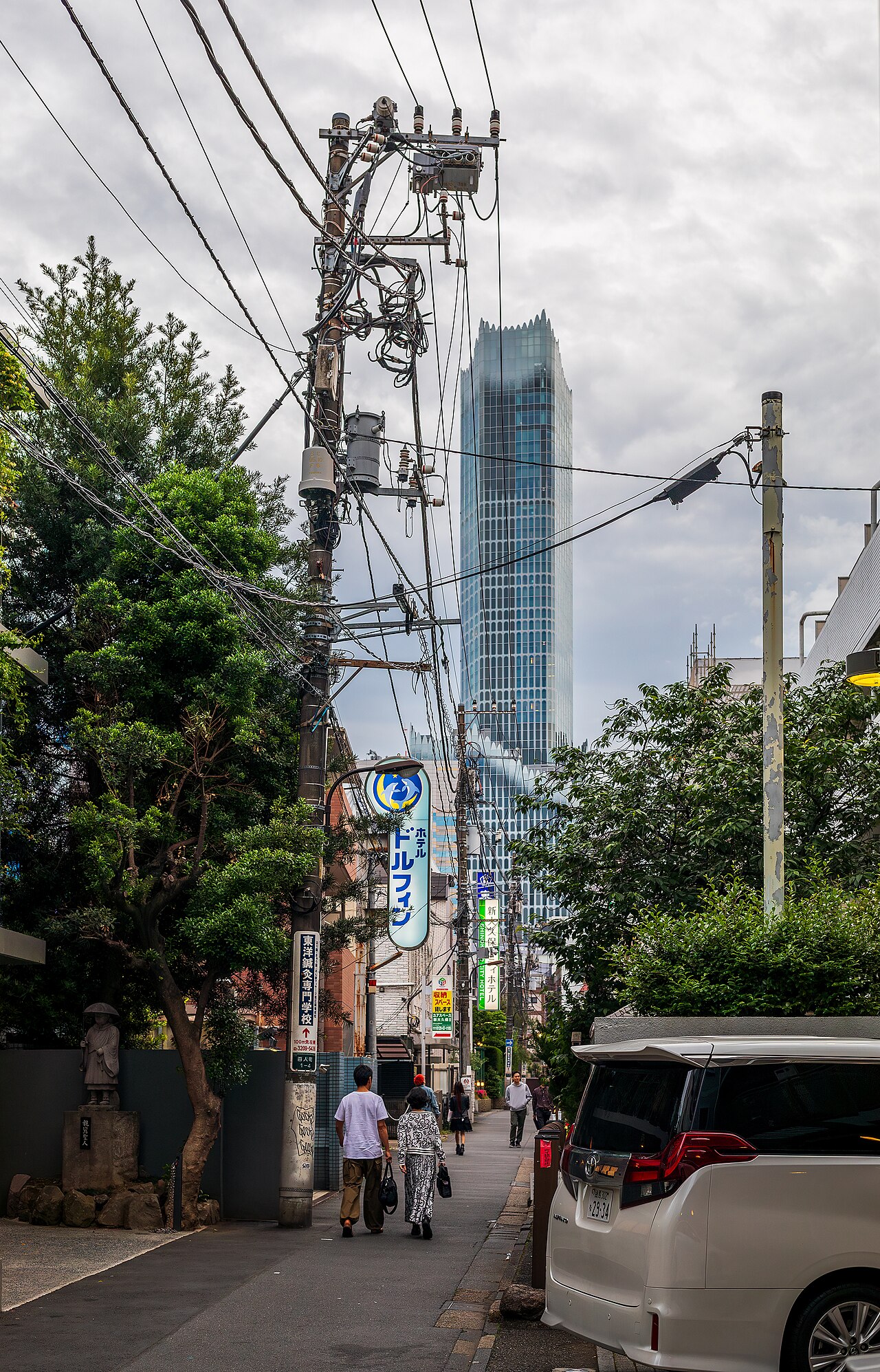
Beyond this individual case, the editorial team checked all approximately 700 Shinjuku accommodation listings displaying registration numbers on the same website between September and October 2026. The results were those noted above: more than 30 used numbers belonging to other properties, and more than 20 displayed nonexistent numbers. The booking website said it would ask operators to confirm compliance and work with government agencies to remove improper listings as needed. The Japan Tourism Agency plans to establish a centralized minpaku data system during fiscal 2027 and coordinate with booking websites to remove unregistered properties.
Shinjuku’s own figures illustrate the pressure on enforcement. Ward records show that, at the end of fiscal 2025, the number of registered private-home accommodation businesses stood at 3,749, the highest total nationwide. Complaints concerning minpaku and hotel and inn businesses totaled 1,525 in fiscal 2025. Citing ward records, Rakumachi reported 410 complaints about unlicensed operations in the same fiscal year. Since fiscal 2025, the ward has imposed administrative sanctions on repeat violators, issuing business improvement orders to 163 facilities, suspension orders to 67 and closure orders to 15.
Operating Costs Rise Before the Restrictions Bite
We discussed the proposed ban on minpaku in residential zones and the reduction to 120 operating days in commercial zones in our September article, Shinjuku’s Minpaku Ban and Diverging Policies Across Tokyo’s 23 Wards. The outline of the proposed ordinance amendments released in October filled in the details. Several provisions would affect existing minpaku before the ban takes effect.
Under the proposed operating-area rules, private-home accommodation businesses would generally be prohibited in exclusively residential, residential, quasi-industrial and educational districts. Owners could apply for “special-exception residence” status, allowing operation during spring, summer and winter school holidays, only if they meet all requirements. These include owning the home, having lived in the registered home or an adjacent home for at least 3 years, and being able to converse in Japanese.
In neighborhood commercial and commercial zones, the annual operating limit would fall from 180 to 120 days, restricted to these periods: March 15 to April 11, July 1 to September 1, and December 15 to January 15 of the following year, with each boundary set at noon. These location and operating-day restrictions would apply to existing facilities two years after the ordinance takes effect.
The operating requirements have a different timetable. Existing facilities would be subject to three requirements as soon as the ordinance takes effect: verifying guests’ identities and explaining house rules face to face; appointing a Japanese-speaking person who can reach the property within approximately 30 minutes; and contracting a waste disposal provider. Changes to the operator’s contact details or management company would also require written notices to surrounding residents and an explanatory meeting. Subcontracting management work to an unregistered provider would generally be prohibited, with a two-year transition period for existing facilities.
The ward’s public register would also add operators’ names—or company names and representatives for corporate operators—and the emergency contact details shown on the required signs. Orders issued under the ordinance could be made public. For hotel and inn licenses, newly applying facilities would need more than 200 m² devoted to accommodation, a reception desk and on-site staff. This would effectively close off the option of converting an ordinary detached house into a small inn.
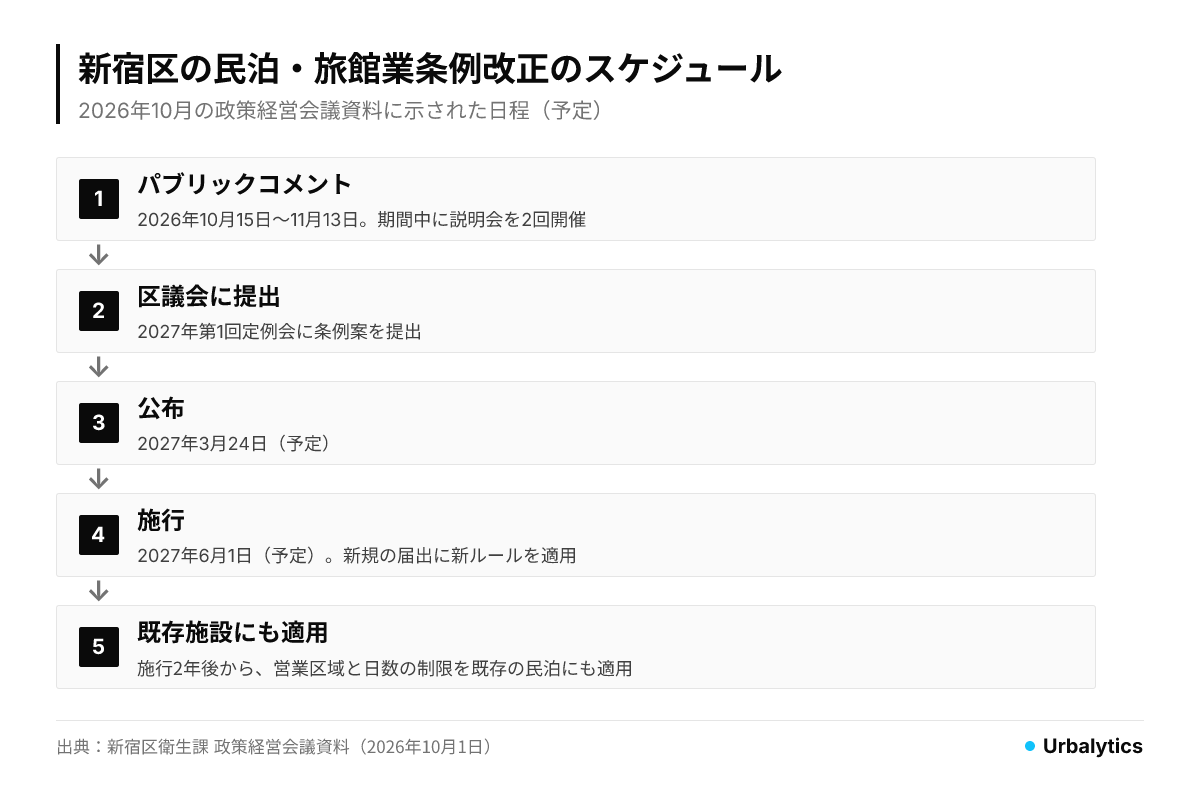
Public comments closed on November 13. The ward plans to submit the ordinance bill at the first regular assembly session of 2027, promulgate it on March 24 and bring it into force on June 1; all dates are provisional. For existing minpaku in residential zones, this implies an operating deadline around June 2029, while the additional operating obligations would begin when the ordinance takes effect in June 2027.
What to Check Before Buying an Operating Minpaku
Rakumachi’s review shows that a registration number on a booking page is no guarantee of legality. Unlawful listings compete with compliant minpaku on the same platform, mixing their room rates and occupancy figures into publicly available comparison data. Investors who estimate income from comparable properties on booking platforms, or simply accept a seller’s income statements, risk pricing in revenue that is unlawful or cannot continue after the ordinance takes effect.
Work through the following checks in order.
First, check the registration number and address. Look up the seller’s number in Shinjuku’s published register, confirm that the registered address matches the property, and check that the booking page displays the same number. If the number belongs to another address or cannot be found, the associated income should not support the valuation.
Second, check the zoning. For properties in exclusively residential, residential, quasi-industrial or educational districts, limit minpaku income projections to two years after the ordinance takes effect. Beyond that, only the special-exception residence route would remain. Its owner-occupancy and ownership requirements generally exclude investors buying a property to let. In commercial and neighborhood commercial zones, future operations would be limited to the three holiday periods, totaling 120 days.
Third, check historical operating dates. Minpaku in exclusively residential zones are already prohibited from operating between Monday noon and Friday noon. If the seller’s occupancy records include weekday stays, that income was unlawful from the outset.
Fourth, review the management contract. Confirm whether the manager is registered and uses subcontractors, who would handle face-to-face checks and the 30-minute response requirement after implementation, and at what cost. These expenses would directly reduce net income over the next two years.
Base the Valuation on Long-Term Rental Income
With both the remaining operating window and permitted days shrinking, a more prudent approach to valuing minpaku in Shinjuku’s residential zones is to establish a baseline from long-term rental income, then treat minpaku income during the permitted period as an addition.
Urbalytics compiled 755 apartment rental listings over the past 12 months, covering units of 15–30 m² within a 10-minute walk of Shin-Okubo, Okubo or Takadanobaba as their nearest station. The median base asking rent was ¥101,000 per month (lower quartile, P25: ¥85,000; upper quartile, P75: ¥125,000; average floor area: approximately 23 m²; median asking rent per square meter: approximately ¥4,521).
For detached houses of 60–150 m² whose nearest station was one of those three or Nakai, Ochiai or Ushigome-Yanagicho, there were 80 rental listings over the past 24 months. The median asking rent was ¥300,000 per month, with an average floor area of approximately 85 m².
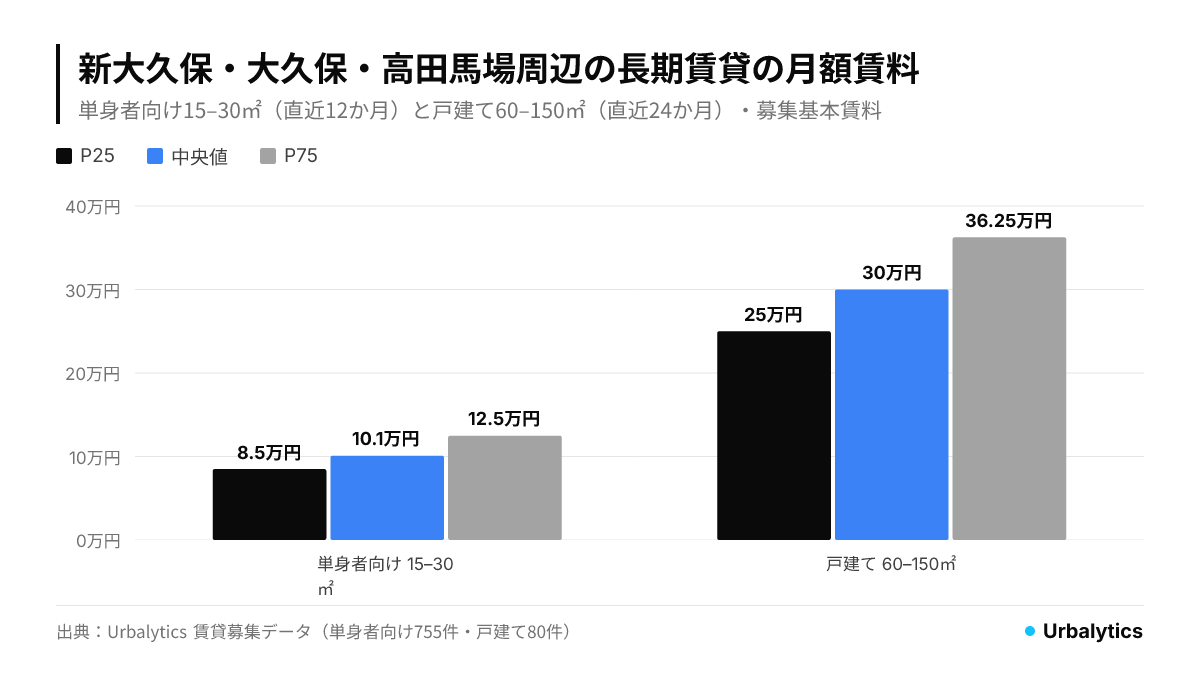
The detached houses averaged approximately 85 m², well below the proposed 200 m² requirement. After minpaku operations end, obtaining a hotel or inn license would also be difficult for these properties, leaving conventional long-term letting as the fallback. At the median asking rents, annual long-term rental income would be approximately ¥3.6 million for a detached house and ¥1.21 million for a single-person apartment. If the seller’s asking price only makes sense with minpaku income, the difference is effectively payment for roughly two years of remaining operations.
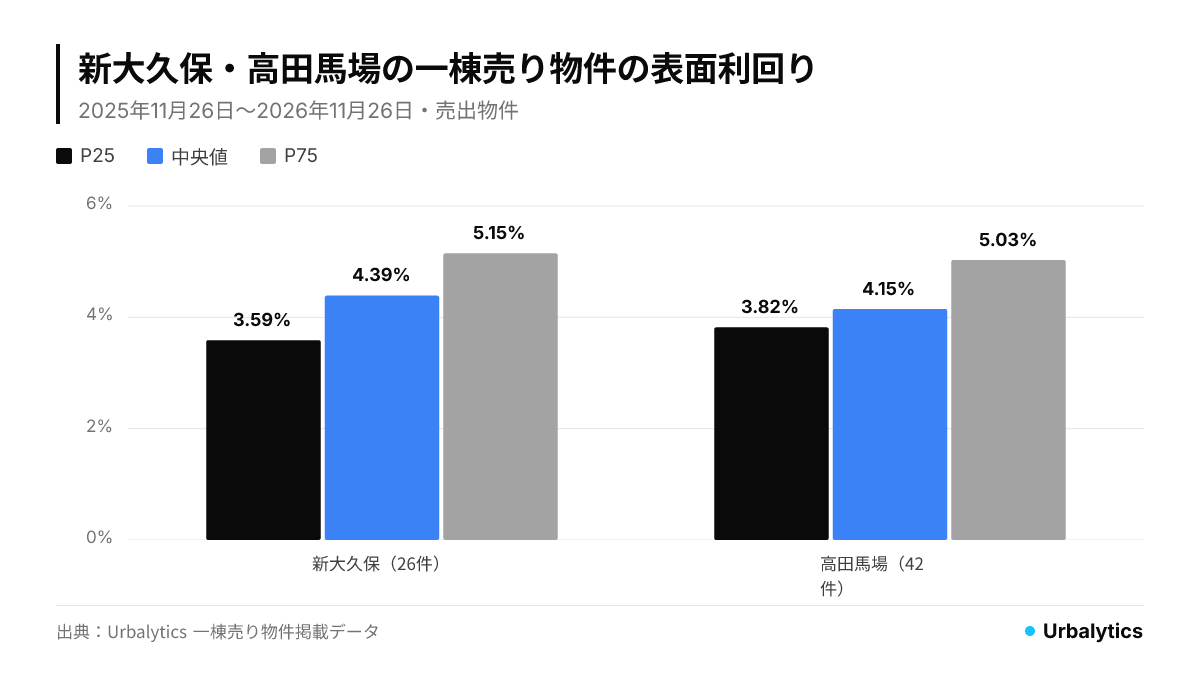
Whole-building sale listings offer a reference for pricing. Over the past 12 months, the median listed gross yield near Shin-Okubo Station was 4.39% (26 listings; lower quartile, P25: 3.59%; upper quartile, P75: 5.15%). At Takadanobaba, it was 4.15% (42 listings; lower quartile, P25: 3.82%; upper quartile, P75: 5.03%). Prices here are already high relative to long-term rental income, leaving little cushion for a premium supported by minpaku earnings.
For price and asking-rent trends for individually owned condominium units in Shinjuku, see the Shinjuku Condominium Market Report. For comparisons with other Tokyo wards, visit the Tokyo Market Overview.
Compliant operators would also be affected, but differently. If platforms remove unlawful listings in bulk during fiscal 2027, compliant minpaku could face less competition during their remaining operating period. That remains speculation and can only be assessed once the Japan Tourism Agency’s system is running. For buyers, the more certain impact is on costs: face-to-face checks, a 30-minute response capability and contracted waste disposal would apply from June 2027. Valuations should include these costs in the remaining two years’ cash flow rather than carry forward today’s operating expense ratio.
For an actual acquisition in Shinjuku’s residential zones, the conclusion is straightforward: verify the registration number, zoning and weekday occupancy records first, then base the offer on long-term rental income. Count minpaku income only until two years after the ordinance takes effect, and deduct the additional operating costs. For more on the shift from case-by-case enforcement to a broader regulatory framework, see our Analysis of Unregistered Minpaku at Harumi FLAG.
Data Notes
The unlawful minpaku case and the review of more than 700 listings come from an independent Rakumachi News investigation, not administrative statistics. Conducted between September and October 2026, it covered Shinjuku accommodation listings displaying registration numbers on a major booking website. The ordinance provisions are drawn from Shinjuku’s published outline of proposed amendments, remain subject to ward assembly deliberation and may change; implementation dates are provisional. Rents are base asking rents in rental listings, excluding management fees, not achieved rents. Single-person unit statistics cover the past 12 months by first observation date (November 26, 2025, to November 26, 2026). Because the detached-house sample is smaller, it covers the past 24 months (November 26, 2024, to November 26, 2026). The station catchments include a small number of Toshima Ward addresses. Whole-building yields are gross yields stated in sale listings, calculated as annual income divided by price. Depending on the listing provider, annual income may assume full occupancy or reflect current income from in-place leases; these yields cannot be directly translated into long-term rental income for individual condominium units or detached houses.
Tags
#ShinjukuMinpaku #IllegalMinpaku #PrivateHomeAccommodation #MinpakuOrdinance #RegistrationNumbers #HotelsAndInns #ShinOkubo #Takadanobaba #Zoning #MinpakuInvestment #LongTermRentalIncome #GrossYield #TokyoRealEstate #JapanRealEstate #Urbalytics
References
Rakumachi News, “We Stayed at an ‘Illegal Minpaku’ Openly Taking Bookings on a Major Website: Approximately ¥23,000 per Night,” November 26, 2026 Link
Shinjuku Ward, “Outline of Proposed Amendments to the Ordinance on Ensuring Proper Operation of Private-Home Accommodation Businesses and the Hotel Business Act Enforcement Ordinance: Summary,” 2026 Link
Shinjuku Ward, “Outline of Proposed Amendments to the Ordinance on Ensuring Proper Operation of Private-Home Accommodation Businesses,” 2026 Link
Shinjuku Ward Health Department, Sanitation Division, “Public Consultation on Proposed Ordinance Amendments,” Policy Management Meeting materials, October 1, 2026 Link
Urbalytics rental listings and whole-building sale listings (November 26, 2024, to November 26, 2026)
Cover image: illustrative (Photo: kirinlikebee / Unsplash)
Copyright: This article is original content by the author. Please do not reproduce, copy, or quote without permission. For usage requests, please contact the author or this site.