Words: 1730 | Estimated Reading Time: 9 minutes | Views: 18
Average gross yield for single-building income assets in Tsurumi (鶴見) is still 6.93%, yet the price per tsubo (3.3 m²) is only a little over half of Yokohama’s—and the city has just decided to invest ¥19 billion at the West Exit.
Most Japanese area-redevelopment headlines aren’t worth an investor’s time. There is one exception: when large public capital is directed not to “more retail floor” but to creating reasons people want to stay, the structure of local rental demand changes. The awardee list Yokohama City finalized on August 6, 2026 fits this pattern.
1. Tsurumi: A station sandwiched between Kawasaki and Yokohama
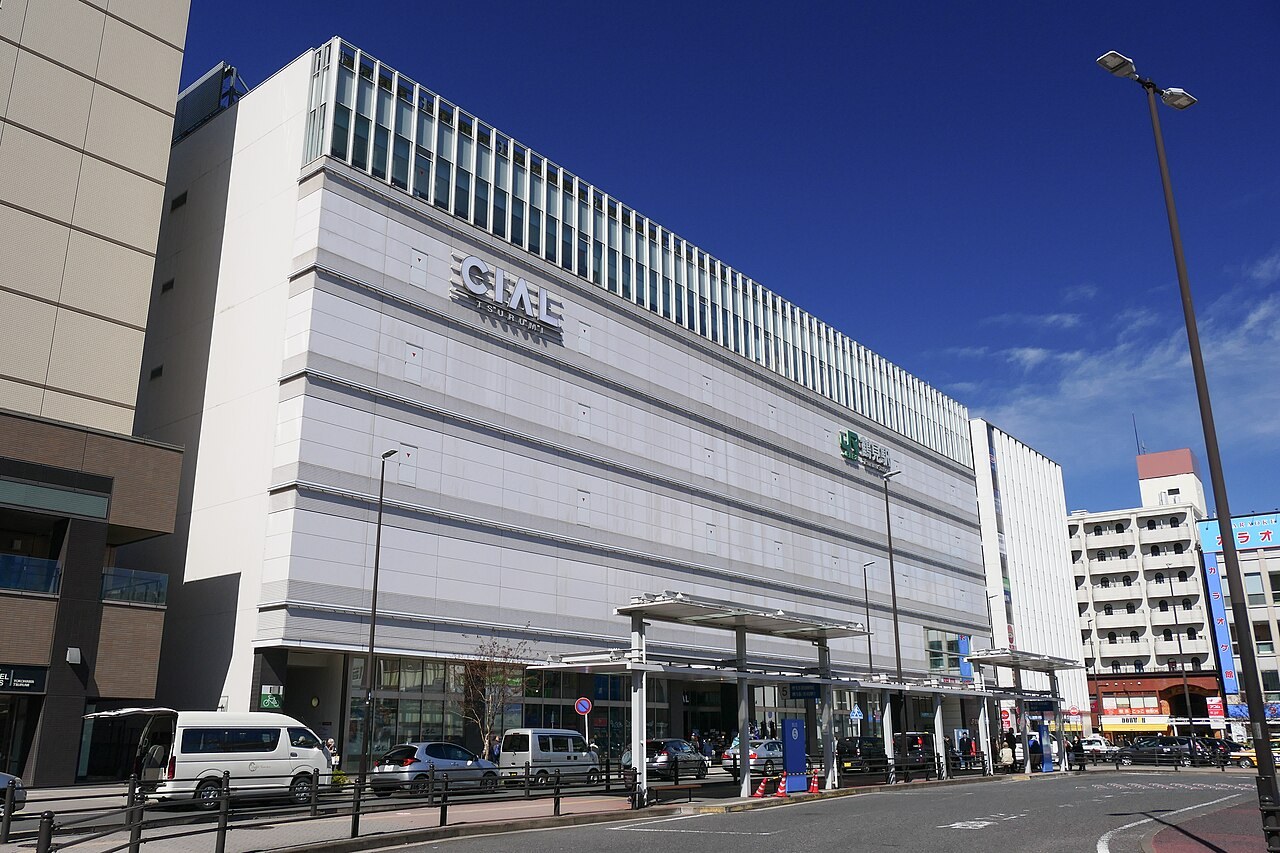
To understand the weight of this investment, start with Tsurumi’s long-standing position. It sits on JR’s Keihin-Tohoku Line—one stop north to Kawasaki, three stops south to Yokohama. Both neighbors are Kanagawa’s dominant business and retail poles.
The problem is precisely that Tsurumi is “in between.” It is neither a terminus nor a hub. Commuters have easy access in both directions, but relatively few people come with Tsurumi as their destination.
The area’s base layer is the Keihin Industrial Zone. From prewar through postwar decades, substantial labor inflows from Okinawa and South America shaped Tsurumi Ward’s distinctive demographics. Shops around Nakadori (仲通り) still retain Okinawan and South American flavors. Sojiji (総持寺), the head temple of the Soto school, adds religious and cultural depth beyond the industrial profile.
From a real estate perspective, however, these traits have long failed to command a premium. The district’s primary function is “residential + commute.” Daytime footfall is thin and commercial accumulation limited—hence Tsurumi’s pricing lags Kawasaki and Yokohama, and yields remain relatively high.
2. ¥19 billion buys more than just a library building
On August 6, 2026, Yokohama City selected the “Weaving the Future – Toyooka Group (未来を紡ぐ・豊岡グループ),” led by Sato Kogyo Yokohama Branch (佐藤工業 横浜営業所), as the awardee for the “(tentative name) Toyooka-cho (豊岡町) Complex Facility Reorganization and Development Project,” setting the award amount at about ¥19.8606 billion.
The project site is the former Toyooka Elementary School (豊岡小学校), about a 7-minute walk from Tsurumi Station West Exit. Leveraging the school’s rebuild due to aging, the plan consolidates dispersed functions—library, nursery, child-rearing support, and civic activities—into a single building.
The complex building will be 7 stories above ground with a gross floor area of about 13,363 m²; including the gymnasium, total GFA will be about 14,395 m². Floors 1–4 will house the elementary school, a nursery will be on the 1st floor, and floors 5–7 will be devoted entirely to public cultural functions.
The standout is the scale of the library expansion. The current Tsurumi Library has a GFA of about 1,510 m²; the new facility is planned at about 5,000 m²—a 3.3x increase. The collection will expand from about 110,000 volumes to about 200,000, and seating from about 40 to over 200.
These numbers matter because there is established demand behind them. In FY2024 alone, Tsurumi Library saw 239,273 visitors; this entire flow will shift to the West Exit.
Equally important is the design intent: a food-permitted area on the 5th floor; a multipurpose hall and teens’ area on the 6th; general stacks and study space on the 7th. This is a clear pivot from the traditional “borrow and leave” model to encouraging “long stays.”
Yokohama describes the goal as a place to “relax, gather, and learn.” Translated into investment terms: attract people to the West Exit for reasons other than commuting and shopping—and keep them there for hours.
The project uses a PFI BTO (Build-Transfer-Operate) scheme. The main agreement is slated for December 2026; the elementary school, library, and nursery are to begin service between August and October 2030; the gymnasium and sports grounds are scheduled to open in September 2033. In addition, a portion of the site will be separately leased to a private operator to develop facilities such as a pool under a private-build, private-operation model.
What will shape the West Exit’s rent curve over the next decade is not building size. It is shifting more than 240,000 annual library visits from “minutes” to “hours” of dwell time.
3. Data: How undervalued is Tsurumi?
Starting with the rental market: Urbalytics data shows the Tsurumi Station area’s average monthly rent for rental apartments is about ¥107,900, with an average unit size of 34.03 m². Converted to a per-m² basis, that is about ¥3,312; the median is about ¥3,249.
The trend in asking rent per tsubo is in a bottoming-and-rebound phase. In Q2 2026 it was about ¥10,600 per tsubo (sample 216), and in Q3 it recovered to ¥11,100 per tsubo (sample 251). For context, sample sizes in Q3 2025–Q1 2026 were just 2, 11, and 16, respectively. Trend judgments should rely on the thicker, most recent two quarters.
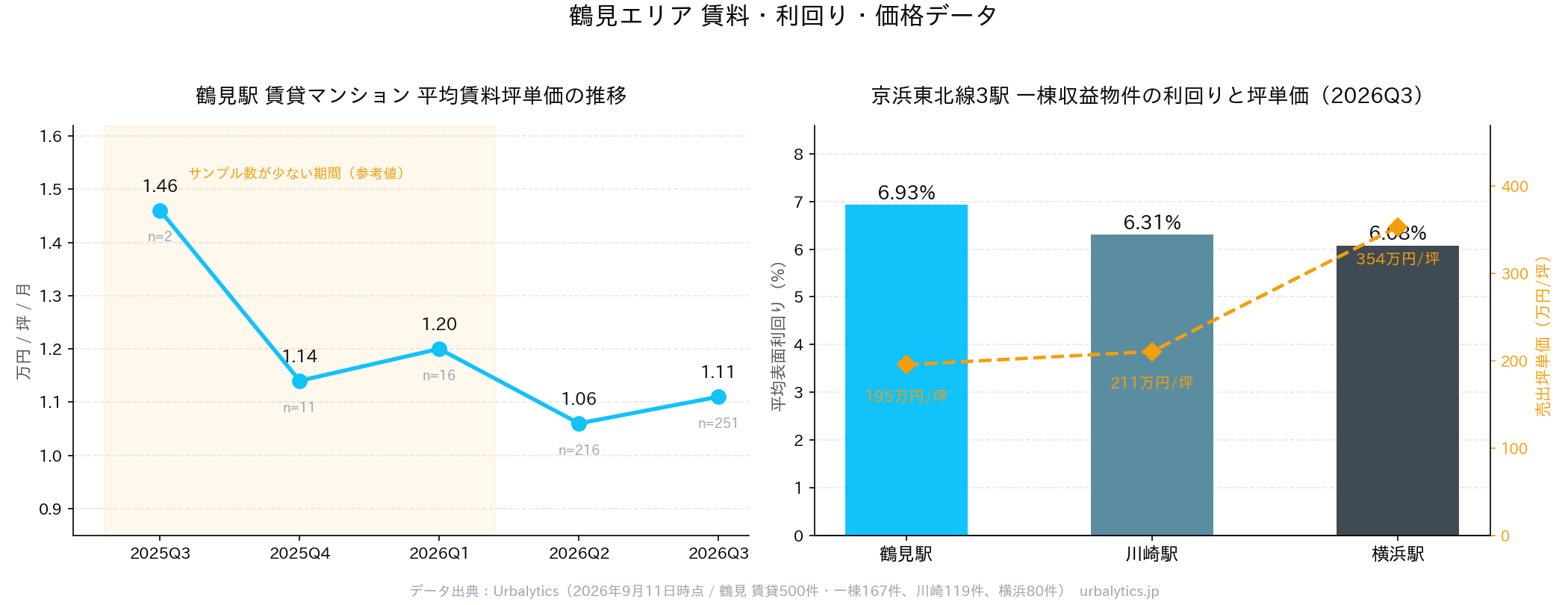
The gap is even more intuitive on single-building assets. Based on Urbalytics’ on-market samples, across 167 listings in the Tsurumi Station area the average gross yield is 6.93%, the median 7.00%, the average asking price about ¥137.2 million, and the average annual income ¥8.486 million.
Set against adjacent stations, the value stands out. Kawasaki Station (119 samples) shows an average yield of 6.31% and an average price of ¥176.13 million. Yokohama Station (80 samples) shows an average yield of just 6.08% and an average price of ¥213.36 million.
The per-tsubo pricing gap is sharper than yields. In Q3 2026, Tsurumi’s on-market price averaged about ¥1.95 million per tsubo, Kawasaki about ¥2.11 million per tsubo, and Yokohama reached about ¥3.54 million per tsubo. Put differently, the asking price per revenue-generating tsubo in Tsurumi is only 55% of Yokohama’s.
Urbalytics Insight We can quantify this discount because Urbalytics simultaneously captures price, annual income, and building/land area for on-market samples, enabling like-for-like comparisons across adjacent stations. It is common knowledge that “Tsurumi is cheaper than Yokohama,” but determining whether that discount is converging requires a per-tsubo time series. Tsurumi rose a cumulative 11.49% over the past four quarters, while Kawasaki rose just 1.68% over the same period. The discount is narrowing, but not rapidly.
One notable example sits right next to the planned site. In Toyooka-cho (豊岡町), Tsurumi Ward, 2 minutes on foot, a single-building asset completed in 1970 is listed with an asking price of ¥289 million, annual income of ¥28.9 million, and a gross yield of exactly 10.00%. This is a textbook case of “public investment about to materialize but not yet priced in.”
4. What this change means for investment value
Combine the three threads and the West Exit thesis becomes clear.
The source of undervaluation is “few people around in daytime.” The ¥19 billion public investment explicitly aims to “keep people there in daytime.” More than 240,000 annual library visits will shift to the West Exit, and with a design that encourages long stays, the daytime footfall profile along Toyooka-dori (豊岡通り) and Toyooka Shopping Street (豊岡商店街) should change directly.
Existing owners gain passively: their buildings need not change when the very nature of fronting footfall does. For new entrants, the window is relatively clear—main agreement in December 2026; core facilities commence service in 2030. That leaves 3–4 years to establish positions patiently.
Of course, opportunity comes with risk.
First, the essence of this project is the reorganization of public facilities, not a station-front commercial redevelopment. It will not bring a tens-of-thousands workforce as a supertall might; footfall will be in the tens of thousands, not hundreds of thousands. Accordingly, the rent uplift should be gradual and measured; do not expect sharp price spikes in the short term.
Second, the site is about a 7-minute walk from the station, and the benefit range depends heavily on whether a “Station → Toyooka Shopping Street → Complex” pedestrian circulation spine actually forms. Yokohama City itself plans a 2026 study of traffic and flow changes due to the relocations. In other words, the circulation spine remains a hypothesis requiring verification.
Third, many of Tsurumi Ward’s high-yield assets carry commensurate trade-offs. The 10% Toyooka-cho example is a 1970 build; the 13.24% asset in Higashi-Terao (東寺尾) is a 20-minute walk. High yields often imply pre-1981 seismic standards, heavier capital-expenditure burdens, or inferior locations. In this market, the easiest mistake is to infer your achievable yield from the area average.
Risk advisory Using the area-average yield for investment decisions is especially dangerous in Tsurumi. Across 167 samples the yield range is 1.60%–13.24%, an eightfold spread. Most high-yield listings are either 1970s–1990s stock or non-core locations 15+ minutes on foot. For such assets, major repairs, vacancy, and financing terms often erode the gap between gross yield and true net income.
5. Conclusion
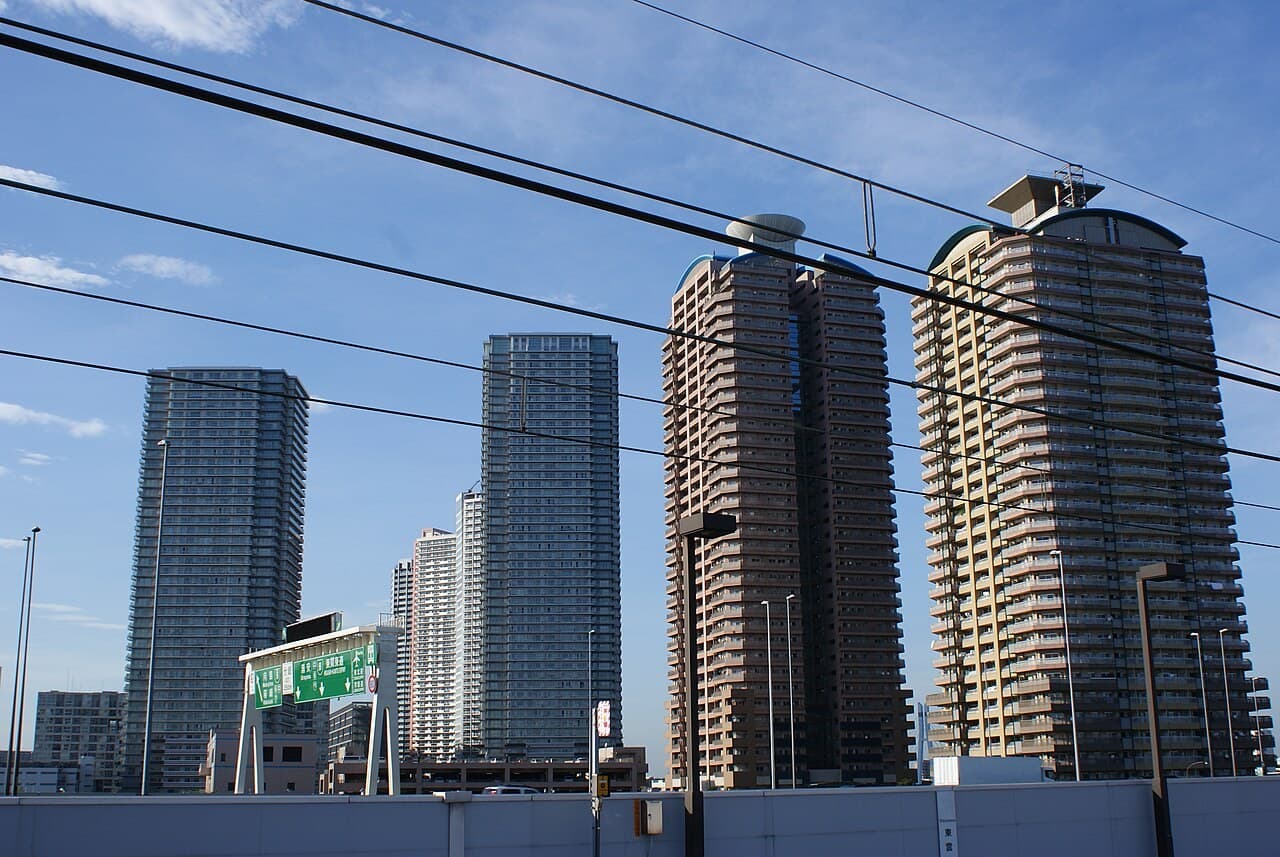
Tsurumi is not a “love at first sight” market. There is no tower skyline and no polished brand label for the district. Even the redevelopment name is unvarnished—“Toyooka-cho Complex Facility Reorganization and Development Project.”
Yet real estate alpha often comes from precisely these “structural improvements that pricing overlooks.” ¥19 billion of public capital, a library expanding 3.3x, and a 240,000‑scale annual flow shift—these are not rumors but awarded facts. Meanwhile, market pricing for Tsurumi still sits on the old coordinates: “55% of Yokohama’s per-tsubo pricing, at about a 7% gross yield.”
The real question is not whether Tsurumi will rise, but how long this discount will persist. If you want to see where a specific asset sits in the distribution, match its yield percentile and per-tsubo time series in the Tsurumi Station area directly in Urbalytics and decide whether to act.
#TsurumiYokohama #TsurumiStation #TsurumiWard #ToyookaChoComplexFacility #KeihinTohokuLine #KanagawaRealEstate #JapanRealEstateInvestment #WholeBuilding #GrossYield #Redevelopment #PFI #IncomeProperty #BuyingRealEstateInJapan #RentMarket #Urbalytics
References
- Kenbiya, 2026, “A new ~14,000 m² hub at the West Exit of Tsurumi Station, Tsurumi Ward, Yokohama City: Functions including the library consolidated; expected shift in foot traffic to Toyooka Shopping Street (豊岡商店街)”, https://www.kenbiya.com/ar/ns/region/shutoken/10484.html
- Yokohama City, 2026, “(Tentative name) Toyooka-cho (豊岡町) Complex Facility Reorganization and Development Project” PFI operator selection and award decision, https://www.city.yokohama.lg.jp/
- Yokohama City, 2026, Tsurumi Station area masterplan (positioning of the core-station area), https://www.city.yokohama.lg.jp/tsurumi/
- Urbalytics, 2026, Rent statistics and single-building income property gross yield and price-per-tsubo data for Tsurumi, Kawasaki, and Yokohama station areas (as of September 11, 2026), https://www.urbalytics.jp/
Copyright: This article is original content by the author. Please do not reproduce, copy, or quote without permission. For usage requests, please contact the author or this site.