Words: 1893 | Estimated Reading Time: 10 minutes | Views: 25
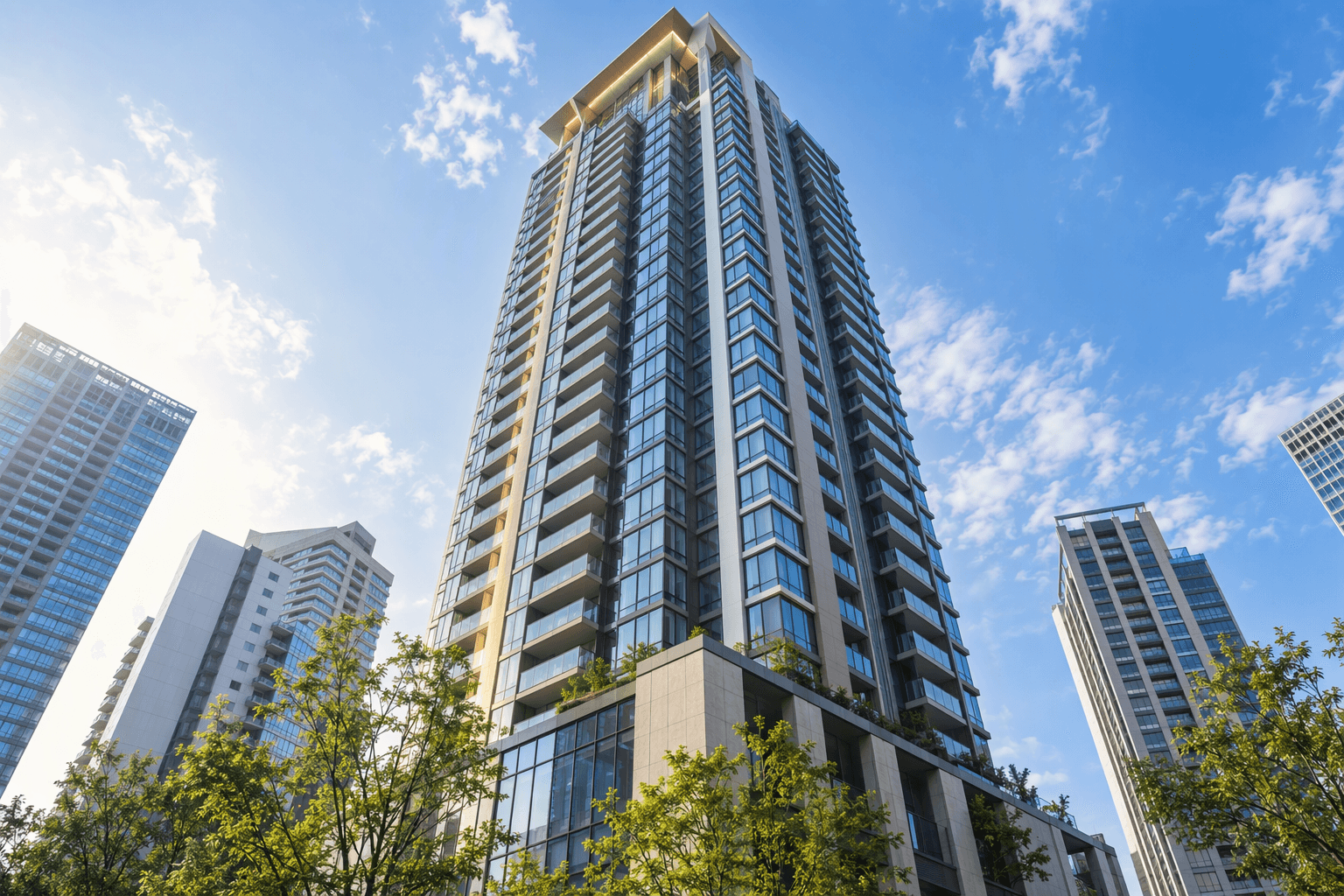
Tokyo Metropolitan Government has written curbs on speculation into its Housing Master Plan, but the market cooled first: at Harumi Flag, 65% of active listings have been reduced from their initial asking prices.
At the plenary session of the Tokyo Metropolitan Assembly on September 29, 2026, Governor Yuriko Koike finally said what many had waited years to hear: the new Housing Master Plan (住宅マスタープラン) will include “effective policies” to curb speculative transactions not intended for owner-occupation.
After the news broke, the most common reaction on social media was not applause but “This should have been done back at Harumi Flag (晴海フラッグ).” Behind that complaint lies a question investors should take seriously: even before rules are in place, the market is already changing.
We reviewed the original planning concept released by TMG on September 11 and pulled the latest six months of resale and rental data for Harumi Flag from the Urbalytics platform. The conclusion may run counter to the instinct of “new rules are coming, sell fast.”
I. Why now
TMG’s own materials spell out the backdrop. Citing data from the Real Estate Economic Institute, the average price of new-build condominiums (新築マンション) in the 23 wards rose from ¥111.81 million in 2024 to ¥136.13 million in 2025—an increase of roughly 20%—with the Tokyo-wide average reaching ¥118.55 million.
In the same document, under policy challenges, it states that beyond construction costs and fewer new deliveries, “short-term resales and other speculative transactions are cited as one cause” of rising prices. This is the first time TMG has directly linked speculation to prices in an official housing policy document.
National-level data had already offered corroboration. An MLIT survey published in November 2025 based on property registry information showed that among new condos over 40 square meters in Tokyo’s 23 wards during the first half of 2024, the share resold within one year was 9.9% in large-scale buildings (single-building preservation registrations of 100 units or more), versus just 3.3% in other buildings.
In other words, short-term resales did not occur evenly across all new supply; they clustered in mega-projects, high-rises, and headline-grabbing developments. Harumi Flag is a textbook example.
Some ward governments moved earlier. In July 2025, Chiyoda Ward asked real estate associations to add contract clauses for redevelopment projects that received subsidies or relaxations on floor-area ratio and height, generally banning resales within five years after handover and restricting multiple purchases under the same name.
II. What exactly did Tokyo say this time?
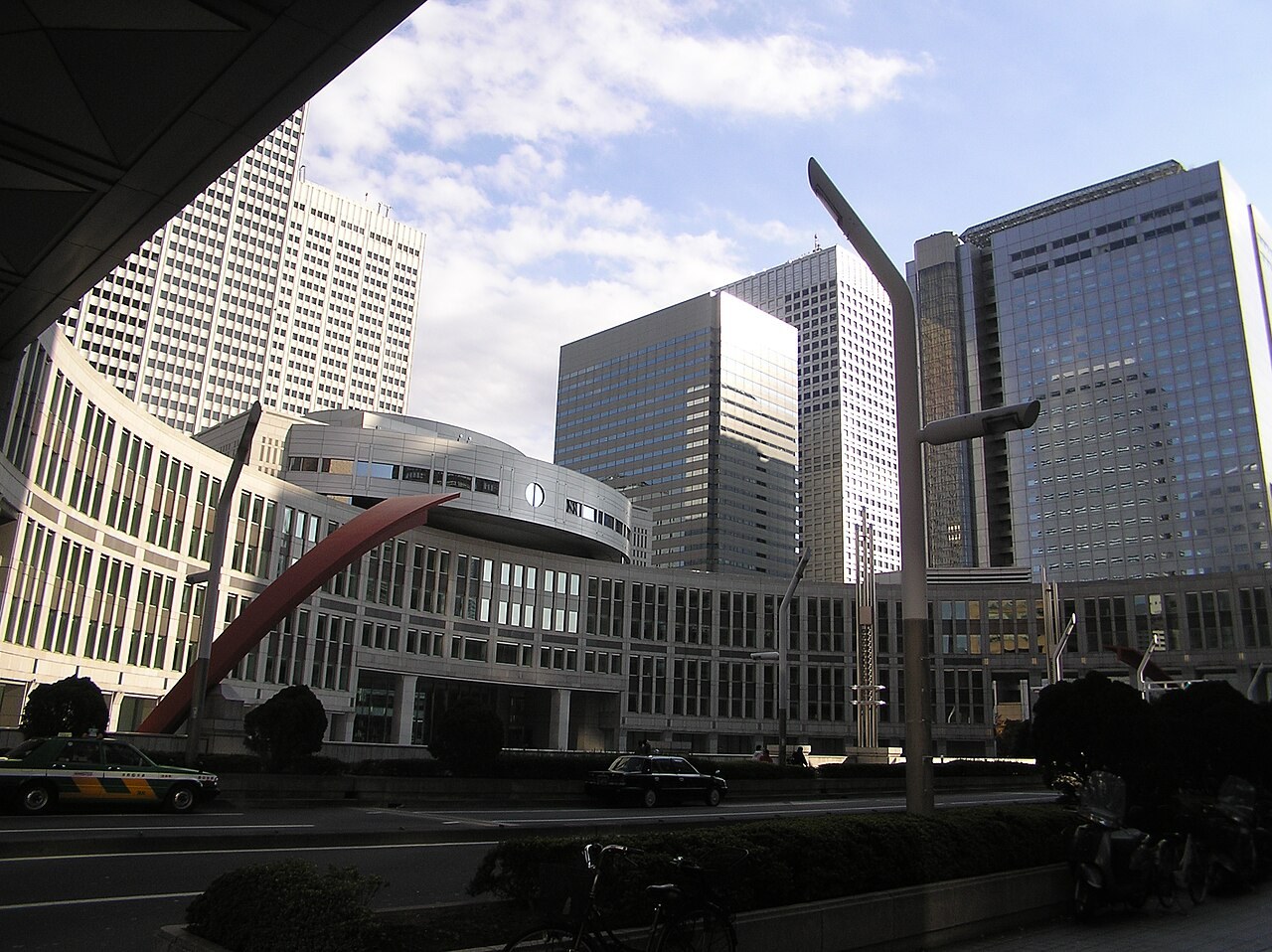
First, temper expectations: the Governor’s statement specified neither concrete measures nor an implementation timeline. Based on what is public, TMG is considering two avenues.
One is to devise ways to restrict purchases made for speculative purposes in redevelopment and other projects in which TMG participates; the other is to request tax measures from the national government. The former is within TMG’s remit; the latter depends on the Diet and the Ministry of Finance, and the pace is not in Tokyo’s hands.
The original text of the “Concept for Formulating the New Tokyo Housing Master Plan (都の考え方)” released on September 11 puts it this way: housing is the foundation of residents’ lives; speculative transactions not based on actual need are undesirable; TMG will study curbs while monitoring price trends.
On timing, the Tokyo Housing Policy Council is expected to submit its response around December, and TMG plans to finalize the new plan within this fiscal year (i.e., by March 2027). The current plan covers FY2021–FY2030, so this is an early revision.
Notably, the same document’s main axis is “making better use of existing stock”: roughly 900,000 vacant homes, roughly 1 million “pre-vacant” homes, and about 510,000 public housing units are all cited as levers to broaden housing choices. Curtailing speculation is one strand, not the centerpiece.
III. Harumi Flag: a belated mirror
Harumi Flag is repeatedly referenced because TMG itself was involved. The former Tokyo Olympic Village site was sold by TMG to developers at a relatively low price and, under the “Designated Builder System” (特定建築者制度), the private sector handled construction and sales.
According to reporting compiled by Shueisha Online, the lottery round in early 2023 saw an average ratio of 71.1x and a maximum of 266x, while later tower buildings reached as high as 640x. In May 2024, NHK examined registrations for six buildings totaling 1,089 units; excluding 10 unregistered units, 292 were under corporate names—about 27%—with a single corporation holding as many as 38 units.
TMG’s explanation at the time was: the project is about a 20-minute walk from the nearest station; there was a long wait from contract to move-in; initial applications were even below supply; and under the Designated Builder System, TMG could not intervene in the sales method. But when NHK checked with MLIT, it was told there is no rule prohibiting TMG from involvement in sales.
In fact, TMG does have precedent. “City Tower Shinagawa (シティタワー品川),” sold in 2008 as a fixed-term land leasehold condo with TMG as landowner, limited buyers to owner-occupiers, barred sales to corporations, and included a buyback clause during the first five years.
Viewed together, the difference was not legal feasibility, but whether “who gets to live there” was set as a policy objective. That is the fundamental reason this latest stance drew criticism as “too late.”
IV. Urbalytics data: Harumi Flag’s resale market is already cooling
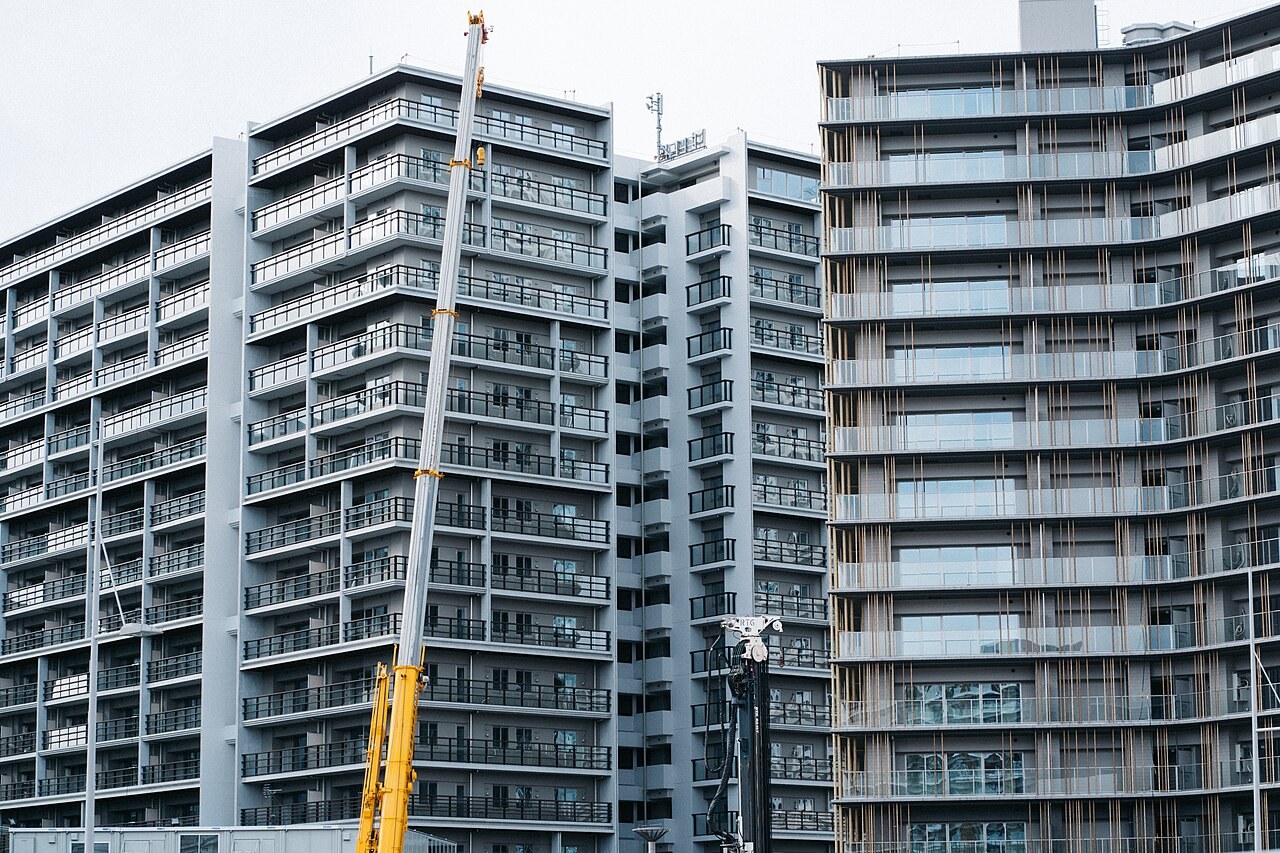
While policy is still on the way, the market has already responded. Using the Urbalytics platform, we extracted Harumi Flag listings with recorded price changes between April and September 2026; after deduplication there were 46 units (the system’s single-pull cap is 50 records, so the sample skews toward recently active listings).
The median asking price across these 46 listings was about ¥154 million, with a median unit price of ¥6.66 million per tsubo—equivalent to roughly ¥2.01 million per square meter. As a reference point, the Urbalytics market report shows that in August 2026, the median unit price across all second-hand condos in Chuo Ward was ¥2.031 million per square meter.
More important is the price trajectory. Of the 46, 30 had reduced their initial asking prices, accounting for 65%; among discounted listings, the median cut was 11.7%, with the largest around one quarter. Final transaction prices typically sit below asks, so these figures mainly show seller expectations easing.
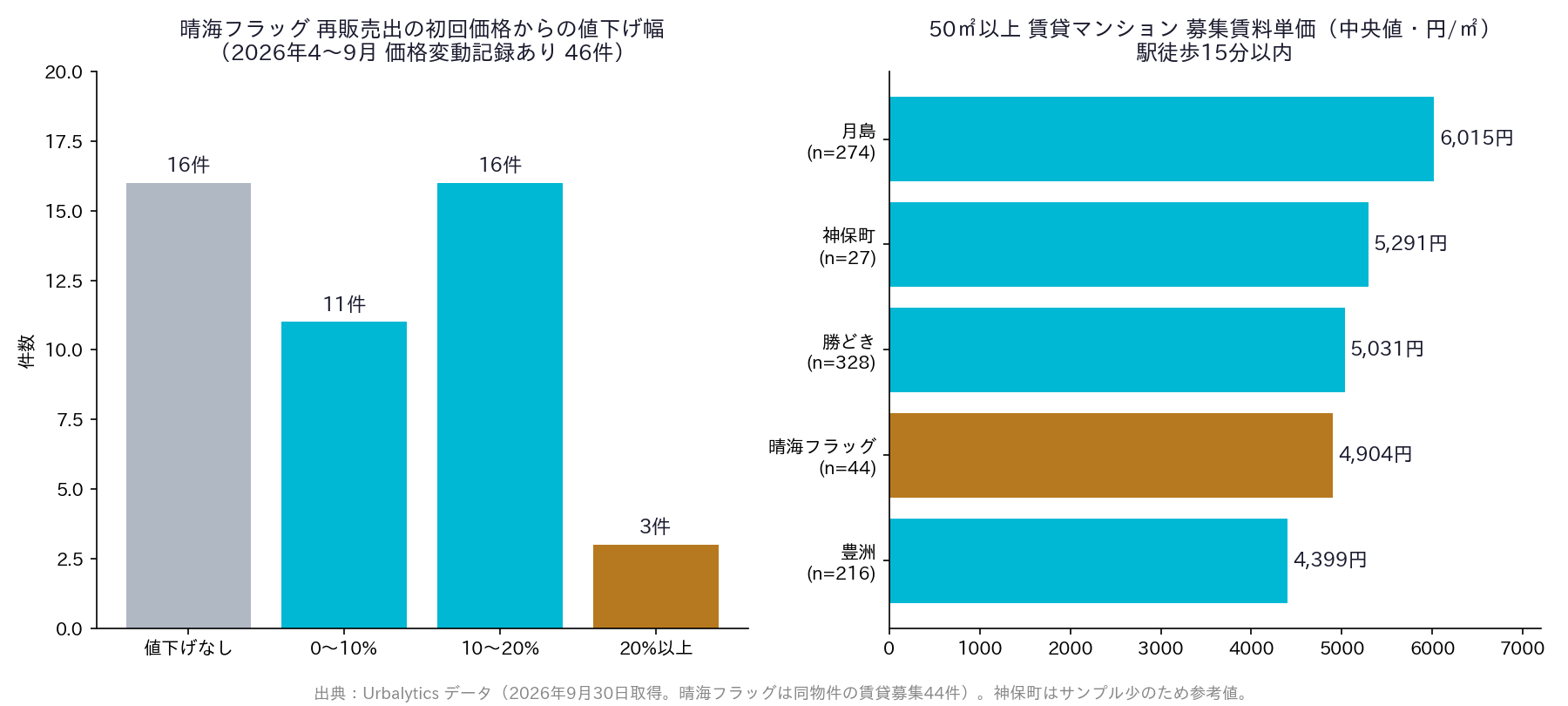
Now rents. Over the same period there were 44 rental listings at Harumi Flag, with a median monthly rent of about ¥385,000 and a median rent of ¥4,904 per square meter. On asking prices, the gross yield (表面利回り) is only around 2.9%, before management fees, repair reserves, and taxes.
Compared with 50 sqm-plus rentals around nearby stations, Tsukishima averages ¥6,015 (n=274), Kachidoki ¥5,031 (n=328), and Toyosu ¥4,399 (n=216). Harumi Flag’s rent per square meter is below Kachidoki and Tsukishima, consistent with its greater distance from stations.
Urbalytics Insight Harumi Flag’s resale unit prices have caught up with the Chuo Ward median, yet its rent per square meter is below Kachidoki; a gross yield of about 2.9% indicates prices are supported mainly by scarcity and appreciation expectations, not by rental income.
Chuo Ward overall shows similar signs. The Urbalytics Chuo Ward second-hand condo market report shows that in August 2026, 528 listings in the ward reduced their asking prices, with a median cut of 4.0%. The reductions are modest, but the volume of price cuts suggests sellers are no longer uniformly holding out.
You can view the detailed numbers in the Chuo Ward second-hand condo market report and the Koto Ward second-hand condo market report.
V. Who will be affected, and who needn’t panic
Based on current information, even if TMG acts, the most likely initial target will be new-builds in which TMG participates, likely following Chiyoda Ward’s format: a no-resale period after handover and limits on multiple applications under the same name. The impact differs by investor type:
First, short-term flippers whose model is “win the lottery, sell at handover” will be hit hardest. Supply of TMG-participating projects is limited to begin with; once resale-prohibition clauses are added, such opportunities will largely disappear. Layer on a cooling market, and the room to profit from spreads has already narrowed markedly.
Second, investors applying in bulk under corporate names will face both “same-name purchase limits” and potential tax changes. The tax side requires national legislation, so it’s unlikely to land quickly, but the direction is clear: policy risk is rising for bulk corporate holdings of new condos.
Third, buyers intending to owner-occupy or to rent long-term face little direct constraint. A no-resale clause over the first five years has almost no impact on those holding more than five years; what really needs clear arithmetic is whether rent can cover carrying costs.
Fourth, the secondary market and ordinary private-sector new-builds not involving TMG are, in the near term, outside the regulatory scope. But if rules tighten and speculative capital exits, resale liquidity in popular mega-projects could be the first to feel the impact.
Risk warning Specifics and timing of any new rules remain uncertain; any attempt to “front-run before the rules” rests on guesswork. Based on asking prices, Harumi Flag’s gross yield is under 3%; if floating rates continue to rise, carrying costs could consume rental income.
TMG materials show that as of January 2026, representative floating mortgage rates at major banks were 0.67%, while the all-fixed Flat 35 stood at 2.08%, both on an upward path. For high-priced condos supported by low-cost leverage, interest rates will alter pro forma returns earlier and more directly than regulation.
Conclusion: Regulation lags, markets lead
Put on a timeline: Chiyoda Ward moved first in summer 2025; in the fall, MLIT used registry data to confirm that short-term resales cluster in mega-projects; in September 2026, TMG wrote “curbing speculation” into its planning concept. Rules are climbing the ladder layer by layer, but each step is half a beat behind the market.
For investors, the more practical takeaway is that the “lottery equals profit” era for central Tokyo new-builds has likely ended before rules take effect. From here, winners will be those who price rents, rates, and hold periods correctly—not those who move fastest.
In our previous analysis, we discussed how the LDP’s land proposal would shift foreign land acquisition from “post-reporting” to “prior approval”; TMG’s latest stance is aligned with this national tightening.
At the same time, rents for single-occupancy apartments in Tokyo’s 23 wards hit record highs, indicating that end-user demand has not disappeared; it is shifting from “buy to flip” back to “rent to live.”
If you want to compare asking levels, price-cut trajectories, and nearby rents building by building, Urbalytics’ condo and station-area datasets can help you gauge how much of a unit’s price is supported by rental cash flow.
#TokyoRealEstate #HarumiFlag #晴海フラッグ #FlippingCurbs #ShortTermResale #TokyoHousingMasterPlan #YurikoKoike #ChuoWard #Kachidoki #JapanNewBuilds #JapanRealEstateInvestment #Yield #BuyingPropertyInJapan #Urbalytics
References
- 集英社オンライン(Yahoo!ニュース配信)「『晴海フラッグの時にやれよ!』小池知事がマンション投機抑制を表明も非難殺到…」, 2026, https://news.yahoo.co.jp/articles/03c8f9a31dc8eaa4e6bbaaf9144cb4fe02901d15
- 東京都住宅政策本部「新たな『東京都住宅マスタープラン』の策定に向けた都の考え方を取りまとめました」, 2026, https://www.metro.tokyo.lg.jp/information/press/2026/09/2026091113
- 東京都住宅政策本部「新たな『東京都住宅マスタープラン』策定に向けた都の考え方(本編)」, 2026, https://www.juutakuseisaku.metro.tokyo.lg.jp/documents/d/juutakuseisaku/juumasusakuteikangaekata_20260911
- 東京都「令和8年第三回都議会定例会 知事所信表明」, 2026, https://www.metro.tokyo.lg.jp/governor/shisehoshin/08_03
- 国土交通省「不動産登記情報を活用した新築マンションの取引の調査結果を公表」, 2025, https://www.mlit.go.jp/report/press/tochi_fudousan_kensetsugyo05_hh_000001_00237.html
- 日本経済新聞「東京都千代田区マンション転売規制、投機けん制」, 2025, https://www.nikkei.com/article/DGXZQOCC270860X20C25A7000000/
- 日経クロステック「原則5年のマンション転売禁止を要請、千代田区」, 2025, https://xtech.nikkei.com/atcl/nxt/column/18/00154/02516/
- Urbalytics マーケットレポート 中央区 区分マンション, 2026, https://www.urbalytics.jp/market/area/tokyo/chuo-ku/mansion
- Urbalytics マーケットレポート 江東区 区分マンション, 2026, https://www.urbalytics.jp/market/area/tokyo/koto-ku/mansion
Copyright: This article is original content by the author. Please do not reproduce, copy, or quote without permission. For usage requests, please contact the author or this site.