Words: 1961 | Estimated Reading Time: 10 minutes | Views: 5445
Regional History and Urban Development Context
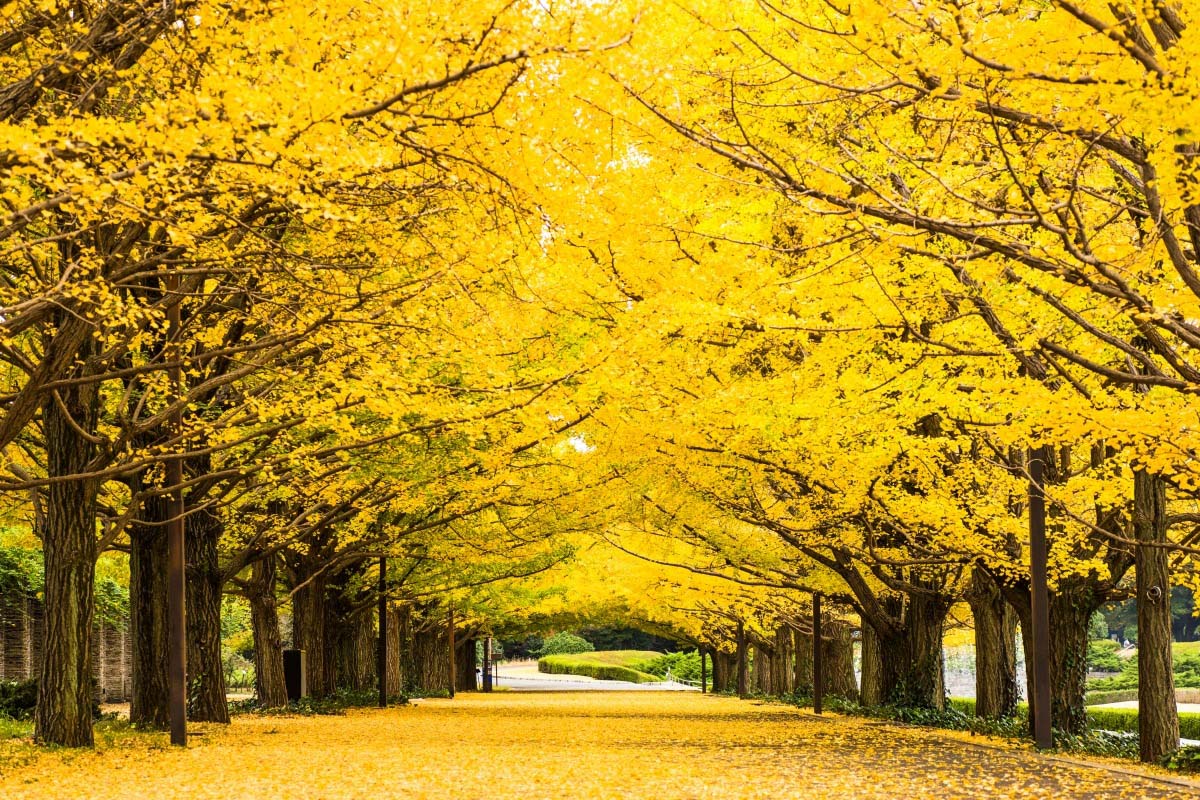
Tachikawa City, located in western Tokyo, is home to roughly 180,000 residents. As a satellite city in the Tama area, Tachikawa’s early growth was closely tied to transport and military uses. In 1922 the Imperial Japanese Army established the Tachikawa Airfield, which became an important aviation base in the early Shōwa era; the Tachikawa Aircraft Company, founded in 1924, manufactured military aircraft during the war and gradually diversified into industries such as real estate after the war. Following World War II, the U.S. military operated the Tachikawa base until its return to Japan in 1977. A large portion of the former base was redeveloped in 1983 into the Showa Memorial Park, now one of Tokyo’s largest urban green spaces.
Find properties in 東京都立川市
Individual listings, price-change history, closed transactions and AI valuations are available on a free account.
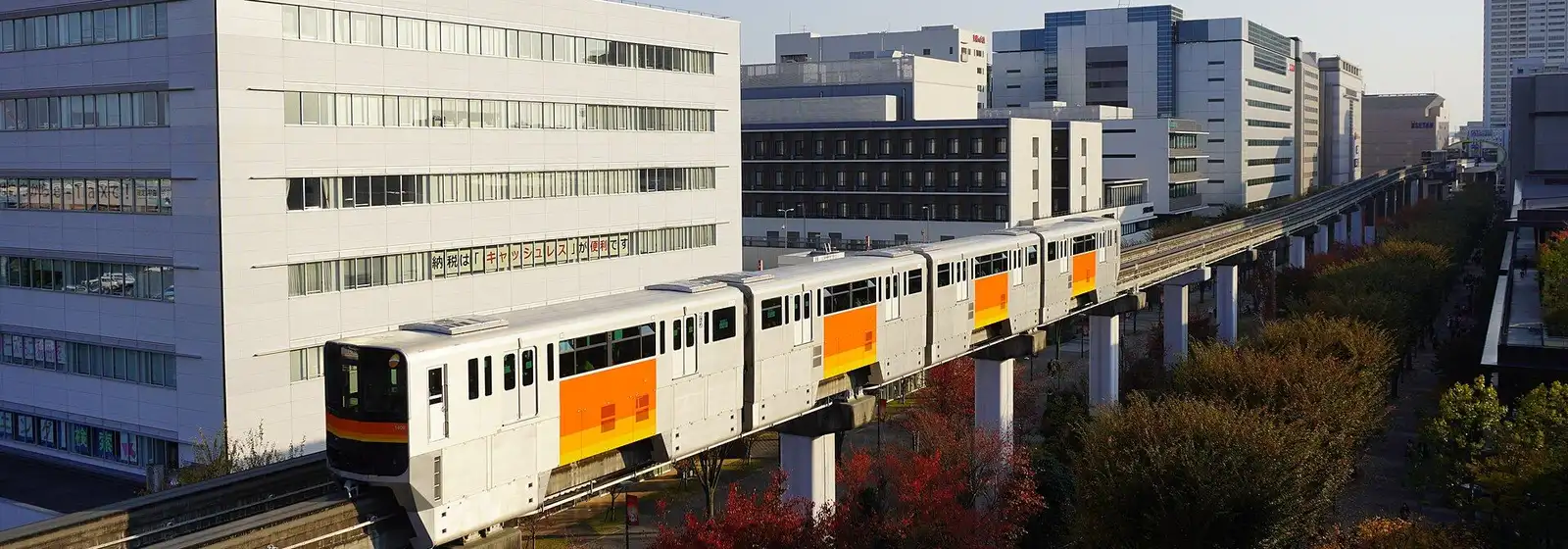
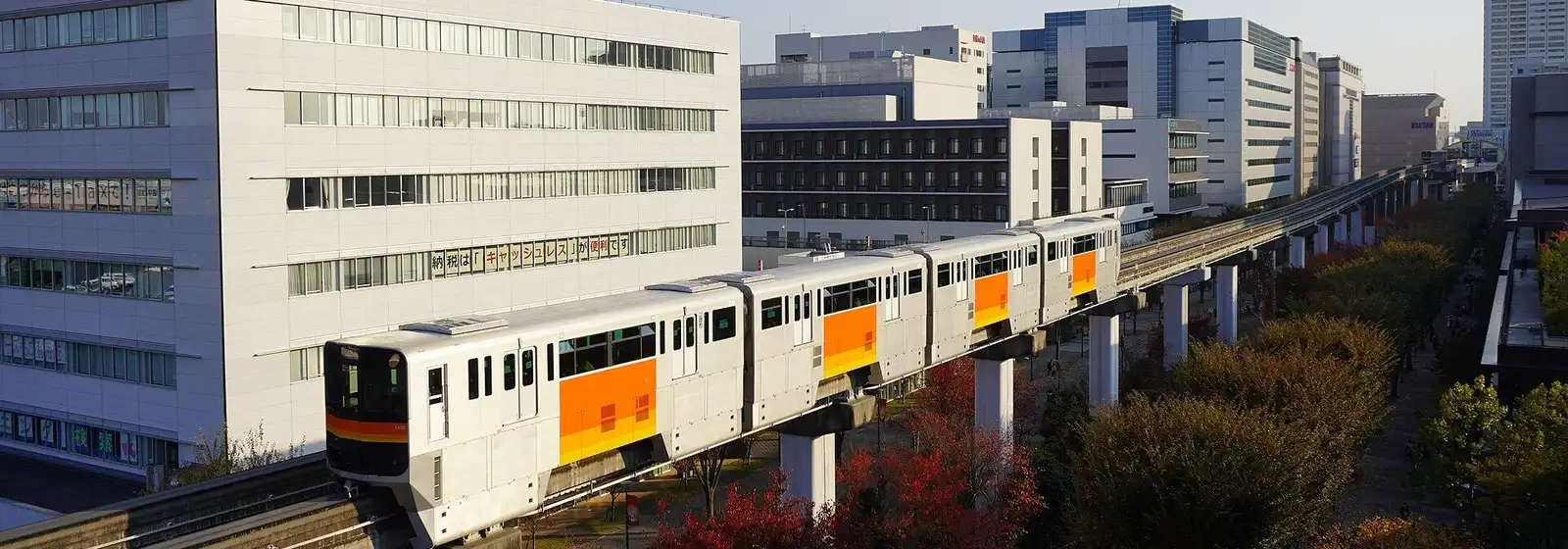
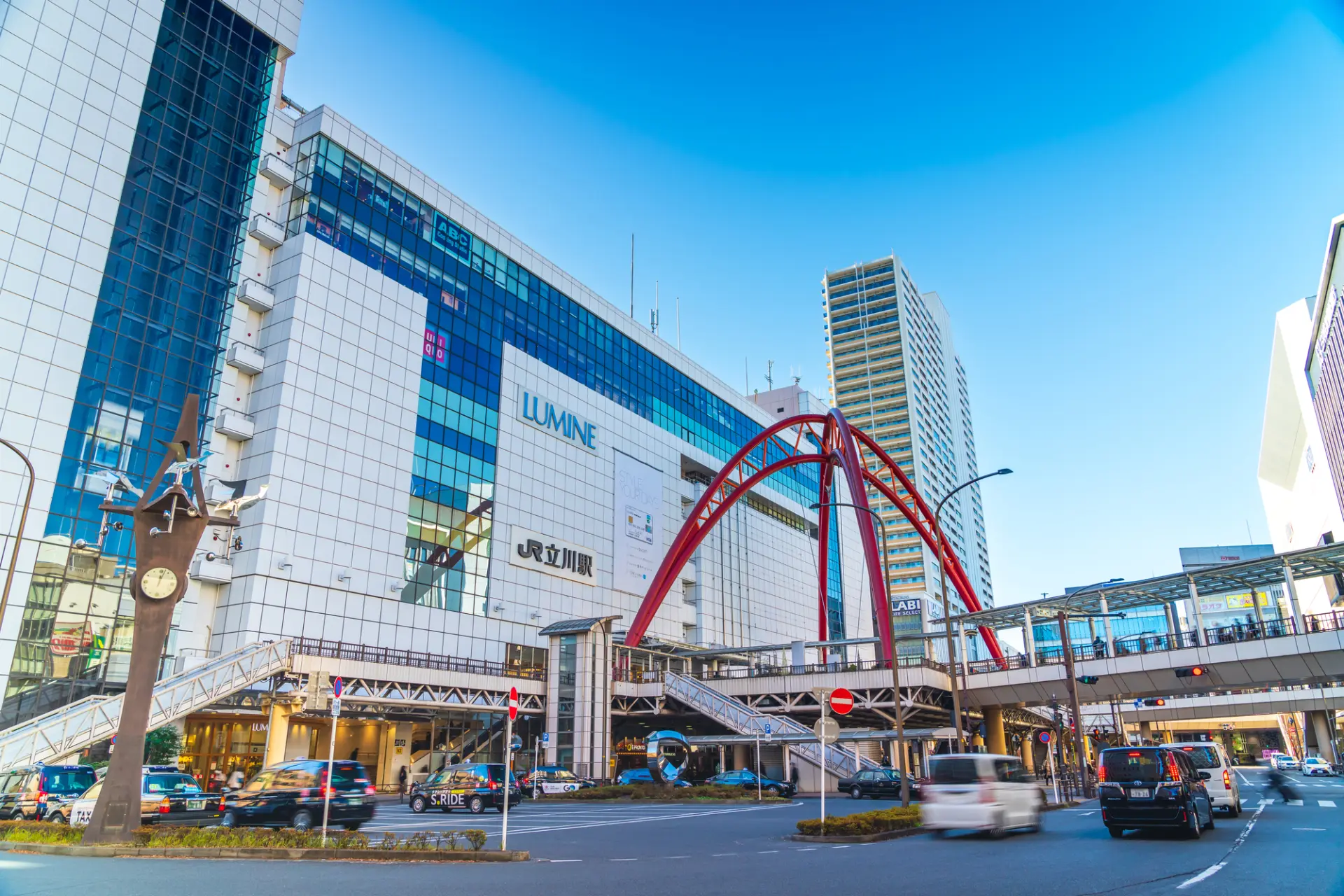
Benefiting from early rail access (JR Chuo Line’s Tachikawa Station has been in operation since 1889) and base-related industries, Tachikawa rapidly urbanized after the war and evolved beyond its former military-town identity to become a commercial and transport subcenter in western Tokyo. By the end of the 20th century the Tama Monorail connected the northern Tama area through Tachikawa. In 1998 Tachihi Station opened with the monorail, serving the west-side district of the former base. Over the past two decades Tachikawa has pursued continuous urban renewal on the old base land: department stores such as Isetan and Takashimaya rose near Tachikawa Station, and underground and elevated commercial facilities (Lumine, Granduo, etc.) were linked to the station area; along the monorail’s western corridor, local firm Tachihi Holdings (a successor to Tachikawa Aircraft Company assets) developed large mixed-use facilities, transforming Tachikawa from a former “military city” into a multifunctional hub of living, commerce, and transport.
In particular, the area around Tachihi Station has emerged in recent years as a new vitality center for Tachikawa. Opened in 2015, the Mitsui LaLaport Tachikawa Tachihi shopping center houses over 250 shops, dining options, a food court, a cinema, and clinics—one of the largest complexes in western Tokyo. In 2020 the north side of Tachikawa Station, near Showa Memorial Park, debuted the large open commercial district GREEN SPRINGS, promoted as a “healthy living city that blends urban life and nature.” GREEN SPRINGS includes a hotel, a theater, diverse retail and office space, and uses a distinctive “urban veranda” design to create public spaces that blend tradition and modernity. These developments have helped Tachikawa evolve from a suburban bedroom community into a regional commercial center and transport node, giving the city an increasingly pronounced dual-core character in both daily living functions and urban opportunities.
Trends in Population, Land Prices, and Rental Demand
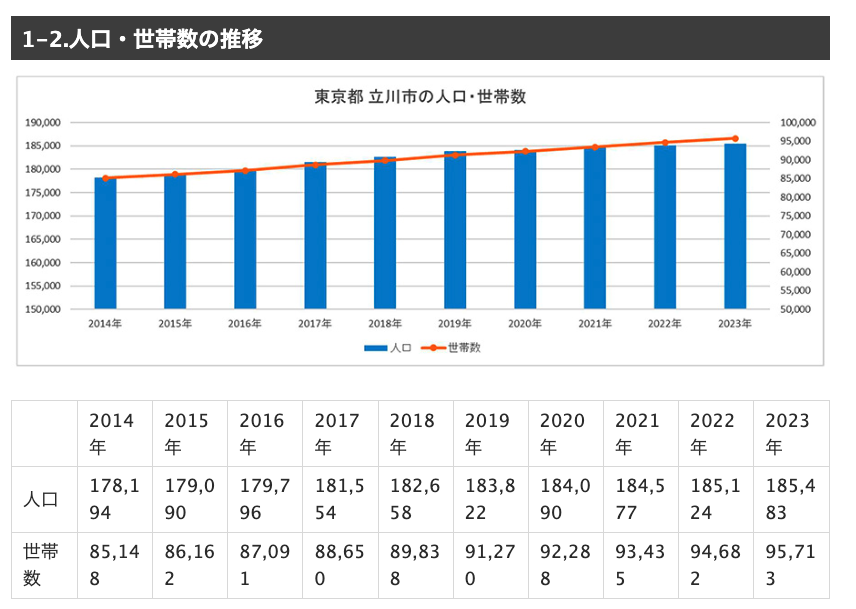
Tachikawa’s resident population has held relatively steady at around 180,000 in recent years. The 2015 national census recorded approximately 175,800 residents, rising to 183,600 in 2020 (a 4.1% increase over five years); as of January 2024 the Basic Resident Register reported about 180,400 residents, roughly flat year-on-year . City projections indicate a slight population increase will continue through the 2020s, peaking around 2028 before entering a gradual decline due to low birthrates and aging. Notably, amid slowed natural growth, Tachikawa has achieved net in-migration through attracting residents from outside the city: over the past five years the city has recorded annual net inflows from other municipalities, totaling roughly 6,400 people. This reflects a trend—accelerated by the spread of remote work—of employees who work in central Tokyo choosing to live in more affordable, well-connected locations like Tachikawa and commute two to three days per week. Stable population levels and ongoing in-migration underpin local real estate demand.
Land prices in Tachikawa have risen strongly in recent years, recording increases for four consecutive years. In the 2025 land price announcement, the citywide average land price was approximately ¥536,436/m², up 5.6% from the prior year—reaching the highest level since 1995. Over the past decade (2016–2025) Tachikawa’s average annual land price growth reached as high as 6.59%. Commercial land in station-front areas surged (2025 average for commercial/service land reached ¥1,503,000/m²), while residential land prices also rose steadily—citywide average residential land price in 2025 was about ¥290,267/m², up 6.55% year-on-year. This performance ranks among the strongest in suburban Tokyo. Statistics show cumulative land price growth of roughly 41.8% between 2014 and 2024, the highest increase outside Tokyo’s 23 wards. Typical residential zones, such as the Nishiki-cho area of Tachikawa, saw land prices climb more than 25% over five years—clear evidence of value uplift from redevelopment.
The rental market in Tachikawa remains active, with rents trending upward. Average rent for multi-unit residential buildings is approximately ¥2,368/m² per month, meaning a compact 33 m² unit rents for about ¥72,800 per month. Average rents rose about 1.1% over the past year, indicating stable and modestly growing demand. For buyers seeking owner-occupied housing, new-build prices in Tachikawa are still attractive relative to central Tokyo. New condominium projects near stations feature primary 2–3LDK layouts priced around ¥65–80 million. For example, a riverside park-adjacent Tachikawa project released in 2024 listed 3LDK units starting at approximately ¥65 million (around 75 m²). Compared with similar-size properties that often exceed ¥100 million in Tokyo’s 23 wards, Tachikawa’s price thresholds are substantially lower. Several years of low interest rates have increased borrowers’ loan capacity and supported higher transaction volumes and price appreciation. With recent shifts toward more cautious interest-rate policy, price growth may moderate, but Tachikawa’s relatively accessible pricing and positive population inflows continue to make its real estate attractive for both owner-occupation and investment.
Recent Area Developments and Facility Upgrades
In recent years Tachikawa—particularly the area around Tachihi Station—has seen a series of notable developments and public facility upgrades that have materially improved local quality of life:
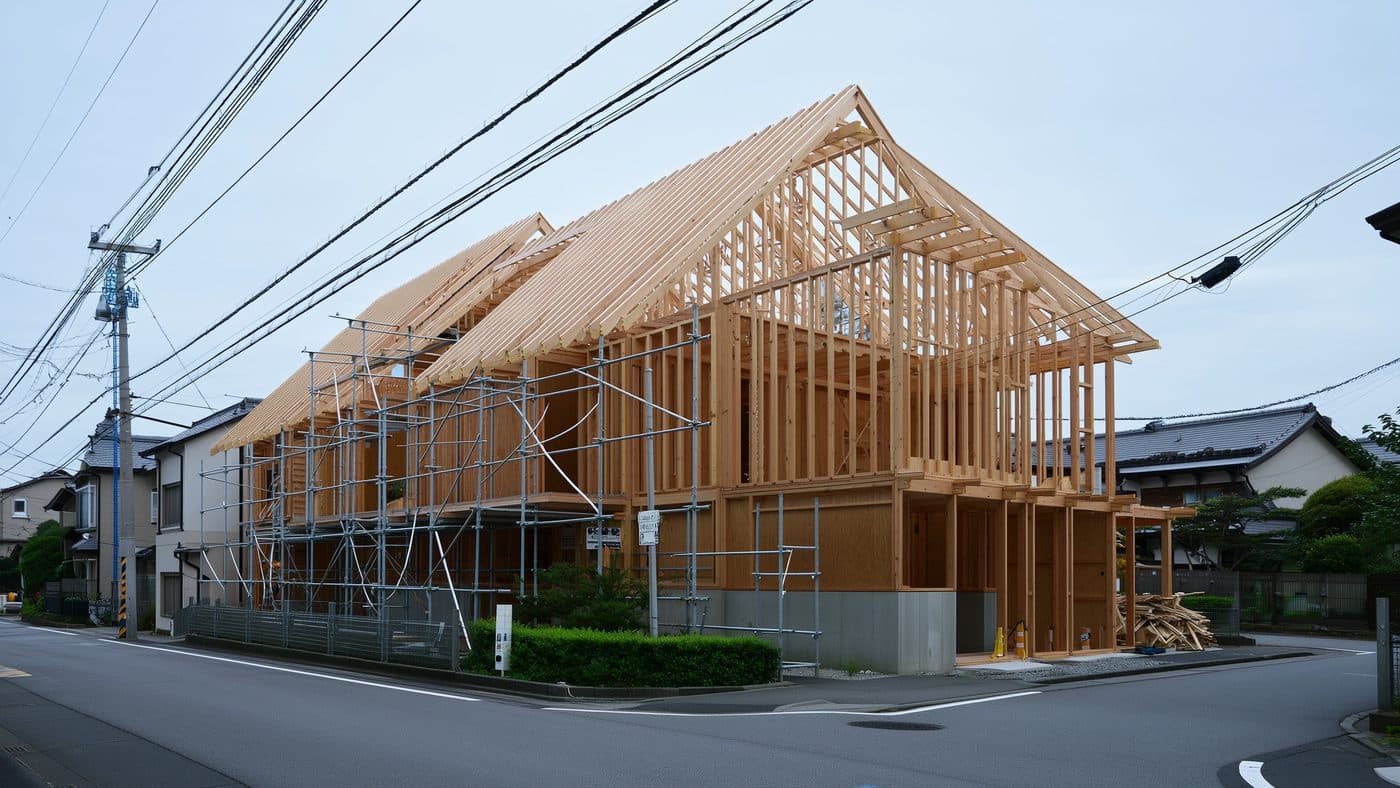
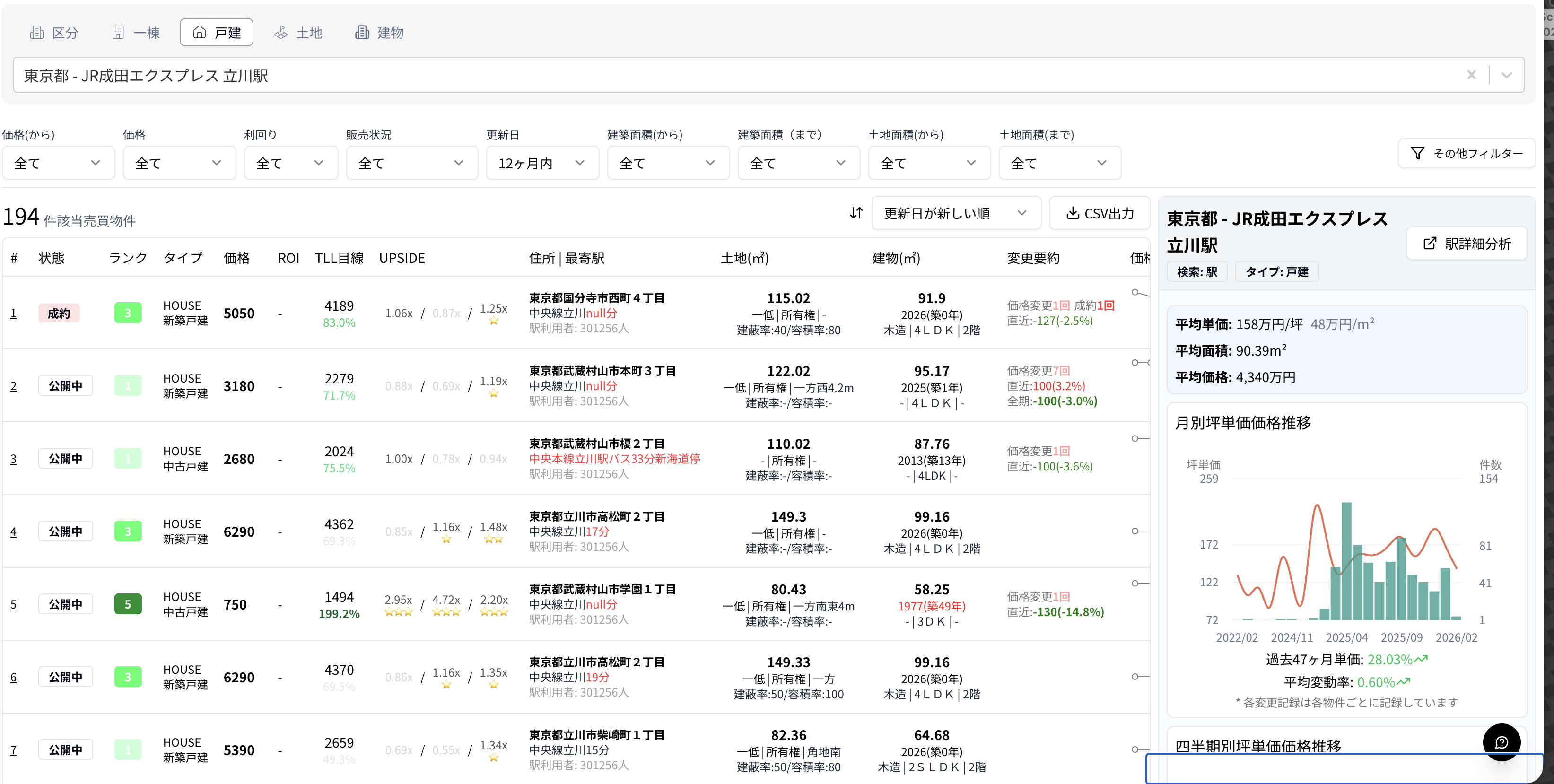
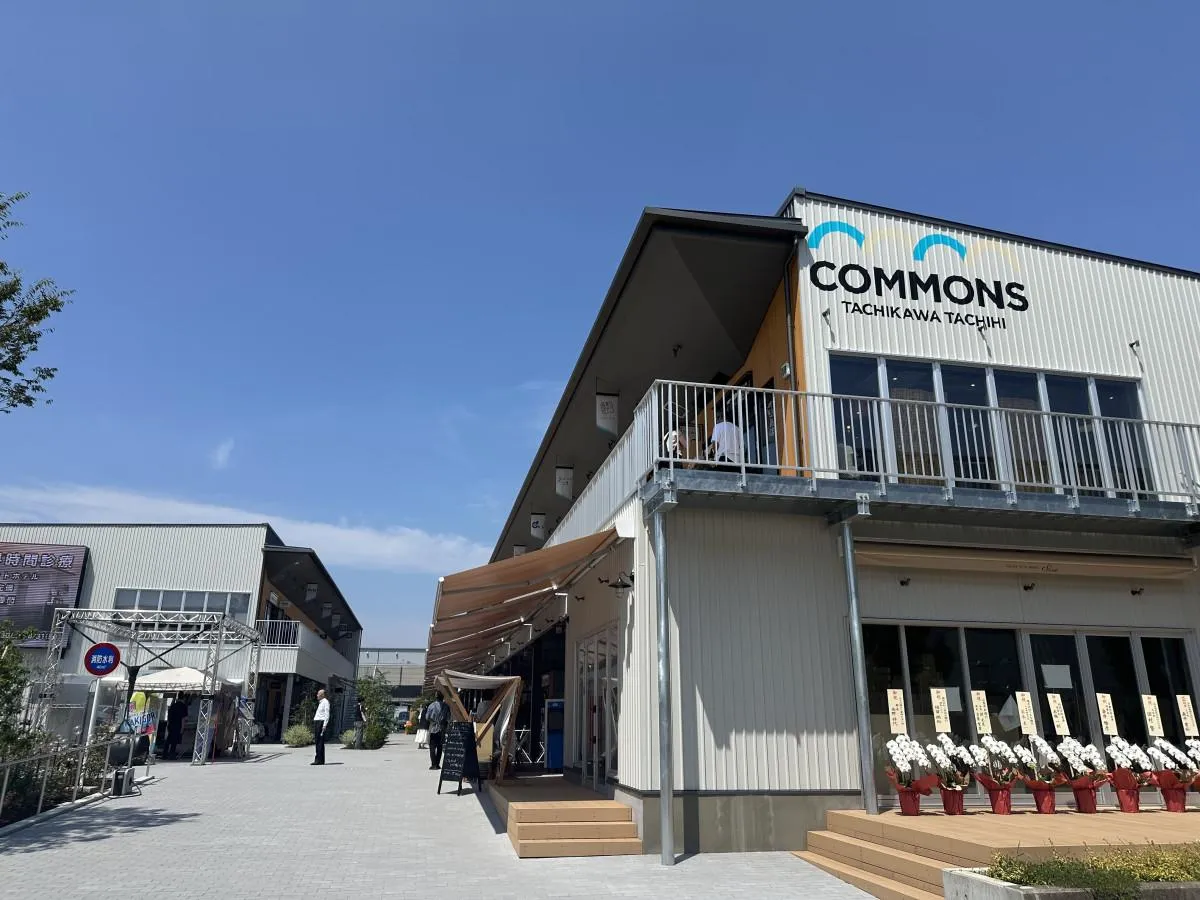
In July 2025, the new low-rise wooden commercial complex “Commons Tachikawa Tachihi” opened on the west side of Tachihi Station. Developed and operated by Tachihi HD, the project consists of two low-rise wooden buildings arranged around a shared open plaza and promotes a “neighborhood living room (Commons)” concept. The plaza features outdoor seating and pet-friendly areas to foster neighborly interaction. Commons hosts a diverse mix of dining and lifestyle tenants—including an acclaimed French pasta concept, Hakata Ippudo ramen, the yakitori shop “Kō no Tori,” sushi restaurant “Wasabi,” a Musashino-style juicy meat udon shop, a Sichuan-style spicy soup outlet, a popular bakery-café, and more than a dozen specialty food and retail operators. This new commercial cluster fills previous amenity gaps along the monorail corridor and provides nearby residents with high-quality and varied dining and leisure options, becoming a new weekend destination for families.
GREEN SPRINGS, which began opening in phases from April 2020 on Tachikawa Station’s north side, represents a milestone in the city’s regeneration. Occupying roughly 3.5 hectares, GREEN SPRINGS integrates retail, office, hotel, and cultural facilities with the theme of connecting sky, earth, and people, creating a rare “healthy living” complex in western Tokyo. Highlights include the Tama area’s largest performance venue, the Tachikawa Stage Garden (a 2,500-seat indoor–outdoor integrated hall and one of Japan’s first of its kind), the upscale onsen-themed SORANO Hotel (opened May 2020), family-oriented experiential cultural facilities such as PLAY! (picture-book museum and related programming), plus numerous scenic restaurants, cafés, and creative retailers. The district centers on a one-hectare lawn garden, while surrounding buildings use abundant glass and wooden eaves to blur indoor–outdoor boundaries and are planted with seasonal greenery. According to Tokyo media, GREEN SPRINGS quickly became one of Western Tokyo’s most popular new landmarks. It effectively links the lively station-front shopping district with the greenery of Showa Memorial Park, realizing a coexistence of city and nature and being referred to as Tachikawa’s “urban veranda.” For residents this area provides both a pleasant place for walks and expanded shopping and entertainment choices; for the city’s value proposition, GREEN SPRINGS has significantly enhanced Tachikawa’s attractiveness as a cultural and lifestyle center.
Tachikawa places high priority on childcare and education, and recent measures have directly benefited families in the Tachihi area. First, childcare capacity has expanded: in January 2018 Tachihi HD established a company-run nursery, Fuji Akatonbo Nursery, on its land south of Tachihi Station (Izumicho 500 block). Operated by a well-established educational foundation that manages notable kindergartens, the facility has approximately 440 m² of building area, a 1,320 m² outdoor activity area, and parents’ drop-off parking—meeting local demand for high-quality childcare for area workers. Later, GREEN SPRINGS introduced another nursery run by the same foundation, Fuji Lemon Nursery, which opened in April 2020 on the first floor of the W3 building. This was the foundation’s fifth nursery in Tachikawa; its stated mission is to be an indispensable childcare facility that supports children’s healthy development and parents’ peace of mind, while bringing vitality to the community. These additions have materially eased childcare capacity constraints across the city. According to municipal statistics, Tachikawa’s enrollment rate for children aged 0–5 ranks among the highest in Tokyo’s urban wards, and the availability of early childhood education resources continues to improve. Second, in terms of educational resources, the Tokyo metropolitan Tachikawa International Secondary School (a metropolitan institution on the north side of Tachikawa Station) added an affiliated elementary school in 2022, becoming the nation’s first public integrated school covering elementary through high school. The school emphasizes international education, offering four English lessons per week starting in first grade and reserving spots for children of foreign residents and returnee families. This initiative provides high-quality public education options close to home and underscores Tachikawa’s positioning as a multicultural-friendly city. The solid distribution of preschool and primary/secondary education resources in the Tachihi area further strengthens families’ confidence in settling here.
Implications for Future Investment and Residential Value
Tachikawa—especially the emerging district centered on Tachihi Station—is transitioning from a traditional Tama commuter town to an area that combines residential quality with asset stability, making it attractive for family-oriented home purchases. The continuous arrival of large-scale commercial and cultural facilities has significantly increased urban density and convenience, enabling suburban living without sacrificing urban experiences. Whether for daily shopping, dining and socializing, or weekend leisure, Tachikawa now provides largely self-sufficient urban functions, and new development models that prioritize public spaces and greenery have strengthened community cohesion and long-term livability.
On the factors families care most about—education and childcare—Tachikawa’s advantages are clear. An improving childcare system, expanding high-quality daycare options, and internationally oriented public schooling offer a stable, family-friendly environment for dual-income households and families with overseas backgrounds. Combined with good public safety and comprehensive public services, Tachikawa is demonstrably preferable on long-term livability metrics compared with many peer suburban areas around Tokyo.
From a transport perspective, Tachikawa’s role as a gateway to western Tokyo supports both residential demand and asset values. The JR Chuo Line provides direct access to Shinjuku and Tokyo Station, while the Tama Monorail connects north–south within the area, maintaining efficient commuting and cross-district mobility while preserving suburban space and pace. This balance of commuter accessibility and lifestyle comfort is a key foundation supporting sustained demand for Tachikawa real estate.
Conclusion
Tachikawa’s rise is no accident. From its historical foundations to contemporary urban management, the city combines metropolitan convenience with suburban comfort. The area around Tachihi Station, in particular, demonstrates a compelling blend of old and new: major commercial and cultural facilities deliver a modern urban feel, while green spaces, parks, and open areas preserve community warmth.
For families seeking owner-occupancy, Tachikawa offers an ideal mix of secure childcare, convenient living, and stable asset potential. Settling in Tachikawa allows residents to access high-quality local education and community resources while positioning themselves to benefit from the prospect of long-term property appreciation.
#JapanHomeBuying #TokyoFamilyProperty #TamaRegion #TokyoRealEstateAnalysis #JapanRealEstate #OwnerOccupiedProperty #SchoolDistrictAndChildcare #TokyoLifestyle
Copyright: This article is original content by the author. Please do not reproduce, copy, or quote without permission. For usage requests, please contact the author or this site.
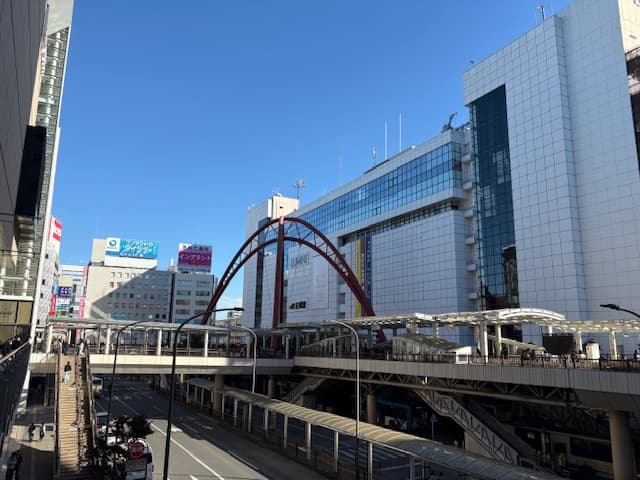
Photos in this article: Tama Intercity Monorail viewed from Green Springs DiKnK8713/CC BY-SA 4.0(トリミング) Wikimedia Commons·Tama-monorail Tachihi Station 20211 DiKnK8713/CC BY-SA 4.0(トリミング) Wikimedia Commons·Tachikawa sta N 20210 DiKnK8713/CC BY-SA 4.0(トリミング) Wikimedia Commons·Tokyo Metropolitan Tachikawa High School IZUMI SAKAI/Copyrighted free use(トリミング) Wikimedia Commons