Words: 1306 | Estimated Reading Time: 7 minutes | Views: 7304
At the start of 2026, the Japanese government is preparing to introduce a basic policy framework on foreign residents. This move follows record-high numbers of foreigners residing in Japan and the institutional debates triggered by their management. This is not only a policy contest but also directly affects the future trajectory of Japan's economy and real estate investment climate.
Influx of Foreigners and Demographic Shifts
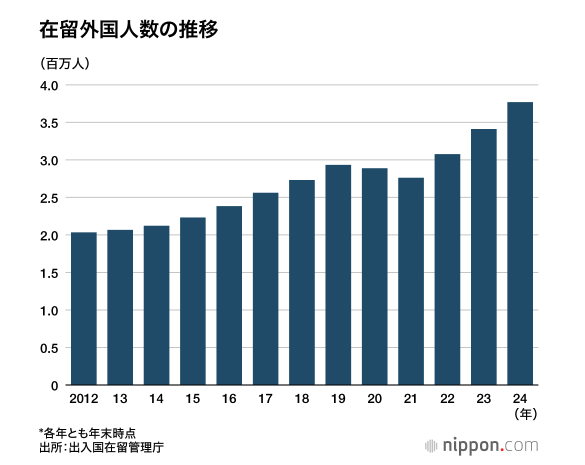
Over the past decades, Japan's demographic structure has been quietly undergoing a dramatic change. Chronic domestic labor shortages, coupled with accelerating low birth rates, have increased Japan's reliance on foreign labor. Official data show that by the end of June 2025, the number of foreign residents in Japan had reached approximately 3.957 million, an increase of nearly 70% compared with ten years earlier【Source: Sing Tao Headlines, 2025,链接】. In some communities foreigners now account for over 10% of the population, signaling Japan's gradual shift from a historically nearly homogeneous society toward a new normal of multicultural coexistence. Looking ahead, if this growth trend continues, foreign residents could account for about one in ten people nationwide by around 2040. This demographic shift means that the loss of a population dividend and the influx of migrants will interact in complex ways. Behind the trend lies Japan's strategic uncertainty: whether to maintain the traditional identity of a "nation of the Japanese" or to embrace immigration to fill the population gap.
Policy Direction: Surface-Level Management or Fundamental Change?
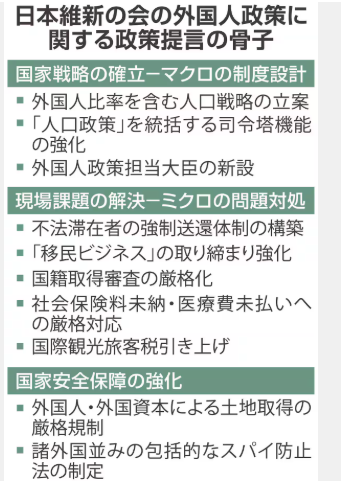
Faced with a surge in foreign residents and the social issues that follow, the new government under Sanae Takaichi has placed foreign resident policy high on the agenda. At the end of 2025, the Liberal Democratic Party and the ruling coalition discussed a series of corrective measures, including tighter controls on real estate transactions, recovering unpaid taxes and social insurance from foreign residents, and stricter criteria for permanent residency and naturalization. It is expected that in January 2026 the government will issue a basic policy guideline on foreign residents, providing directional guidance on these topics. Notably, the outline also explores whether to introduce a "total volume control," i.e., setting an annual cap on foreign entries—a position long advocated by the ruling Japan Innovation Party. However, despite this tightening tendency, these measures mainly focus on managing "surface issues": preventing unlawful overstays, restricting land purchases in sensitive areas, and plugging social insurance evasion. The Japanese government still avoids a core choice—whether to formally recognize and accept immigration. The current approach remains reactive, emphasizing a 'non‑immigration' premise while patching a widening policy gap with piecemeal rules.
Systemic Gaps and Concerns: Lessons from the Singapore Model
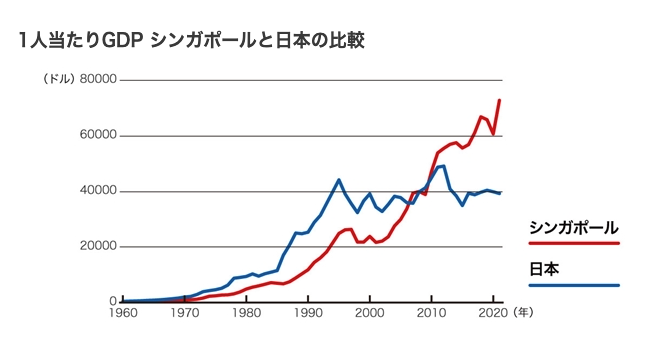
Behind the policy wavering lie many structural loopholes and real-world constraints. Some conservative voices have suggested Japan emulate Singapore by enforcing a clear separation in the treatment of foreign workers—deporting low-skilled workers at the end of contracts while welcoming high-skilled professionals for long-term settlement. Japan, however, cannot easily replicate Singapore's model because of economic differences and language environment. Singapore's average monthly salary is about JPY 910,000, while Japan's is only about JPY 330,000; for low-skilled jobs, Singapore's minimum hourly wage is more than 1.2 times that of Japan. Japanese firms cannot afford Singapore-level wages nor can they universally offer an English working environment. Therefore, even if harsh rules are imposed, Japan may still fail to attract migrants: migrant labor could flow instead to countries like South Korea or Taiwan that offer higher pay or more welcoming conditions. This trend is already visible in the data—Japan's per capita GDP has recently been overtaken by South Korea and Taiwan, reducing Asia's relative attractiveness for labor to Japan【Source: Observer, 2025,链接】.
At the same time, Japan's visa system has been repeatedly exploited. For example, the "Business/Management" visa was once approved with an investment threshold of just JPY 5 million, and many foreigners used this low barrier to establish shell companies in Japan—posing as entrepreneurs while effectively using the route for residency. In just two years such companies surged by about 7,000, and the number of foreign residents holding this visa jumped by 60%. The government only curbed this trend at the end of 2025 by urgently raising the minimum investment to JPY 30 million. Similarly, the media exposed cases where some Chinese nationals could obtain Japanese driver's licenses after a simple test despite holding tourist visas and not speaking Japanese, raising concerns about fairness and safety. The real estate sector also has regulatory blind spots: in the past, purchasing condominiums and other properties did not require declaration of nationality, allowing foreign capital to hide behind domestic corporations to acquire large amounts of land, with reports even of overseas investors hoarding watershed and forest land. The 2017 case in which Asahi Kasei's predecessor's land was fraudulently transferred (the Sukiya housing/land fraud case) involved forged property documents that defrauded the longtime developer of roughly JPY 55.5 billion, further highlighting weaknesses in the land transaction review system【Source: Commercial Times, 2018,链接】. These incidents have sounded an alarm. The government is now building a national real estate registry to comprehensively record property owners' nationalities and other information from 2027, aiming to improve transparency and close regulatory gaps【Source: CNA, 2025,链接】.
Investment Perspective: Risks and Opportunities Coexist
For professional investors, the direction of Japan's immigration policy contains tangible risks and opportunities. First, changes in the labor structure will profoundly affect the macroeconomy and specific sectors. If mismanaged policies lead to a sudden reduction in foreign workers, Japan's already tight labor market will worsen, and sectors that rely on foreign labor—such as manufacturing, eldercare, and construction—could see constrained capacity and diminished investment returns. Some urban rental markets could also face rising vacancy rates and downward pressure on rents. On the other hand, this "immigration conundrum" could catalyze structural opportunities: if Japan advances reforms and relaxes admission for high‑skilled talent, it could, over the long term, mitigate population decline, boost consumption, and increase housing demand. For value-oriented institutions, now is the time to reassess allocations. On one hand, consider modestly reducing exposure to properties in regions heavily dependent on low‑skilled foreign labor to hedge against abrupt policy tightening; on the other hand, focus on segments likely to benefit from quality inflows, such as innovation districts in metropolitan areas, international schools, and nearby apartments. In periods of high uncertainty around demographics and policy, prudent scenario planning is essential.
Conclusion: Embrace Change and Prepare in Advance
Japan faces not only a labor supply challenge but also a national decision about identity and future competitiveness. Ignoring the realities of migration will only allow systemic loopholes to fester and ultimately damage the economy and investor confidence. From the lessons of large-scale fraud to controversies over foreign land acquisition, every incident underscores the need for regulators to confront institutional weaknesses and proactively improve rules. For investors, regardless of the path Japan chooses, it is imperative to assess impacts in advance and position accordingly. If Japan implements more transparent and sustainable immigration policies in time, investors should seize the opportunities from market expansion and structural upgrading; conversely, if policy remains erratic or regresses, investors must prepare for worst-case scenarios by tightly controlling exposures and diversifying across markets. It is foreseeable that, driven by public debate and economic realities, Japan's immigration policy will move toward clearer reform. This presents both a challenge and a window to recalibrate strategy and seek new value. Only by embracing change and planning ahead can investors remain resilient in the next chapter of Japan's real estate market.
References:
【Source: Sing Tao Headlines, 2025,https://www.cna.com.tw/news/aopl/202512050038.aspx】
【Source: CNA, 2025,https://www.cna.com.tw/news/aopl/202512010057.aspx】
【Source: CNA, 2025,https://udn.com/news/story/6812/8864008】
【Source: Lai Media, 2025,https://gudate.com/news_view.php?new_sn=113000】
【Source: Commercial Times, 2018,https://www.chinatimes.com/cn/realtimenews/20181104000381-260511】
#JapanRealEstate #ImmigrationPolicy #DemographicTrends #ForeignLabor #InvestmentRisk #InstitutionalReform #RealEstateRegulation #LaborMarket #LowBirthrate #EconomicOutlook #PropertyInvestment #MarketStrategy
Copyright: This article is original content by the author. Please do not reproduce, copy, or quote without permission. For usage requests, please contact the author or this site.