Words: 1266 | Estimated Reading Time: 7 minutes | Views: 5214
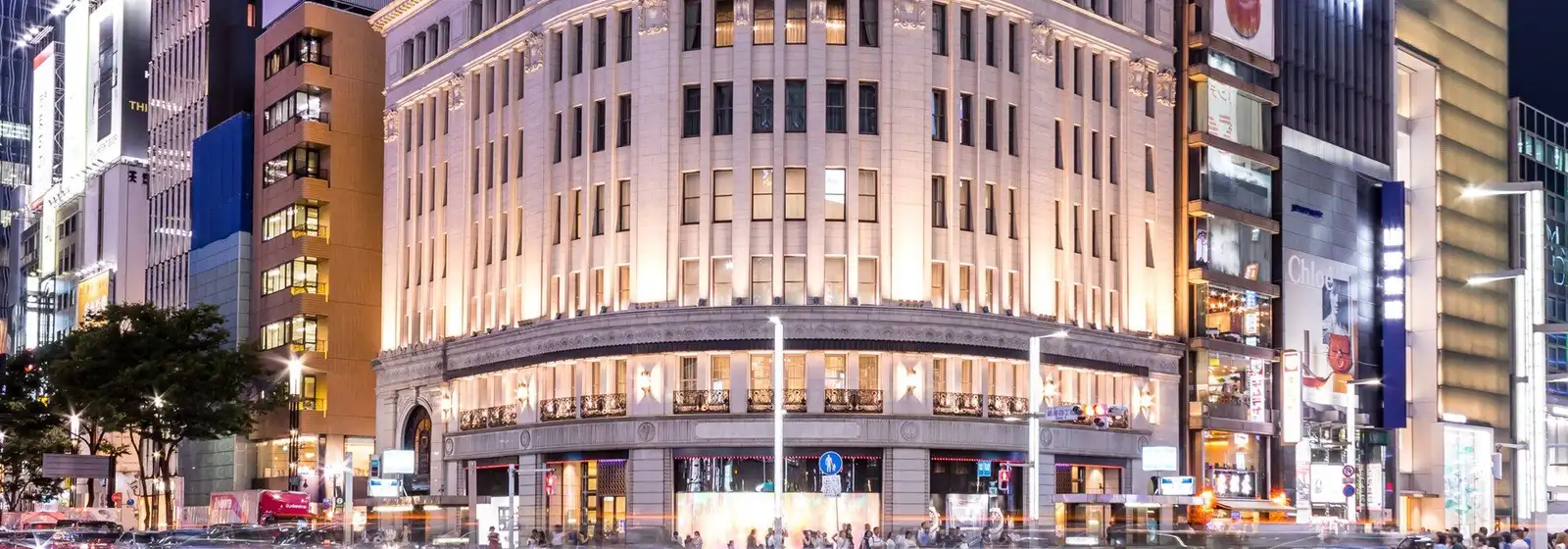
If Ginza represents Tokyo's "commercial face," Tsukiji's redevelopment is more like rebuilding the city's "functional backbone." On approximately 190,000 m² of metropolitan land, a consortium led by Mitsui Fudosan is packaging sports and entertainment, MICE, life sciences, hotels and high-end residences, a maritime transport hub, and roughly 10-hectare-scale open space into a "long-term operated urban product." For investors, this is not a single-point benefit but a systemic variable that will continuously reshape foot traffic, leasing composition, and capitalization-rate expectations over the next decade or more.
From "Tokyo's Stomach" to "Tokyo's Living Room": Tsukiji's historical role mandates a redefinition
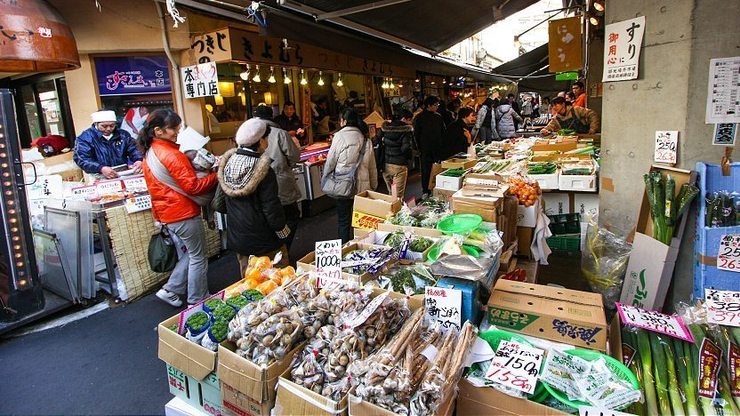
Tsukiji was historically defined by its market: maritime transport, wholesale, early-morning trade, and nationwide food distribution made it one of the few "hard-core production nodes" in Tokyo's urban functions. After the market relocated, the site's value did not vanish; it was re-priced from "logistics efficiency" to "urban experience and international connectivity" — sitting adjacent to Ginza, the Shimbashi–Shiodome business district, and the Hama-rikyu waterfront, it represents one of the rare premium plots in Tokyo's core: on the CBD edge while able to interact chemically with waterfront ecology. The basic plan states this plainly: using the "ONE PARK×ONE TOWN" concept to overlay natural systems (green, water, open space) with urban activities (interaction, innovation, hospitality), aiming to create Tokyo's new international urban card rather than simply "build a few towers." The essence of this positioning is to convert Tsukiji from "functional land" into an "operable urban destination," an asset logic closer to a large mixed-use/resort destination than a simple assemblage of conventional office or residential uses.
Find properties in 東京都中央区
Individual listings, price-change history, closed transactions and AI valuations are available on a free account.
News recap: publicly disclosed information on facility composition and funding scale
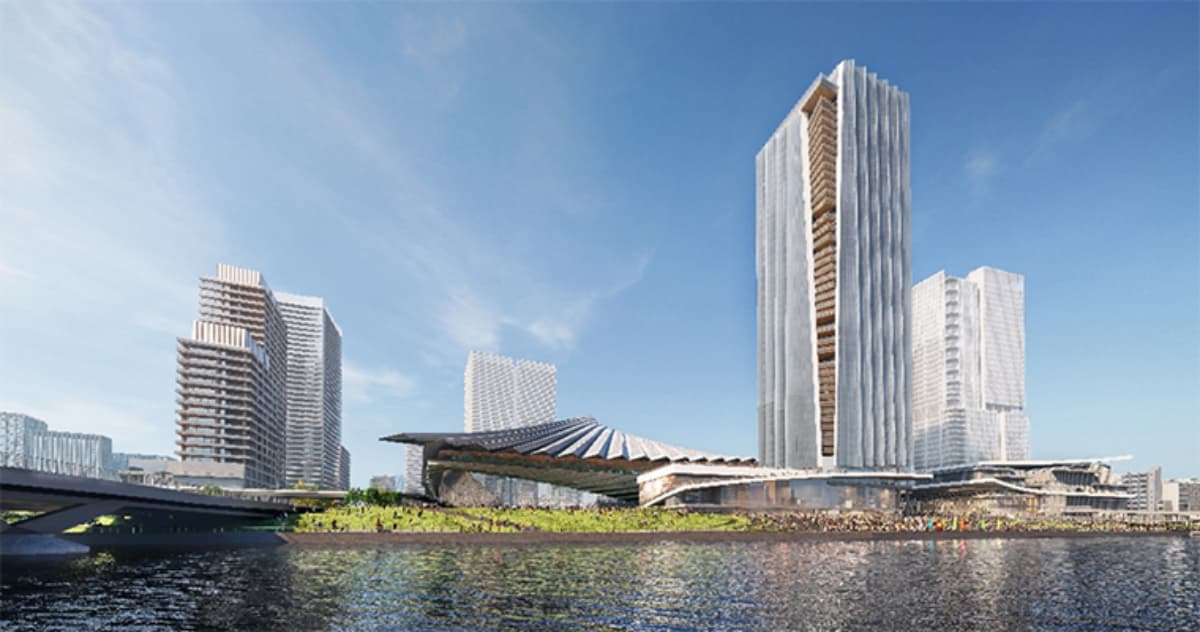
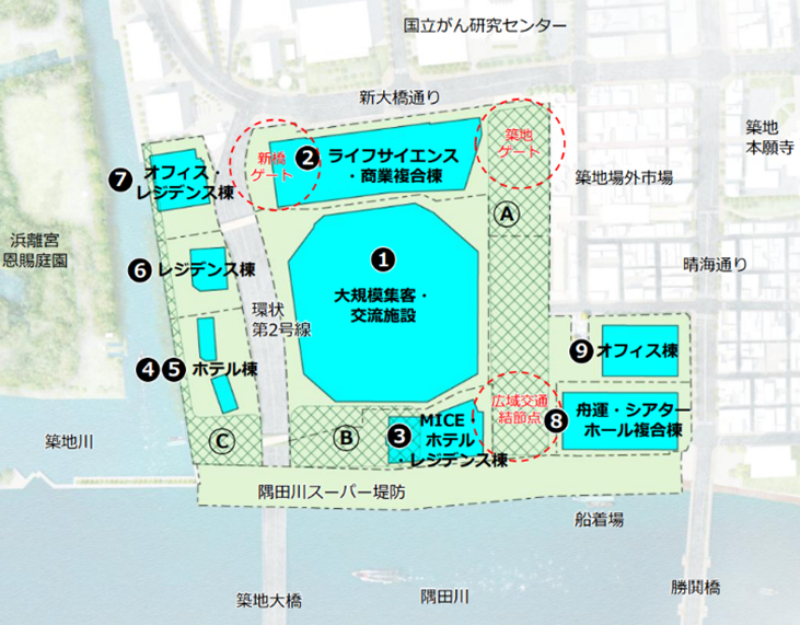
The most critical elements of the disclosed information are "scale + function + operating rhythm." The official project framework includes: approximately 190,000 m² of metropolitan land, a total floor area of about 1.26 million m², total investment of roughly ¥900 billion, nine core buildings in total, and phased openings starting in the early 2030s; the most iconic element is an all‑weather indoor multi‑purpose arena with a capacity of around 50,000 that can switch between sports, concerts, e-sports, and exhibitions. At the same time, the program is not simply "arena + retail" but ties together three types of cash-flow engines
Activity engine: multi-purpose arena + international-standard MICE (large halls, meeting rooms) channel "peak footfall" into daily operations;
Industry engine: life sciences and commercial mixed-use (lab&office, incubation facilities) aim to retain "long-term high value-added employment" in the area;
Hospitality engine: multi-tier hotels + short- and mid-stay accommodations + high-end residences to host international conferences, business travelers, and high-net-worth visitors.
Combined with food-culture facilities linked to the Tsukiji outer market, a maritime transport hub (serving as a "transport node" connecting water routes to Asakusa, Toyosu, Haneda, etc.), and roughly 10 hectares of open space, the project effectively forms a composite model of "high-frequency daily use + peak events + industry residency." For investors, the significance of this model is that it diversifies project risk away from "single-tenant cycles" across multiple curves—foot traffic, exhibitions, hotels, industry, and residential—and expands revenue from "rent" to "operating income + brand premium." I believe this is the core asset value of the Tsukiji project—it will function more like a tunable urban engine than a pure development-arbitrage play.
Population and land-price foundations: Chuo Ward's residentialization trend combined with rising core commercial land values provides Tsukiji with a rare countercyclical foundation
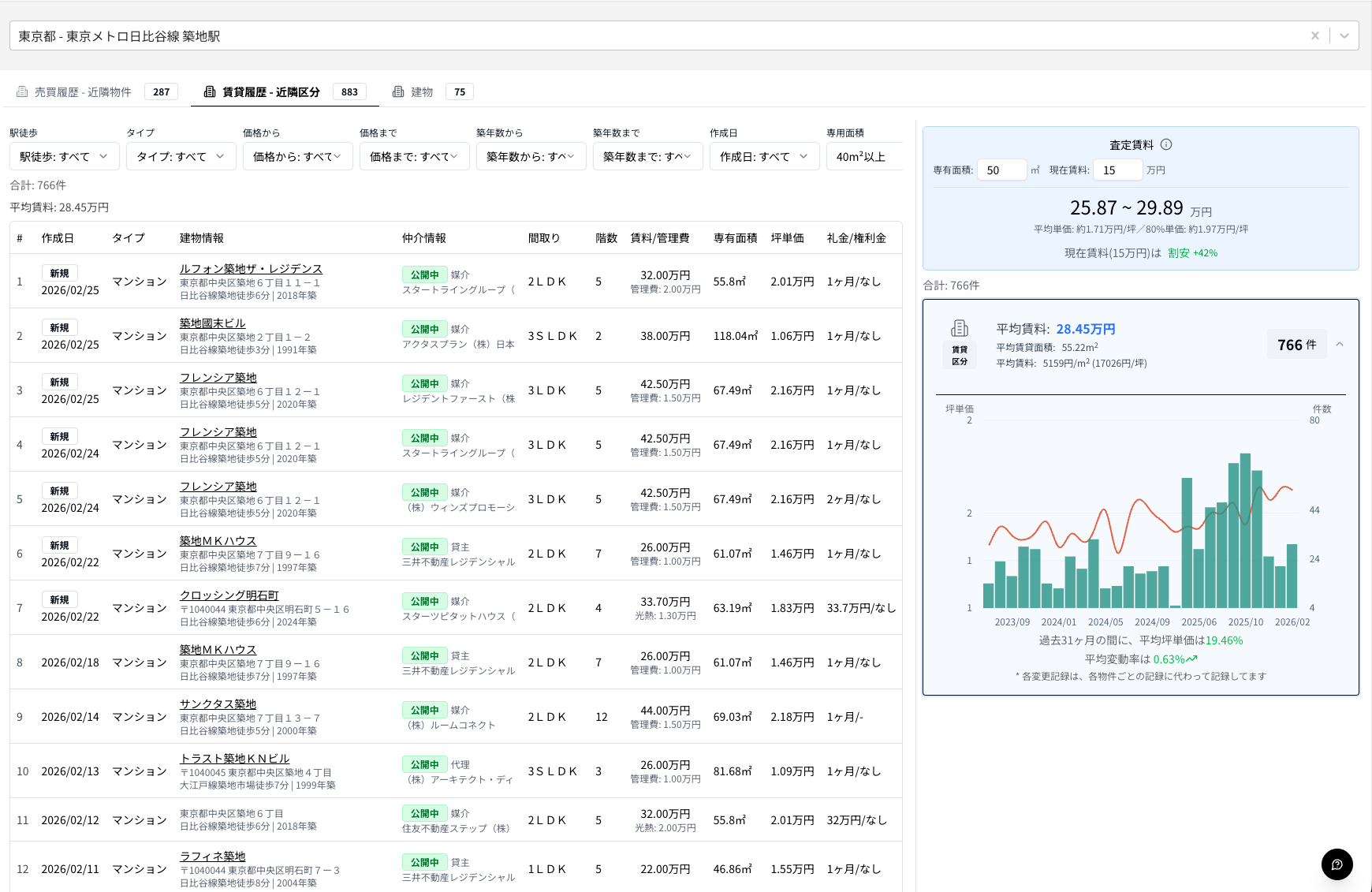
Whether the redevelopment can realize value first depends on whether the area's foundation is growing. The most notable structural change in Chuo Ward over the past decade-plus has been sustained population growth with stronger householdization tendencies; official materials even provide explicit estimates: reaching 200,000 by fiscal 2024 and exceeding 220,000 by fiscal 2029. This means that, unlike a typical hollowed-out CBD, Chuo Ward is a hybrid market with both residential and business demand. Land-price signals corroborate this: taking a published land-price sample in Tsukiji 4-Chome as an example, about ¥431,000/m² in 2024 rose to about ¥479,000/m² in 2025, remaining noticeably upward even at high levels, indicating that capital's "certainty premium" for this location has not dulled. On the leasing side, you can understand demand as more diversified: traditional Ginza/Shiodome business users, inbound business and leisure visitors, and long-term rental demand driven by central-city residentialization will overlap in the same area.
Impact on future investment value: Tsukiji will become a new anchor for the "Ginza–Shiodome–Toyosu" corridor
When an area evolves from a "single landmark" into a "systemic destination," two things typically happen in the capital markets:
Risk premium compression (more certain foot traffic, more stable industry and hospitality demand, stronger public-space and transport integration)
Relative repricing between assets (who is closer to the new flow paths, who benefits from exhibition and hotel spillover, who can absorb new jobs). The Tsukiji project thickens "waterfront open space + high-intensity urban activity + international hospitality functions" simultaneously, which in theory should raise the long-term attractiveness of the eastern Chuo waterfront and strengthen linkages with Ginza's cultural consumption, Shiodome business, Shimbashi transport hub, and the coastal side (Toyosu, etc.).
But investing cannot be based on "it will just rise." I am cautiously optimistic: the real opportunity lies in a mismatch between two timelines. Construction and phased openings mean the short-term market will see volatility due to works, circulation adjustments, and uncertainty; while in the medium to long term, as phased milestones are realized, leasing and customer structures will undergo an "irreversible" upgrade. For investors, the optimal strategy is often not to chase a peak after full maturity but to position around "predictable premia before milestone realization": for example, serviced apartments/high-quality long-stay units upstream of the exhibition and hotel chains, mid-to-high-end residential rentals that can absorb industry workers, or retail and office micro-locations along the corridor that benefit from redistributed foot traffic.
Tsukiji's redevelopment is not an ordinary urban renewal but a "functional reprogramming of Tokyo's core": using ¥900 billion to integrate sports and entertainment, international exhibitions, life sciences, hotels and high-end residences, water transport, and public space into a long-term operated destination. For professional investors, Tsukiji's positioning is closer to a combination of "long-term stable, city-scale cash flows + brand premium" rather than a short-term speculative development play. The opportunity lies in allocating assets that can capture spillover demand ahead of phased realization and customer upgrades; the risks lie in construction schedules and policy variables, concentrated supply pressure on mid-to-lower-end products, and the higher management requirements of "operational" assets. My advice is to treat Tsukiji as an "anchor of a repricing framework," track milestone delivery with data, and bet on verifiable demand curves rather than pursuing the concept alone.
References
【Source: Mitsui Fudosan press release, 2025,https://www.mitsuifudosan.co.jp/corporate/news/2025/0822/】
【Source: Mitsui Fudosan press release (Tokyo "Tsukiji Area Town Development Project" selected developer), 2024,https://www.mitsuifudosan.co.jp/corporate/news/2024/0422/】
【Source: Chuo City public materials (Tsukiji Area Town Development Project Basic Plan PDF), 2025,https://www.city.chuo.lg.jp/documents/17388/kth1-1-250829.pdf】
【Source: Chuo City statistics (population trends and estimates PDF), 2019 (including estimates for 2024/2029), https://www.city.chuo.lg.jp/documents/3586/13_1.pdf】
【Source: Ministry of Land, Infrastructure, Transport and Tourism Real Estate Information Library page, 2025,https://www.reinfolib.mlit.go.jp/realEstatePrices】
【Source: Sumitomo Realty Step published land-price data page (Chuo-ku 5-42 Tsukiji 4-Chome), 2025,https://www.stepon.co.jp/tochi/chikadoukou/13/102_kouji/5_42/】
【Source: Impress Watch report (basic info on Tsukiji market site redevelopment), 2024,https://www.watch.impress.co.jp/docs/news/1585937.html】
【Source: BUILT (ITmedia) report (¥900 billion, 1.26 million m², 9 buildings overview), 2025,https://built.itmedia.co.jp/bt/articles/2509/05/news130.html】
#TsukijiRedevelopment #TokyoUrbanRenewal #ChuoWardRealEstate #GinzaMarket #MICE #Multi-PurposeArena #HotelInvestment #ServicedApartments #LifeSciencesPark #Mixed-UseComplex #WaterfrontEconomy #PublishedLandPrices #RentTrends #CapitalizationRate #JapanRealEstateInvestment
Copyright: This article is original content by the author. Please do not reproduce, copy, or quote without permission. For usage requests, please contact the author or this site.
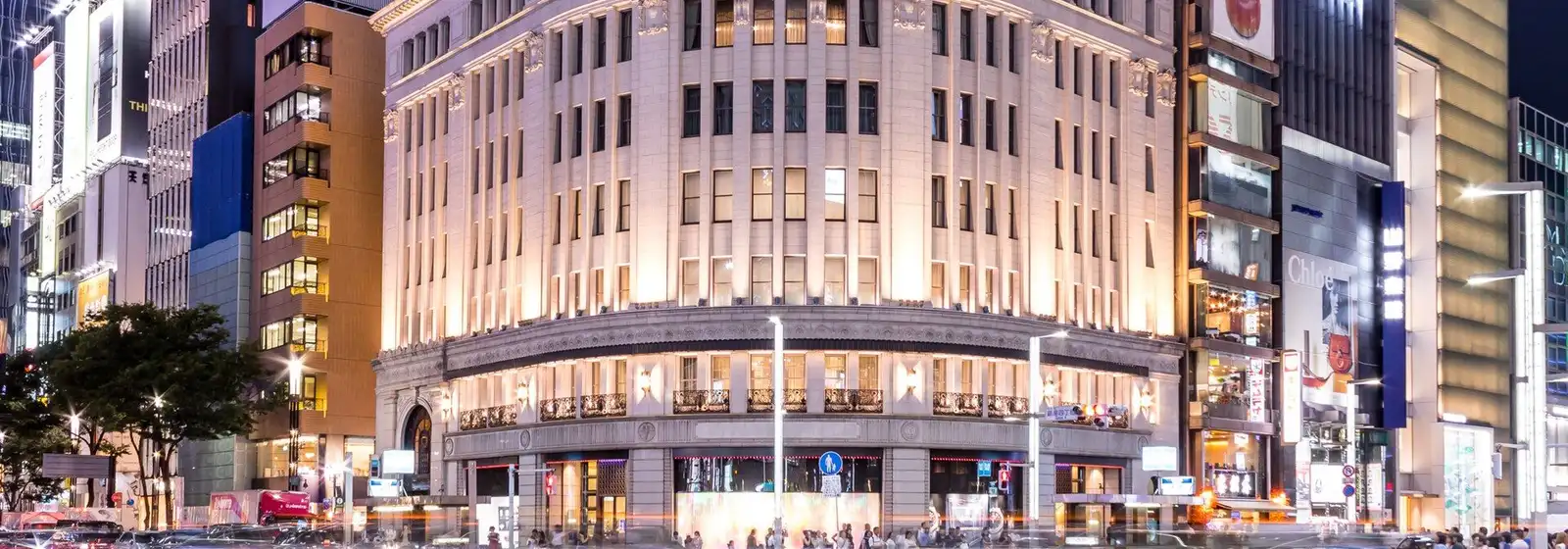
Photos in this article: Ginza-WAKO at night Kakidai/CC BY-SA 4.0(トリミング) Wikimedia Commons·Tsukiji-station-Exit Tokyo-Good/CC BY-SA 4.0(トリミング) Wikimedia Commons·Tsukiji 2 Wpcpey/CC BY-SA 4.0(トリミング) Wikimedia Commons·Ginza area at dusk from Tokyo Tower CC BY-SA 3.0(トリミング) Wikimedia Commons