Words: 1641 | Estimated Reading Time: 9 minutes | Views: 18
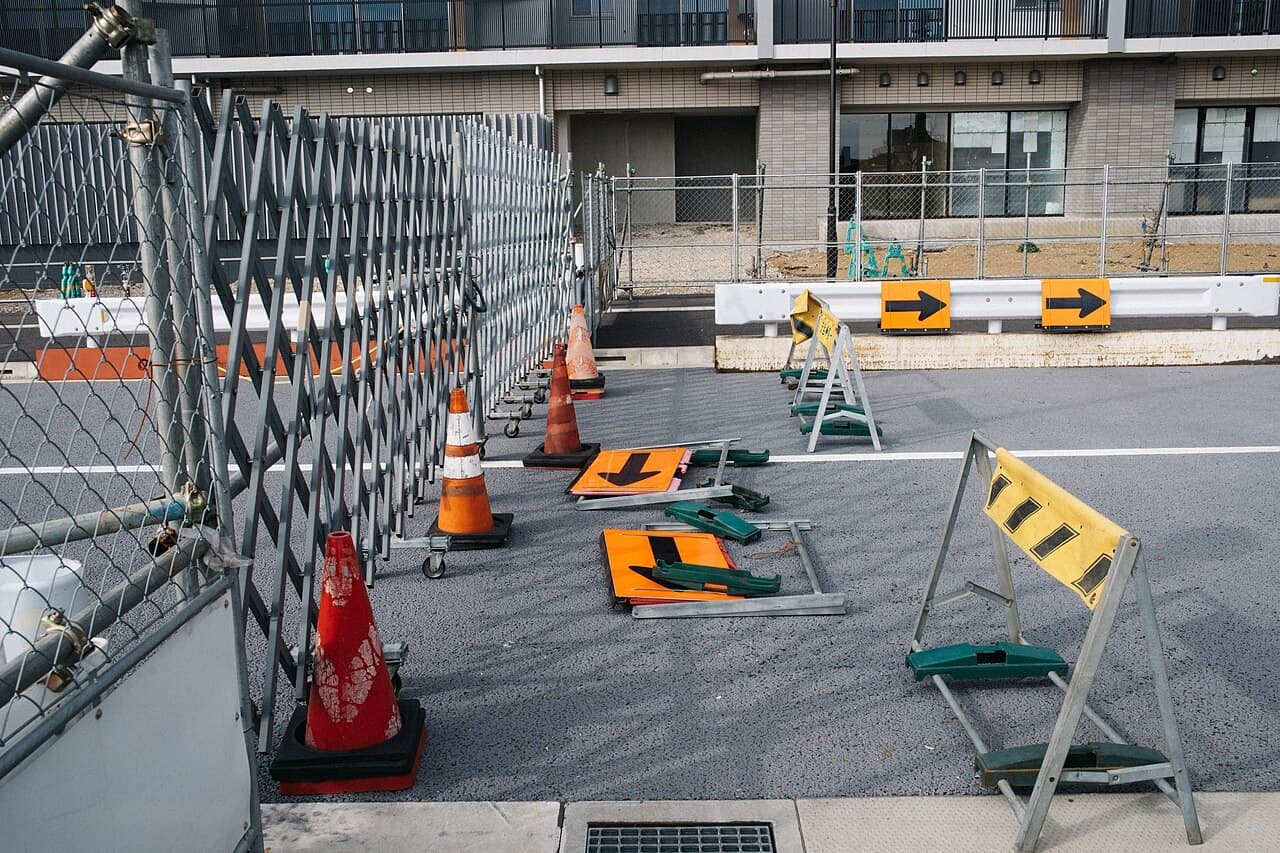
The white-plate cars and late-night suitcases at HARUMI FLAG have pushed Tokyo toward a shift in short‑term rental regulation from case-by-case disputes to systemic tightening.
1. From Olympic Village to “Problem Development”: Ten Years on the Harumi Site
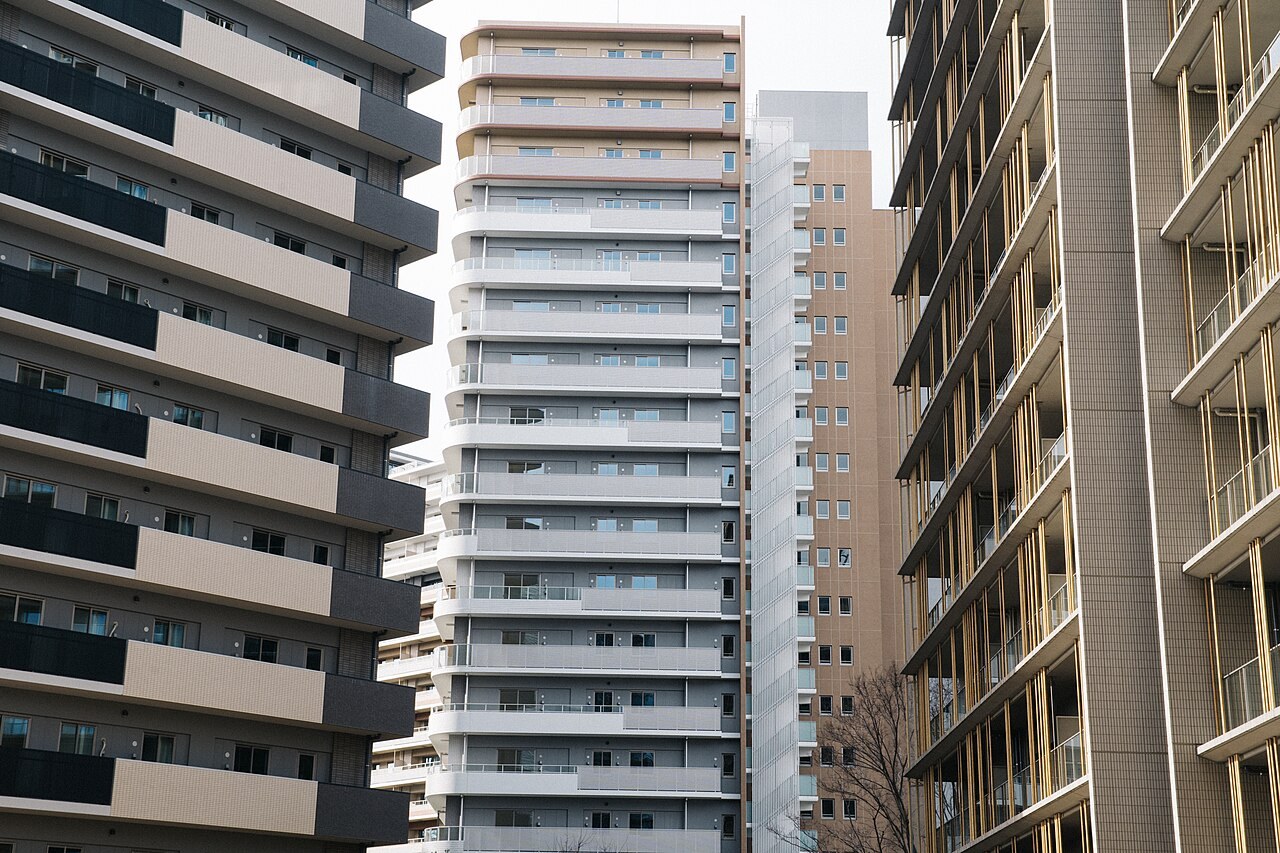
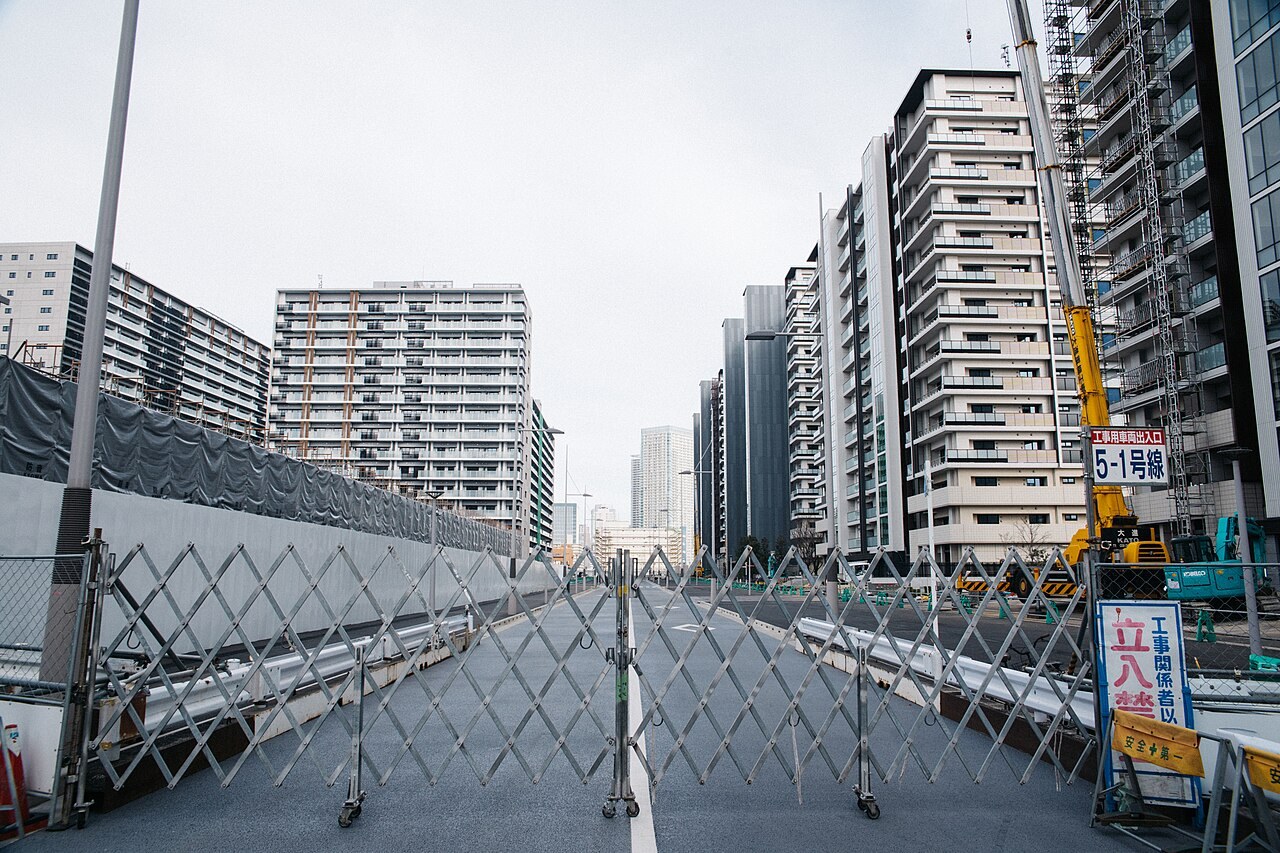
The Tokyo 2020 Olympic Village was converted after the Games into HARUMI FLAG, a large residential district with over 4,000 units, with handovers starting in 2024. The reclaimed land at Chuo City’s Harumi 5‑chome was once among the most promising new supply on the Tokyo bayside.
Scale itself is a source of risk. A community planned for a population over ten thousand and with many investment-held units naturally has the impulse to monetize vacant rooms quickly—fertile ground for unauthorized minpaku (無断民泊; unlicensed short‑term rentals).
The issue is not that Harumi’s location has deteriorated—quite the opposite. Precisely because it combines waterfront views, seaside parks, and convenient commuting toward Ginza, it became among the first stock targeted by gray operators in years of strong short‑stay demand.
Urbalytics data show that in the Kachidoki Station area, rental apartments average about ¥331,000 per month with an average size of 58.82 m², equivalent to roughly ¥17,400/tsubo·month. Over the past four quarters, that per‑tsubo figure has fallen by about 5.4%—in other words, the long‑term rental path is not widening returns.
2. What Happened: Police Call‑outs, White‑Plate Cars, and “Go Ahead, Call the Police”
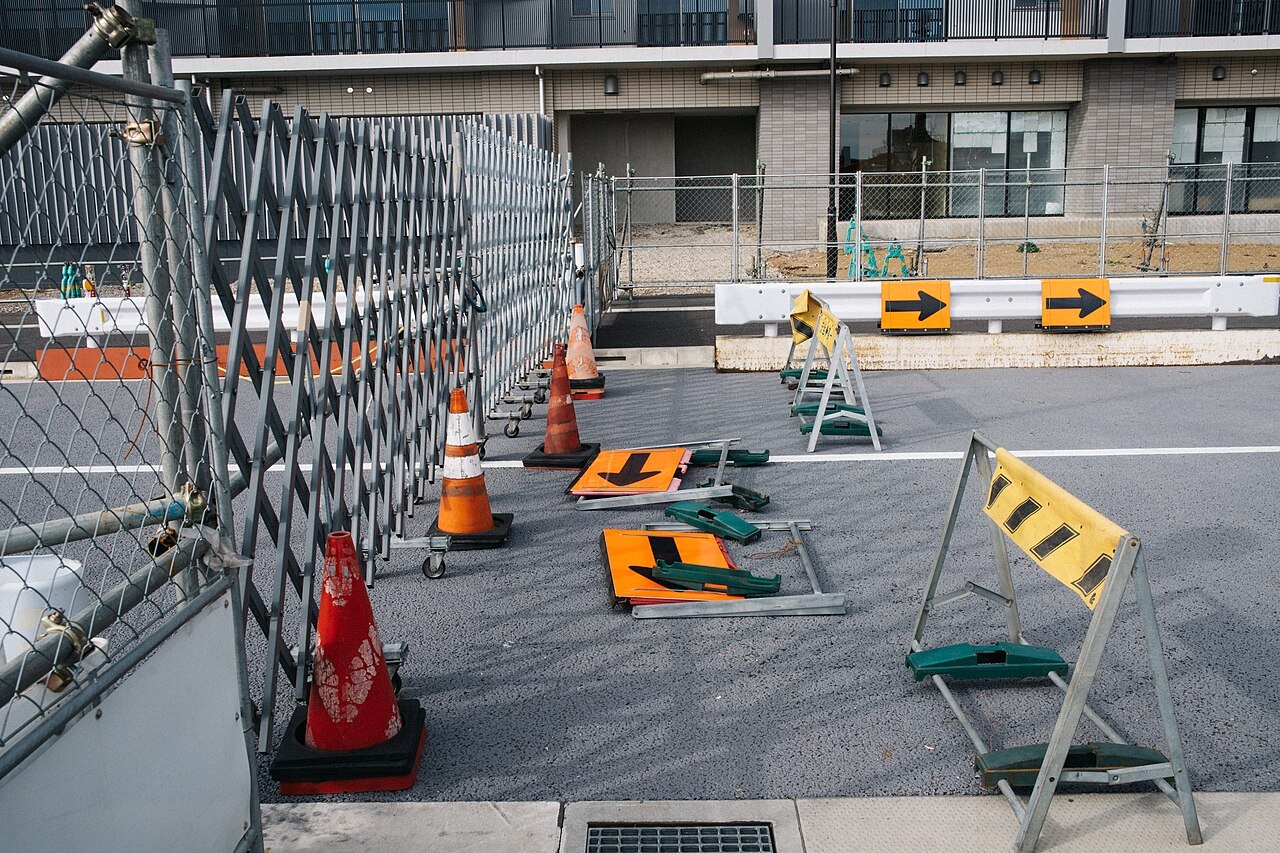
In March 2026, TV Asahi and others reported repeated sightings of suspicious vehicles around HARUMI FLAG and multiple police call‑outs, noting that the development’s management bylaws (管理規約) explicitly prohibit minpaku. In June, authorities conducted a concentrated crackdown on white‑plate cars (白タク; illegal taxis).
According to MoneyPost and others, organized groups are operating inside the complex; when confronted by reporters, a representative allegedly replied, “Go ahead, call the police,” and claimed “the rent is ¥6 million a month.” The Tsukishima Police Station has opened an investigation; there are reportedly around ten such groups. Some residents have formed neighborhood watch teams (自警団) to patrol.
Residents’ unease is not abstract: strangers ringing doorbells late at night; people with suitcases moving in and out; individuals lingering for long periods in shared corridors. These do not show up in crime statistics, yet they materially change what it feels like to live in a building.
For owners, the costliest damage is often not the single offending unit. When compliant tenants move out because they “don’t know who is coming and going in this building,” the vacancy loss lands on all owners.
3. Two Legal Layers: Administrative Licensing and “Use Violations” Are Different Issues
A common mistake is to treat illegal minpaku as a single issue. In reality, it straddles two entirely different legal lines, and either one alone can shut operations down:
First, the administrative law side. Operating minpaku requires a license under the Hotel Business Act (旅館業法) or a notification under the Private Lodging Business Act (住宅宿泊事業法). Chuo City further limits operating hours district‑wide to noon Saturday through noon Monday, effectively capping annual operating days at only around 100–110—roughly 60% of the Minpaku Law’s 180‑day ceiling.
Second, the civil side. Condominiums with divided ownership (区分マンション) can ban minpaku directly via management bylaws, while rental units are constrained by the lease’s “purpose of use”—the MLIT model lease stipulates “residential use only.”
This leads to a counter‑intuitive conclusion: completing administrative procedures does not mean a building can operate minpaku. Both lines must be satisfied simultaneously; lacking either is a violation.
Whether a use violation (用途違反) exists does not hinge on “working from home,” but on how far the actual use deviates from “residential.” Listing the address on booking sites, putting up signage, non‑specific guests coming and going daily, luggage piling up in common areas—once these facts accumulate, the reality has shifted from residence toward lodging.
4. The Bar for Termination: Suspicion Alone Won’t Evict Anyone
So if you suspect a violation, can you demand immediate move‑out? In practice, no. When courts assess lease termination, beyond the breach itself they place heavy weight on whether the parties’ relationship of trust (信頼関係) has deteriorated to the point continuation is impossible.
The right sequence is to preserve evidence first, then issue a written demand to cure (是正要求). Capture screenshots of listings on booking sites and social media; have the management company log visitor counts, times, vehicles, and use of common areas; and archive other residents’ complaints with dates and specifics.
On that basis, state the breach and a remediation deadline in writing. If the other party repeatedly offends, refuses to explain, and harm to other residents continues, these accumulations become compelling material later when seeking to terminate the lease or recover possession.
Legally, labels do not matter; what matters is how the unit’s actual use changed after it was rented out, and what impact it has on the building and other residents.
Attorney Nobuhiko Yamamura, who has handled many such cases, notes that the hardest part is evidence: no one can continuously verify what happens inside a unit, and a simple “just had a friend stay a few days” can sink an allegation. The key is not a single smoking gun, but to continuously document externally observable facts.
5. The Regime Is Tightening: Shinjuku’s Ordinance and the EU Proposal Point the Same Way
Treating HARUMI FLAG as a mere neighborhood spat misses the bigger signal. Reports in early September indicate that Shinjuku Ward—home to the most minpaku facilities in Tokyo—has decided to prohibit minpaku in exclusively residential zones (住居専用地域) and educational districts (文教地区) in principle, and will subject existing facilities as well.
Based on reports, roughly about 2,000, more than half of the ward’s minpaku may be unable to continue operating; even in commercial zones, the annual operating cap would be cut from 180 days to 120 days. The amendment will be submitted to the ward assembly, targeting enforcement in summer 2027, with exceptions for cases such as host‑occupied homes.
At the same time, the European Commission unveiled an “Affordable Housing Act” seeking common benchmarks for city‑level minpaku regulation: authorities would identify areas with tight housing supply‑demand and demonstrate that short‑term rentals have, for at least three years, materially harmed affordability and supply.
The two developments seem distant but share the same logic: once short‑term rentals start competing with residential use for the same housing stock, the regulatory balance tilts toward residents—and that tilt is measured in years and hard to reverse.
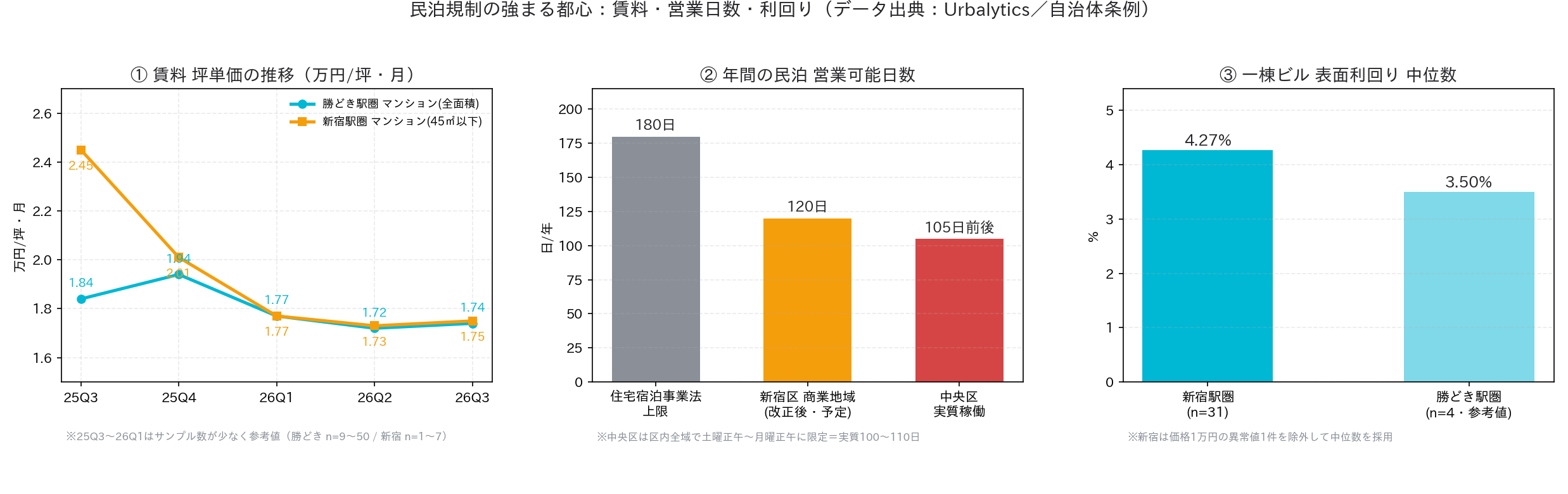
Urbalytics Insight Urbalytics internal data clarifies the magnitude: in the Shinjuku Station area, rental apartments of 45 m² or smaller average about ¥139,000 per month, or roughly ¥17,500/tsubo·month. If around 2,000 minpaku in Shinjuku Ward are forced to exit, much of that inventory will likely flow back to the long‑term rental market—an unmistakable supply‑side shock for existing landlords. Cross‑area comparisons of rents, yields, and supply mix are exactly what Urbalytics’ regional data tools are built to answer.
6. Investor Lens: The Minpaku Premium Is the Most Fragile Layer of the Return Stack
For investors whose underwriting assumes minpaku, HARUMI FLAG offers a blunt lesson: that premium is subject to three independent termination triggers—administrative licensing, building bylaws, and neighborhood tolerance. If any one trips, cash flow can go to zero quickly, and the portion of asset value tied to that premium evaporates.
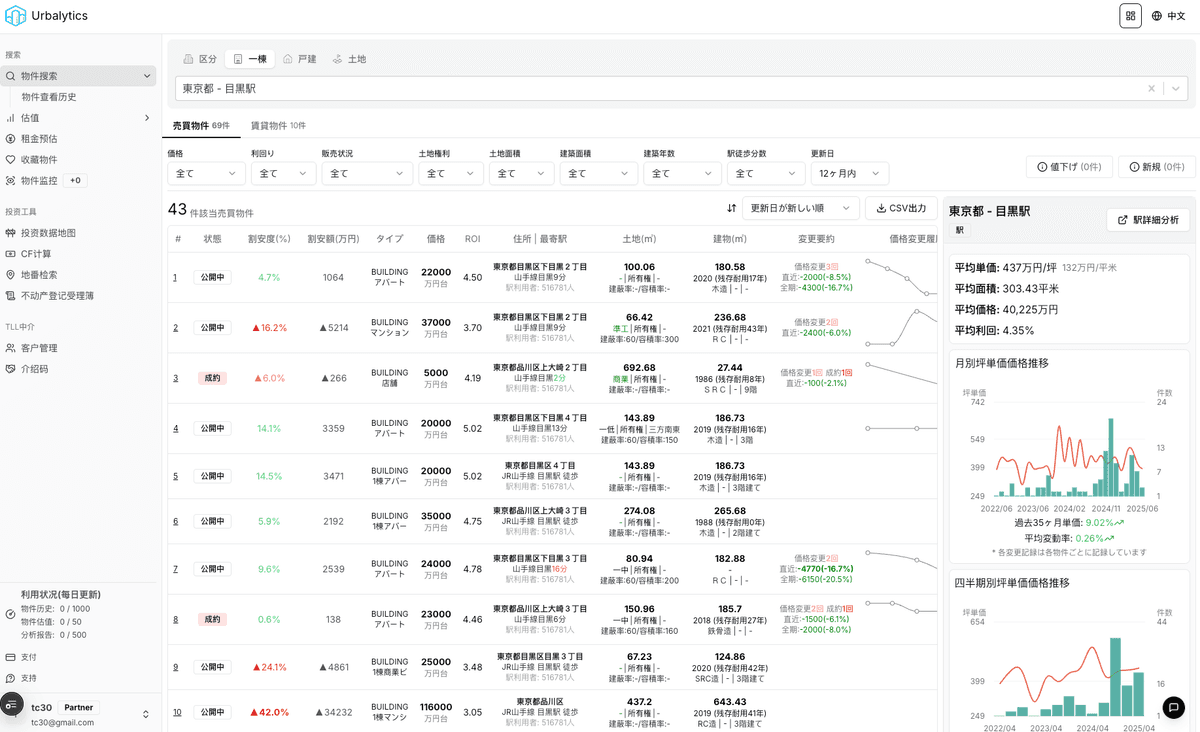
Based on Urbalytics’ yield distributions, the median gross yield (表面利回り) for entire buildings (一棟) around Shinjuku Station is about 4.27% (31 samples, one price outlier removed). Around Kachidoki Station there are only four samples, with a median of roughly 3.50%, so use as reference only. At these levels, the few extra points from short‑term rentals largely constitute all of the excess return.
Before buying, three points merit clear answers:
1) At acquisition, underwrite as if “minpaku unavailable” were the base case; treat short‑term revenue as an option, not principal, and avoid paying prices justified only under lenient regulation.
2) For unit‑level investments, read the management bylaws and house rules first, not just whether administrative notification is possible; bylaws that ban a use cannot be overridden by filing.
3) In operation, build a management setup that can both detect and document, because unauthorized minpaku—unlike hidden shops or rent arrears—will not show up in your numbers and can only be caught by on‑site anomalies.
Risk note Regulation tightening cuts both ways. On one side, if your asset is found in use violation, you may face termination and surrender disputes; the timing of shutdown is set by the combination of authorities and building management, not by the owner. On the other, a wave of minpaku units returning to long‑term leasing can pressure existing rents in dense areas like Shinjuku. Assets priced on short‑term assumptions get squeezed from both ends.
Conclusion
HARUMI FLAG’s issue is not fundamentally a failure of one building’s management, but the conflict between short‑term demand and residential use laid bare in one of Tokyo’s most visible locations. Shinjuku Ward’s ordinance revision and the EU’s housing proposal show that this conflict has entered the legislative arena, no longer confined to complaint hotlines.
For long‑term holders, the takeaway is not bearish, just more honest assumptions: downgrade minpaku revenue from “base case” to “upside option”; price in bylaws and municipal ordinances; and count “how the unit is used after it’s leased out” as a holding cost. Urbalytics’ regional rent and yield data provide a common baseline for these assumptions.
#HARUMIFLAG #ChuoCity #ShinjukuWard #TokyoMinpaku #IllegalMinpaku #ManagementBylaws #PrivateLodgingBusinessAct #HotelBusinessAct #UseViolation #JapanRealEstateInvestment #TokyoRents #GrossYield #MinpakuOrdinance #BaysideArea #Urbalytics
References
- 健美家, 2026, 晴海フラッグで問題化する「無断民泊」。大家が知るべき用途違反と契約解除【弁護士が解説!不動産投資の落とし穴】, https://www.kenbiya.com/ar/ns/jiji/legal_knowledge/10490.html
- FNNプライムオンライン, 2026, 東京オリンピック選手村跡地「晴海フラッグ」に連日警察出動 外国人観光客“闇民泊”トラブル 白タクらしき不審車も, https://news.yahoo.co.jp/articles/b013d641dd6833826fae24e453645f1ba99baab5
- マネーポストWEB, 2026, 晴海フラッグで横行する“違法民泊”や“白タク”, https://www.moneypost.jp/1324523
- 共同通信, 2026, EU、民泊規制へ共通基準 観光地の住宅価格高騰で, https://news.yahoo.co.jp/articles/6a8729b25f2469d8093fcc94ab4a34e6e5bd8ba2
- 日本経済新聞, 2026, 東京都新宿区、住宅地や学校周辺で民泊営業を禁止へ 既存施設も対象, https://www.nikkei.com/article/DGXZQOCC043YF0U6A900C2000000/
- 読売新聞, 2026, 民泊が全国最多の新宿区、住宅地や学校周辺の営業禁止へ…既存施設も・半数以上営業できなくなる可能性, https://news.infoseek.co.jp/article/yomiuri_20260906_gyt1t00196/
- 中央区, 住宅宿泊事業に関する中央区のルールについて, https://www.city.chuo.lg.jp/a0030/kenkouiryou/eisei/seikatsueisei/minpaku/jyutakujyukuhakujigyojyorei.html
- ファイナンシャルフィールド, 2026, マンションの隣室が「民泊」になり、夜遅くまで旅行客の声が聞こえるようになりました, https://news.yahoo.co.jp/articles/bfe9f2a99e38c2622eb1d99028cefa6078c7b4b0
- 国土交通省, マンション標準管理規約(単棟型)及び同コメント【民泊関係改正】, https://www.mlit.go.jp/jutakukentiku/house/jutakukentiku_house_tk5_000052.html
- Urbalytics, 2026, 賃料統計・一棟利回り統計(勝どき駅圏/新宿駅圏), https://www.urbalytics.jp/